Starting on the QC side of a Shenzhen production line and eventually running B2B exports to distributors in over forty markets — I've opened enough returned packages to have an unusually grim view of this category. Most USB hubs don't fail dramatically. They fail quietly: a port that works for three months then won't charge a phone anymore, an Ethernet jack that negotiates at 100M instead of 1G after the first firmware handshake, a case that runs hot enough to discolor plastic over a year of use.
None of this shows up in product photos. It shows up about four to nine months after the sale, which is exactly when the cheap ones stop being the cheap ones.
This piece is for two kinds of readers — distributors evaluating suppliers, and technical end users who've already been burned once. I'm going to skip the marketing gloss and get into what actually matters.
The USB Hub market in 2026 is split into three tiers, and the middle tier is where most confusion happens
The low tier — hubs retailing under US$8 — almost universally use unbranded or rebadged controllers, lack overcurrent protection on individual ports, and ship with cables that won't meet USB-IF eye-pattern specs at full speed. They work. They just don't keep working.
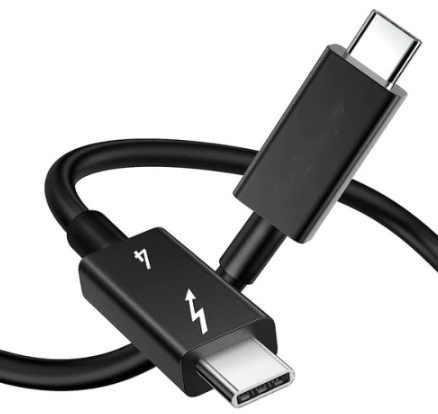
The top tier — Thunderbolt 4 docks running US$180 and up — is a different category entirely. Different chipset family (Intel JHL7440 / Barlow Ridge JHL9440), active cables, and a certification process that rejects roughly 1 in 5 production units during compliance testing. Overkill for most buyers.
The middle tier is where it gets complicated. This is where the best USB C hub for a specific use case actually lives, but it's also where the biggest quality spread exists. Two hubs with identical spec sheets can differ by 40% in sustained throughput under thermal load, and the difference usually traces back to one component most buyers never ask about: the main controller IC.
Controller chips, briefly
Three families dominate current USB hub production:
|
Controller Family |
Typical Position |
Known For |
|
Genesys Logic GL3510 / GL3523 |
Mid-tier USB 3.1 hubs |
Thermal stability, broad OS compatibility, low idle draw |
|
VIA Labs VL817 / VL822 |
Budget to mid-tier |
Cheap BOM, acceptable at light loads, struggles under sustained multi-port copy |
|
ASMedia ASM1074 / ASM1142 |
Upper-mid / higher-end hubs |
Better burst performance, more expensive, higher idle draw |
If a supplier can't or won't tell you which controller their hub uses, that's information in itself.
Why port count is the wrong starting question
The number I see first in most RFQs is port count. "Can you quote me on a 7-in-1 usb hub with usb c?" "What's your best price on a 10-port model?"
Port count isn't what makes a hub good. Power budgeting is.
Every downstream port on a bus-powered hub pulls from a shared pool that, per USB-IF specification, tops out at roughly 900mA on a USB 3.0 host port (1.5A on a USB-C host with PD negotiated up). Split that across seven ports, run an external SSD pulling 600mA from one, a phone charging at 500mA from another, and a bus-powered fan at 100mA — you've exceeded the budget before you plug in anything else. What happens next depends entirely on how the hub handles brownout.
Well-designed hubs detect the undervoltage, log it in controller firmware, and gracefully disconnect the most recently added device. Badly designed ones silently drop data — which on an external SSD copying 40GB of video files is the failure mode that destroys customer relationships.
The fix is a USB C hub with dedicated DC-in or PD passthrough. For any hub that will see regular use with external storage or multiple charging devices, we treat external power input as non-negotiable. This isn't marketing — it's the single biggest predictor of whether the product will still be in service two years after purchase.
On the phrase "usb c ethernet hub" and why host capability matters more than hub capability
A question our sales team has fielded maybe 300 times a year: will this hub give my laptop gigabit Ethernet?
The honest answer is: it depends on your laptop, not on the hub.
USB-C ports on host devices expose wildly different capability sets. A 2020 budget laptop might have a USB-C port wired only for USB 3.2 Gen 1 — 5Gbps data, no DP Alt Mode, no PD input support. Plug that into a 10-in-1 hub advertising 4K@60Hz dual display and gigabit Ethernet, and you'll get the Ethernet and the USB ports working, but the video outputs will fail silently. No error message. The HDMI cable just won't produce a picture.

This isn't a defective hub. It's host-side capability mismatch, and it accounts for — in our rough estimate based on eighteen years of RMA analysis — somewhere between 60% and 75% of "the hub doesn't work" complaints we've investigated.
Before buying any multi-port USB hub, the first homework is running the host laptop's spec sheet for three things:
1. Does the Type-C port support DisplayPort Alternate Mode? (Required for video out)
2. Does it support Power Delivery 3.0 input? (Required for charging passthrough)
3. What USB data generation does it negotiate — 3.2 Gen 1 (5Gbps), Gen 2 (10Gbps), or Gen 2x2 (20Gbps)?
If the manufacturer's spec sheet doesn't explicitly state these three things, assume the worst case. We've seen mid-range laptops from reputable brands in 2065 still shipping with Type-C ports that don't support DP Alt Mode — it's not a solved problem yet.
The sustained-load test most reviews skip
Reviewers run a single file copy, a single 4K video stream, or a single iperf3 Ethernet test — then publish. None of this tells you how the hub behaves under sustained mixed load, which is what actual desk use looks like.
Our QC bench procedure at PURPLELEC runs four streams simultaneously for 90 minutes:
· External SSD copying a 180GB working set (~450MB/s target)
· iperf3 over the hub's Ethernet port at 940Mbps sustained
· 4K@60Hz HDMI output displaying a moving pattern (not a static desktop)
· PD passthrough delivering 65W to the host laptop
Under these conditions, after roughly 40 minutes, the differentiation becomes obvious. The better units hold within 3-5% of their advertised throughput and stabilize around 46-48°C case temperature. The worst units — including some from brands with good Amazon reviews — drop SSD throughput by 30% or more, and in two cases we've documented, the Ethernet link renegotiated down to 100M and stayed there until the hub was unplugged.
A hub that can't sustain its rated spec for an hour isn't really rated at that spec. It's rated at a burst figure.

Where USB 2.0 still has a legitimate role
Mentioning this because it's a category most blogs dismiss too quickly: there's still a real B2B market for plain USB 2.0 hubs, and it's not going away.
Point-of-sale terminals, industrial label printers, medical diagnostic equipment, embedded control systems — none of these need 5Gbps, most were certified against USB 2.0 host stacks, and upgrading the hub to USB 3 actually causes compatibility regressions in certified environments. A seven-port USB 2.0 hub for a pharmaceutical packaging line isn't a downgrade. It's a deliberate choice to stay within the certified envelope.
The useful distinction for buyers isn't "USB 2.0 is obsolete." It's "USB 2.0 is the right answer for devices that were designed around it, and anything else is risk."
Who shouldn't buy a general-purpose USB hub
Listing this because most buying guides refuse to:
· Video editors working with 6K/8K ProRes footage — bandwidth demands exceed USB 3.2 Gen 2 capacity; you want Thunderbolt 4 or USB4
· Users running external GPU enclosures — same story, Thunderbolt territory
· Studio audio engineers with multi-channel USB audio interfaces — hub jitter and shared bandwidth create dropouts that a direct connection won't have
· Anyone whose workflow involves simultaneous high-draw charging + dual 4K displays + multiple NVMe drives — budget a dock, not a hub
For everyone else — hybrid office workers, front-end developers, analysts running dual externals, graphic designers working at 1440p/4K — a well-specified USB-C hub is the right tool and will cost a quarter of what a Thunderbolt dock costs.
A note to distributors
If you're sourcing hubs for wholesale, the two questions that predict long-term return rates better than any other:
1. What's the MTBF rating, and was it tested or estimated? Tested MTBF figures cost money to produce. Estimated figures are whatever the marketing team feels like writing. Ask for the test report.
2. Does every port have independent overcurrent prUSB C hub with dedicated DC-inotection, or is there a single shared polyfuse? Shared protection means one shorted device takes out all ports until power cycle. Independent protection is more expensive to implement and almost always correlates with better overall build quality.
Cheap hubs skip both. You'll see the consequences eight months into the sales cycle, which is also when reorder decisions happen.