The Universal Serial Bus (USB) was invented in 1994 with the aim of standardizing the external connections of electronic devices such as laptops and smartphones. Over the years, the usage of USB has grown exponentially, thanks to its convenience and cost-effectiveness.
In addition, it has largely replaced other traditionally used interfaces like serial ports on a global scale.
As a result, the substantial increase in market demand has led to significant advancements. The quality of USB has greatly improved, and the options have become more diverse. And USB-C represents the latest revolution in the USB field.
Although USB-C technology made its debut as early as 2014, it has only gained widespread recognition recently. So, what sets USB-C charging cables apart from USB Type-A or USB Type-B cables? Why is it often hailed as the best charging cable?
Unique Design: Ergonomic Interface
Compared with previous USB cables, USB-C connecting cables are more in line with ergonomic design and better cater to the needs of contemporary products. Firstly, they are more compact and easier to carry around.
Secondly, their interfaces are more rounded and, excitingly, more symmetrical. This means you can plug a USB-C charging cable into a device in either direction—it works both ways!
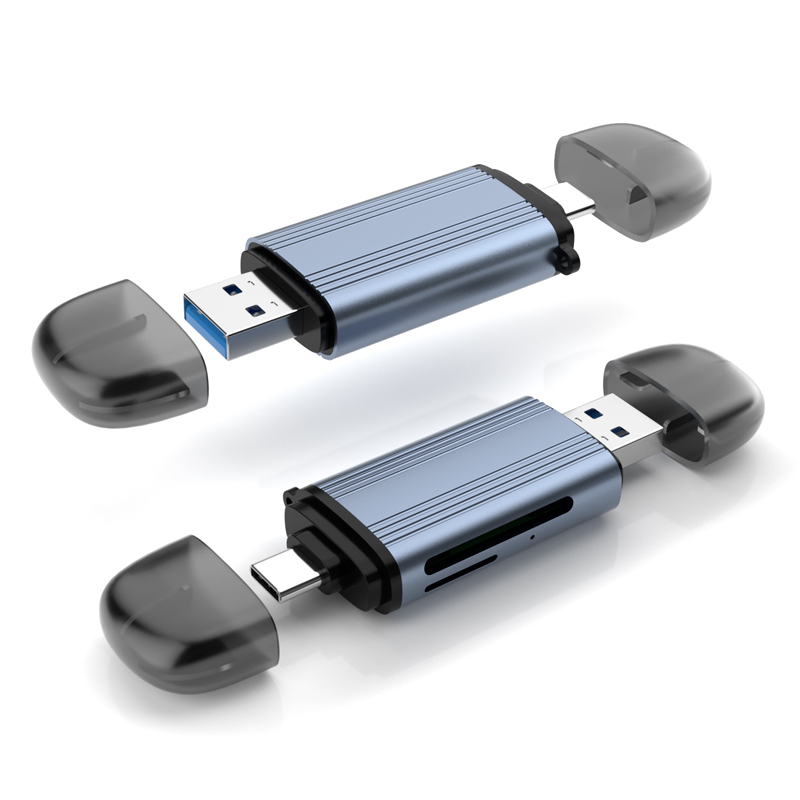
Lastly, USB-C cables usually support backward compatibility with USB-A devices. For many years, USB-A has been the mainstream cable interface type, so undoubtedly, many users may still have devices equipped with only USB-A ports. Fortunately, with the right adapter, USB-C can be easily connected to these ports without any loss of performance.
Charging Speed: Fast and Safe
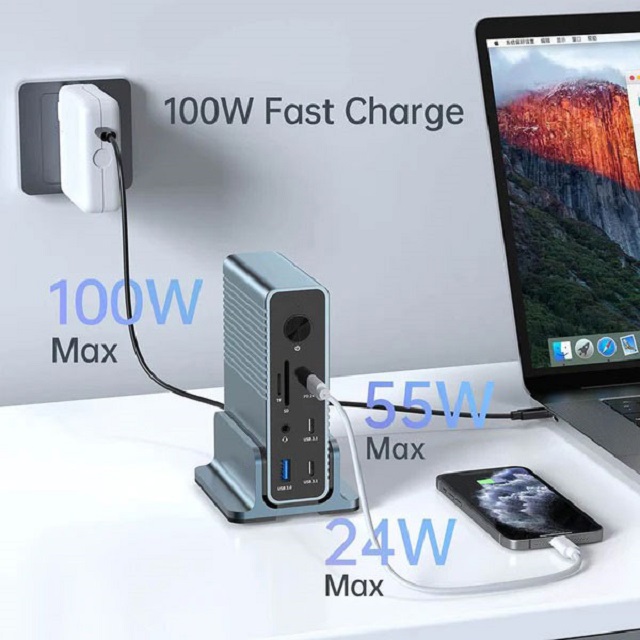
Fast and safe charging speeds are almost always preferred, and this alone makes USB-C charging cables a better choice. According to Business Insider, when connecting a traditional charging cable to a phone, it can charge at most 30% in 30 minutes. In contrast, a suitable USB-C charging cable can charge up to 55% (or even more!) in the same 30 minutes.
This difference is mainly because USB-C cables generally have a higher power transmission capacity than USB Type A and B. Therefore, USB-C cables can transfer more power to compatible electronic devices, directly translating into faster charging speeds.
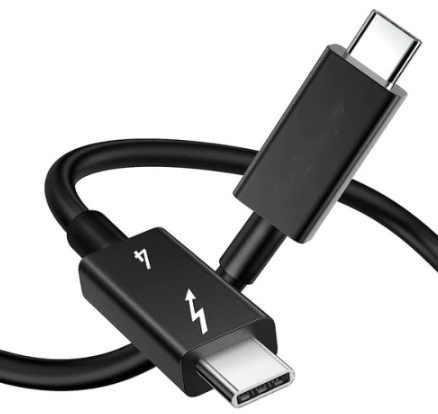
Take our excellent USB-C to USB-C charging cable as an example. Our built-in electronic marker chip ensures that users get the optimal power output, enabling fast charging and data transmission (up to 480Mbps). Moreover, the sturdy and flexible connecting cable provides a stable power supply to the connected devices, making it an ideal charging cable for numerous devices!
Port Compatibility: Widely Adaptable to New Trends
Although USB Type A and Type B have been around longer than USB Type-C, the latter is rapidly gaining public recognition. In fact, in 2019, the market value of USB Type-C cables rose to $7.9 billion. So, it can be said that USB-C connecting cables are the new "darlings" in the hotel (metaphorically referring to the tech world) of the past decade.
Nowadays, an increasing number of digital companies (such as Intel, Xiaomi, Apple, etc.) are producing products with built-in Type-C cable compatibility. USB-C ports are gradually being added to more devices, with the goal of eventually replacing traditional USB-A ports.
Therefore, purchasing devices compatible with USB-C or buying USB-C adapters might be a good idea so that you won't miss out on the benefits of using USB-C.
Data Transmission Capacity: Efficient Synchronization without Delay
In the USB field, data transmission capacity refers to the rate and limitations of transferring data files (such as videos, audio, or documents) from one device to another through a USB cable connection.
Most USB-C charging cables are designed to support multi-line data transmission, enabling higher data transmission rates, which result in faster performance and more efficient data synchronization.
In fact, USB-C cables are commonly used to transmit and play high-resolution 4K and 8K videos on large screens such as TVs or in-car displays without any annoying delays.
Additionally, processes like backing up photos from your phone to your desktop can be seamlessly completed in just a few minutes.
USB-C charging cables are becoming the mainstream choice for charging and data transmission of electronic devices due to their unique design, fast charging, wide compatibility, and efficient data transmission. With the continuous development of technology, it is believed that USB-C will showcase its powerful charm in more fields and bring more convenience to our lives.