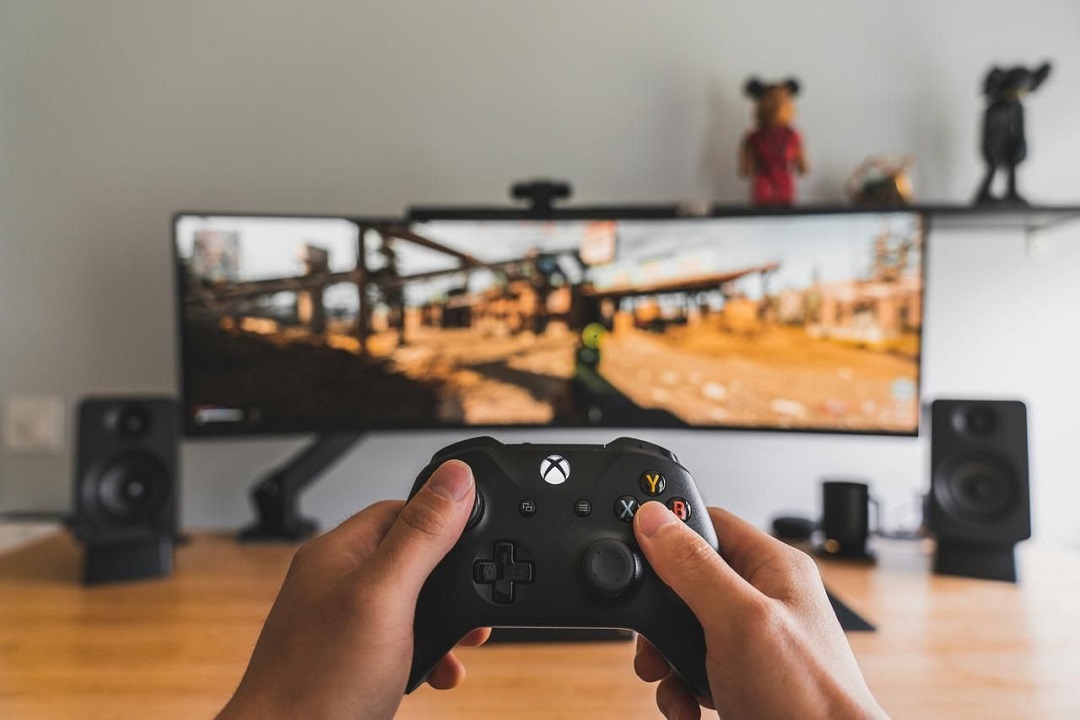
For years, DisplayPort has been the go-to choice for gamers and users of high-refresh-rate monitors, such as 144Hz 4K displays, due to its superior data and audio connectivity capabilities. Boasting a higher data rate than HDMI 2.0, DisplayPort excels in handling complex data streams, a trend that persisted even in 2022. While HDMI 2.1 emerged as a potential competitor, devices supporting it remained scarce, confined primarily to high-end GPUs and monitors.
The next iteration, DisplayPort 2.0, is currently under development. However, DisplayPort 1.4 stands as the current pinnacle of the standard. Despite its age, DisplayPort 1.4 continues to offer one of the most robust feature sets and specifications among display connectors, rivaled only by the most advanced alternatives.
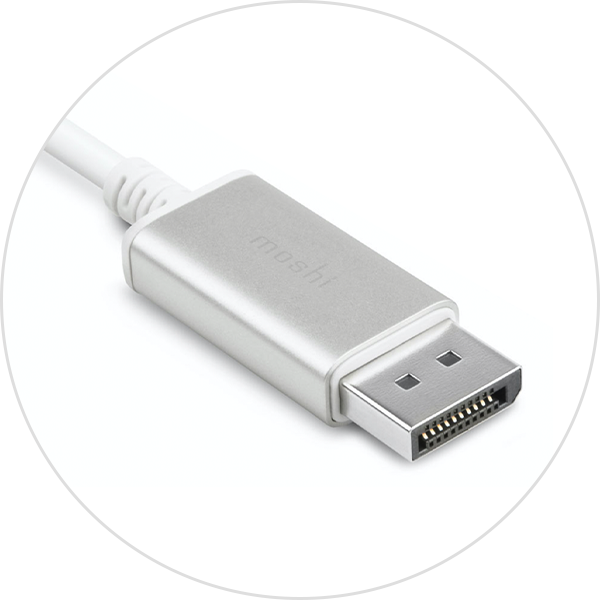
DisplayPort 1.4 is a digital display interface developed by the Video Electronics Standards Association (VESA). First released in March 2016, DisplayPort 1.4 builds upon the solid foundation laid by its predecessor, DisplayPort 1.3, without introducing new transmission modes or increasing available bandwidth or data rates. It offers a maximum total bandwidth of 32.4Gbps and a maximum total data rate of 25.92Gbps, enabling it to handle demanding resolutions and refresh rates, including 4K UHD streams at up to 120Hz with 24-bit/pixel color depth, or 5K displays at up to 60Hz with 30-bit/pixel color depth. It even supports 8K video, albeit at a reduced frame rate of up to 30Hz due to the immense bandwidth requirements.
The DisplayPort 1.4 interface resembles a USB port but is slightly larger and features a unique, angled corner for easy identification. It is designed to fit snugly into ports, ensuring a stable connection, and often includes a locking mechanism to prevent accidental disconnection.
Using DisplayPort 1.4 is straightforward. Simply connect one end of a DisplayPort cable to the DisplayPort output on your computer or gaming console, and the other end to the DisplayPort input on your monitor or TV. If your devices are powered on and set to the correct input, the video signal should appear on the screen without any additional setup.
DisplayPort 1.4 in Action
DisplayPort 1.4 plays a crucial role in various scenarios requiring high-resolution video and audio transmission. Gamers rely heavily on it for its ability to deliver smooth, clear visuals that keep pace with the rapid developments in modern gaming, providing an immersive experience free from lag and stuttering. This high performance also makes it indispensable for professionals like graphic designers and video editors, who demand precision and attention to detail in their imagery.
DisplayPort 1.4 is also commonly used in office and educational environments to connect computers to projectors or monitors. Its compatibility with high-resolution displays enables clear presentations and content sharing. Essentially, DisplayPort 1.4 is a versatile, high-performance connection suitable for a wide range of applications, from gaming and entertainment to professional and educational use, making it the preferred choice for those in need of reliable, high-quality display solutions.
Advancements and Benefits of DisplayPort 1.4
DisplayPort 1.4 offers numerous advantages and advancements that make it a compelling display technology. With its maximum total bandwidth of 32.4Gbps and maximum total data rate of 25.92Gbps, it can handle demanding resolutions and refresh rates with ease. One of its most significant features is the introduction of Display Stream Compression 1.2 (DSC) support, which enables visually lossless encoding of higher resolutions and HDR content. This means that with DisplayPort 1.4 and DSC, users can enjoy 4K resolutions at up to 120Hz with 30-bit/pixel color depth and HDR, or 8K resolutions at up to 60Hz.
Additionally, DisplayPort 1.4 supports Dual-Mode DVI and HDMI adapters, allowing users to connect HDMI or DVI displays to a DisplayPort source. It also offers improved support for HDR10 metadata and Forward Error Correction (FEC), ensuring noise-free transmission. These enhancements enable users to enjoy superior visual quality and seamless connectivity when using DisplayPort 1.4.
In the audio realm, DisplayPort 1.4 has made significant strides. It increases the maximum audio sampling rate from 768kHz to 1,536kHz and boosts the maximum number of audio channels from 8 to 32. These enhancements provide a richer audio experience for users seeking high-quality sound, making DisplayPort 1.4 an ideal choice for multimedia professionals, content creators, and audio enthusiasts.
Moreover, DisplayPort 1.4 includes features like Multi-Stream Transport (MST), which allows multiple displays to be connected via a single cable, and Forward Error Correction (FEC) for reliable data transmission. The interface can also be utilized via USB-C, offering a single-cable solution for video, data, and power, thereby simplifying device connectivity and enhancing user convenience.
In summary, DisplayPort 1.4 offers a range of advantages and improvements that make it an attractive display technology. With its high bandwidth, support for DSC, enhanced compatibility with adapters, and audio enhancements, DisplayPort 1.4 is the preferred choice for users seeking high-resolution, high-refresh-rate displays and superior audio performance.