In the current era of rapid technological advancement, various HDMI devices play crucial roles in the display field. However, an HDMI splitter cannot extend the display range; it is merely one of many HDMI signal replication devices. Other technologies that can achieve functions such as extension, amplification, mirroring, and display include HDMI extenders, adapters, and wireless HDMI. For instance, HDMI extenders utilize Cat 5 cables for indoor wiring, enabling the transmission of HDMI signals over longer distances. Wireless HDMI, on the other hand, can replicate images without the need for cables. Next, we will delve into how to achieve large-screen viewing by extending the display of source devices (such as laptops, tablets, and mobile phones).
HDMI Extended Display: What You Need to Know
Display Demands in the Tech Era
Living in the tech era, we constantly upgrade our devices, but our demands also grow accordingly. After purchasing a small laptop for convenient mobile office work, the small screen may strain our eyes, making a large screen a necessity. Similarly, for devices like Blu-ray players, PCs, PS4s, and Xboxes, whether or not an HDMI splitter is used, multi-screen extended display can bring more comfort and enjoyment.
Definition of HDMI Extended Display
"HDMI extended display" refers to the expansion of display across multiple monitors. With the help of a dual-monitor adapter, the source image from a laptop or desktop computer can usually be extended to multiple monitors without the need for an additional graphics card.
Detailed Explanation of Various HDMI Devices
HDMI Extender
An HDMI extender can extend the signals from source devices such as Blu-ray players and cable TVs and send the displayed content to a TV or monitor. Since standard HDMI cables degrade signal quality during long-distance transmission, and the problem becomes more pronounced when the number of output devices increases, HDMI extenders use Cat 5 cables for connection, allowing A/V signals to reach their destinations without loss. However, although these cables can transmit signals over long distances with the help of extenders, they also have limitations. Their refresh rate cannot exceed 60 FPS, making HDMI extenders unsuitable for competitive gamers who pursue 4k@120 Hz image quality. Moreover, establishing a connection using an extender is not plug-and-play.
HDMI Splitter (Mirroring Only, No Extension)
An HDMI splitter can conveniently split and mirror signals to different screens. Setting up a splitter is not straightforward, and to avoid overcomplicating matters, we will not elaborate on it in detail here. Unlike HDMI extenders, HDMI splitters are relatively inexpensive, but getting them to work properly in one go is not easy and tests the user's patience.
Wireless HDMI
Wireless HDMI operates in the same way as traditional HDMI cables, except that it does not require cables and is relatively easy to install. It consists of two components: a transmitter and a receiver. The transmitter sends signals, and the receiver receives them, making it a good choice. However, for gamers, it is not only a waste of time but also money, and its practicality is low.
Reasons Why HDMI Splitters Cannot Extend Displays
As mentioned earlier, HDMI splitters do not have a mechanism for extending displays. They split audio and video and send the same image and sound to other screens. Nevertheless, HDMI splitters do not impose a high cost on users. Here, we need to mention High-Bandwidth Digital Content Protection (HDCP), a feature that prevents content theft. Most graphics cards, TVs, and streaming devices on the market come with HDCP protection, and companies need to pay substantial fees to obtain HDCP certification. Simply put, HDMI transmitters and receivers must be HDCP-certified for continuous digital communication; otherwise, they will receive HDCP error messages. If HDMI accessories are used for conversion, they must be HDCP-certified, which requires spending money, but manufacturers often avoid mentioning this. HDMI splitters take advantage of an HDCP loophole known as "fallback." When a signal passes through an HDCP-incompatible splitter, the screen does not go black but "falls back" to a lower resolution. For example, a 1080p signal is split into two mirrored 720p screens. If reducing the resolution meets the requirements, an HDMI splitter is a good choice, and it can also achieve 4k video quality.
Mirroring or Extending the Screen from USB-C Devices
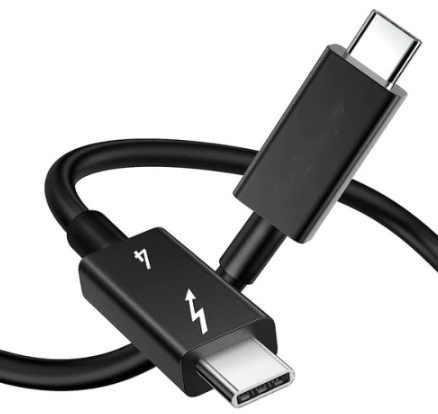
USB-C technology offers significant advantages, prompting the continuous update of many problem-solving accessories. Using USB-C accessories that comply with the HDCP 2.2 standard allows for immediate mirroring of laptop, tablet, and mobile phone screens. USB-C to HDMI cables can mirror as many screens as there are USB-C ports on the source device and support 4k and UHD video formats. For workaholics who pursue ultimate productivity and entertainment experiences, an eight-in-one USB-C hub is an ideal choice. In addition to supporting HDMI extended display and mirroring modes, it also provides SD card, USB, and HDMI ports, making it a precise professional-grade connection tool.