External storage has shifted from a convenience to a core part of modern workflows—video editors offload 4K footage in the field, IT teams clone system images on-site, and developers carry full virtual machines between offices. The right SSD enclosure determines whether that data moves at 80 MB/s or 2,800 MB/s, and whether your drive throttles after ten minutes or runs cool through a 500 GB transfer. This guide walks through the protocols, specifications, and real-world trade-offs that separate a usable enclosure from one that will frustrate you within a month.
Table of Contents
• What Is an SSD Enclosure and How Does It Work?
• M.2 SSD Enclosure vs 2.5" SATA Enclosure: Key Differences
• NVMe SSD Enclosure: Why Speed Matters and What to Expect
• NVMe M.2 SSD Enclosure Buying Guide: 6 Critical Specs
• Real-World Performance: Benchmark Insights and Thermal Behavior
• Common Pitfalls and Compatibility Issues to Avoid
• Use Case Recommendations: Which Enclosure for Which User?
• FAQ
What Is an SSD Enclosure and How Does It Work?
An SSD enclosure is an external housing that converts an internal solid-state drive into a portable USB or Thunderbolt device. Inside, a bridge controller chip translates the drive's native protocol—either SATA or NVMe—into a USB Mass Storage or USB Attached SCSI (UASP) command set the host computer can recognize. Without this translation layer, no ssd enclosure could expose internal storage to a standard external port.
The bridge controller is the most important component most buyers ignore. Chips like the JMicron JMS583, ASMedia ASM2362, and Realtek RTL9210B each handle NVMe-to-USB translation differently, with measurable differences in sustained throughput, command queue depth, and TRIM passthrough support. A premium drive paired with a weak controller will perform no better than a mid-tier SATA setup.
Author's note: Throughout a decade of evaluating storage hardware, the single most consistent predictor of long-term reliability has been the bridge chip and the quality of its firmware—not the brand printed on the aluminum shell.
M.2 SSD Enclosure vs 2.5" SATA Enclosure: Key Differences
The choice between an M.2 form factor and a traditional 2.5-inch SATA case is a choice between two generations of storage architecture. SATA III tops out at 6 Gbps (roughly 550 MB/s real-world), while NVMe over PCIe 3.0 x4 can theoretically reach 3,940 MB/s. The enclosure interface itself becomes the next bottleneck.
|
Specification |
2.5" SATA Enclosure |
M.2 SATA Enclosure |
NVMe M.2 Enclosure |
|
Underlying protocol |
SATA III (AHCI) |
SATA III (AHCI) |
NVMe (PCIe) |
|
Theoretical max speed |
6 Gbps (~550 MB/s) |
6 Gbps (~550 MB/s) |
32 Gbps+ (PCIe 3.0 x4) |
|
Typical USB interface |
USB 3.0 / 3.2 Gen 1 |
USB 3.2 Gen 1 |
USB 3.2 Gen 2 / Gen 2x2 / USB4 |
|
M.2 key compatibility |
N/A |
B-key / B+M-key |
M-key / B+M-key |
|
Heat output |
Low |
Low to moderate |
Moderate to high |
|
Typical price tier |
Entry |
Entry |
Mid to premium |
For users still working with older 2.5-inch SSDs, a SATA enclosure remains a sensible, low-cost option. For anyone purchasing a drive today, an m.2 ssd enclosure paired with the correct protocol unlocks substantially better performance headroom.

NVMe SSD Enclosure: Why Speed Matters and What to Expect
The NVMe protocol was designed from the ground up for non-volatile memory, replacing the legacy AHCI command structure that SATA inherited from spinning disks. According to the NVM Express specification, NVMe supports up to 64,000 command queues with 64,000 commands each, compared to AHCI's single 32-command queue. In practical terms, this means an nvme ssd enclosure handles parallel workloads—simultaneous reads, writes, and metadata operations—dramatically more efficiently.
However, the external interface caps what you actually receive:
• USB 3.2 Gen 2 (10 Gbps): ~1,050 MB/s sustained, the most common tier
• USB 3.2 Gen 2x2 (20 Gbps): ~2,000 MB/s, Windows-only in most cases
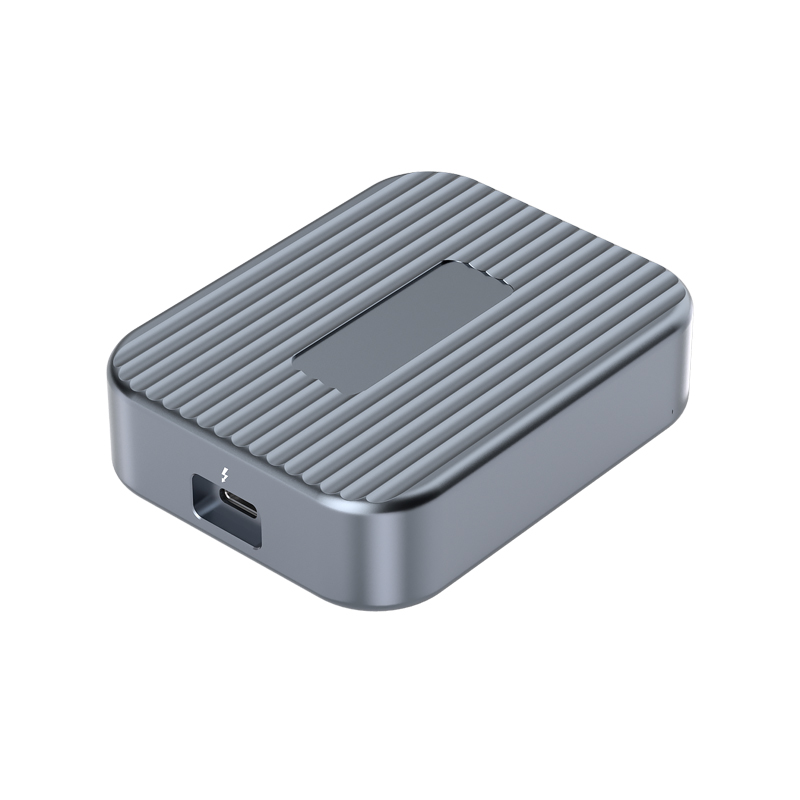
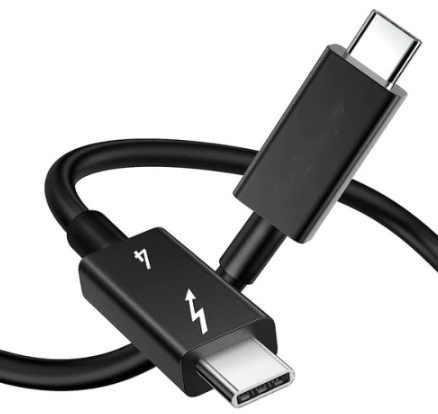
• USB4 / Thunderbolt 3 & 4 (40 Gbps): 2,800–3,000 MB/s, the current ceiling for portable storage
The PCI-SIG and USB Implementers Forum publish full specifications for these standards, and verifying a product against those documents—rather than marketing claims—is the most reliable validation method.
NVMe M.2 SSD Enclosure Buying Guide: 6 Critical Specs
Selecting an nvme m.2 ssd enclosure involves more variables than the headline transfer rate. Six specifications consistently determine real-world satisfaction:
1. Bridge controller chip: Look for documented chips (JMS583, ASM2362, RTL9210B). Unspecified controllers often indicate cost-cutting.
2. M.2 key compatibility: Confirm M-key support for NVMe drives; some budget cases support only B-key SATA M.2 modules.
3. PCIe lanes supported: Most enclosures expose only PCIe 3.0 x2 internally—even with USB 3.2 Gen 2x2 outside—creating a hidden bottleneck.
4. UASP and TRIM support: UASP enables command queuing over USB; TRIM passthrough preserves long-term SSD health.
5. Thermal design: Aluminum housing, thermal pads, and graphene sheets are not equivalent. Heat dissipation directly governs sustained performance.
6. Cable and port quality: A USB 3.2 Gen 2x2 enclosure shipped with a 5 Gbps cable is a surprisingly common defect.

Real-World Performance: Benchmark Insights and Thermal Behavior
Synthetic benchmarks from CrystalDiskMark or AmorphousDiskMark capture peak performance, but sustained workloads expose the limitations that matter. Based on typical industry benchmarks reported by outlets such as Tom's Hardware and AnandTech, a USB 3.2 Gen 2 enclosure paired with a mainstream PCIe 3.0 NVMe drive will read at roughly 1,050 MB/s for the first 30–60 seconds.
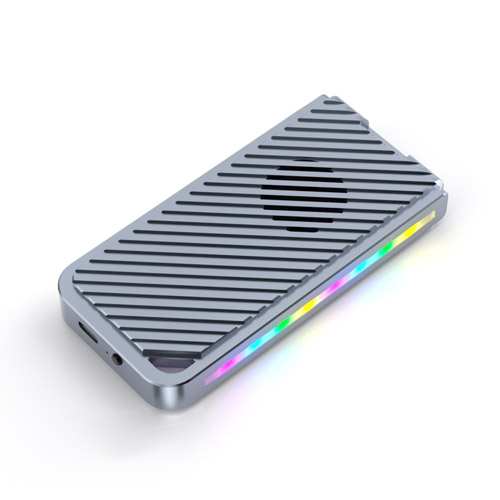
In practical testing scenarios, the picture shifts. During a continuous 500 GB write transfer, a typical aluminum-shell enclosure surface temperature rises from ambient to approximately 55–60 °C, at which point the drive's own thermal throttling reduces write speeds by 30–50 percent. Enclosures equipped with active cooling fans, or those incorporating a heatsink with substantial fin area, sustain peak speeds two to three times longer.
Thermal behavior also depends on host conditions. The same enclosure tested on a laptop in a 28 °C ambient environment will throttle noticeably earlier than on a desktop in a climate-controlled room. This is a physical limitation, not a product defect, and any honest review accounts for it.
Common Pitfalls and Compatibility Issues to Avoid
Several recurring issues account for the majority of negative user experiences:
• Protocol mismatch: Inserting an NVMe M-key drive into a SATA-only B-key enclosure—or vice versa—is the most frequent return reason. The drive will not be detected.
• Host port limitations: A 20 Gbps enclosure connected to a USB 3.2 Gen 1 (5 Gbps) port will operate at the lower speed regardless of cable rating.
• macOS and USB 3.2 Gen 2x2: Apple has not implemented Gen 2x2 in macOS as of this writing; users seeking maximum portable speed on Mac should evaluate Thunderbolt or USB4 options instead.
• Firmware-locked TRIM: Some bridge controllers do not pass TRIM commands, which can degrade drive longevity over months of heavy use.
• Cable assumptions: USB-C connectors look identical regardless of speed rating. Always verify the cable specification matches the enclosure.
Limitation note: No external SSD enclosure—regardless of price—matches the latency or sustained throughput of an internal PCIe 4.0 or 5.0 drive. If your workflow requires sub-millisecond access to working files, internal storage remains the appropriate choice.
Use Case Recommendations: Which Enclosure for Which User?
• DIY enthusiast repurposing an older drive: A USB 3.2 Gen 2 m.2 ssd enclosure with a documented bridge chip provides the best price-to-performance ratio.
• Video editor working with 4K ProRes: A Thunderbolt 3/4 or USB4 enclosure justifies its premium through sustained write performance and Mac compatibility.
• IT professional cloning and deploying systems: Prioritize UASP support, broad host compatibility, and reliable TRIM passthrough over peak speed.
• Enterprise procurement for field teams: Look for ruggedized aluminum housing, documented thermal performance, and bulk warranty terms; a tested nvme m.2 ssd enclosure model deployed across a fleet reduces support overhead.
• Casual user transferring documents and photos: An NVMe enclosure is unnecessary. A 2.5" SATA case or even a USB flash drive meets the workload at a fraction of the cost.
Knowing when not to buy a high-end enclosure is as valuable as knowing when to invest in one.
Q1: Is an NVMe enclosure faster than a SATA one?
A1: Yes, substantially. An NVMe-based external case can reach 1,050–3,000 MB/s depending on the USB interface, while a SATA case caps at roughly 550 MB/s. The advantage only materializes if the host port and cable also support the higher speed.
Q2: Do all M.2 SSDs fit in any M.2 enclosure?
A2: No. M.2 drives use B-key, M-key, or B+M-key edge connectors. NVMe drives are M-key; SATA M.2 drives are typically B+M-key. Match the enclosure to the drive's key and protocol.
Q3: Can I use a USB 3.2 Gen 2x2 enclosure on a Mac?
A3: Not at full speed. macOS does not currently support the USB 3.2 Gen 2x2 protocol. Mac users seeking equivalent speeds should select Thunderbolt 3, Thunderbolt 4, or USB4 enclosures instead.
Q4: Do external SSD enclosures support TRIM?
A4: Some do, some do not. TRIM passthrough depends on the bridge controller and host operating system. Reputable manufacturers state TRIM support explicitly in their specifications.
Q5: Why does my external SSD slow down during large transfers?
A5: Almost always thermal throttling. The drive's controller reduces write speed once internal temperatures exceed roughly 70 °C. Better heat dissipation—aluminum housing, thermal pads, or active cooling—delays this point.
Q6: Is Thunderbolt worth the price premium over USB 3.2 Gen 2?
A6: For sustained heavy workloads (4K and 8K video editing, large dataset transfers, virtualization), yes. For routine backup and file transfer, the price difference rarely justifies the upgrade.
Q7: How long do external SSDs typically last?
A7: Drive lifespan is governed by the SSD itself, not the enclosure. Mainstream consumer NVMe drives are rated for 300–600 TBW (terabytes written), which translates to roughly five to ten years of typical use.
Choosing the right ssd enclosure comes down to matching three layers: the drive's protocol, the host port's bandwidth, and the cable connecting them. An M-key NVMe drive paired with a USB 3.2 Gen 2 case and a certified cable delivers excellent everyday performance; users with demanding sustained workloads should evaluate Thunderbolt or USB4 options and pay close attention to thermal design. Verify the bridge controller, confirm UASP and TRIM support, and treat marketing speed claims as the ceiling rather than the floor. Done well, this small piece of hardware quietly extends the useful life and flexibility of every drive it houses.