I. Core Concepts of Memory Cards
A memory card is an independent, non-volatile flash storage medium heavily utilized across diverse digital ecosystems, including smartphones, digital cameras, portable computers, and IoT devices. Renowned for their compact form factor and plug-and-play functionality, digital memory cards offer a streamlined approach to capacity expansion. Their standardized interfaces ensure high compatibility, making them an ideal solution for rapid data exchange between different hardware platforms.
II. Classification of Flash Memory Cards
The term "multimedia flash memory card" encompasses a broad spectrum of form factors engineered for specific hardware requirements. While standard SD (Secure Digital), MicroSD (historically TF or T-Flash), and CF (CompactFlash) dominate the current consumer landscape, the evolutionary timeline includes a total of nine primary formats: CF, MMC, SD, MINI-SD, RS-MMC, T-Flash, MS (Memory Stick), MS PRO, and MS Duo. Each classification features distinct pin configurations, bus interfaces, and physical dimensions tailored to different eras of digital equipment.
III. Internal Storage vs. External Memory Cards
It is common to conflate built-in device memory with removable storage. Understanding the technical distinction is crucial for hardware management:
Internal Memory (ROM/Storage): This refers to the embedded memory chips soldered directly onto a device's motherboard (such as a smartphone's internal storage). It defines the baseline, non-removable capacity dictated by the manufacturer.
External Memory Card: This is an independent flash memory module purchased separately to augment the existing storage capacity. It acts as a modular hardware expansion rather than a core system requirement.
VI. Strategic Purchasing Criteria
Acquiring the correct storage media requires evaluating hardware specifications rather than relying on generalized marketing claims.
Assess Capacity Pragmatically: Scale the storage volume to your actual workflow. Selecting oversized capacities unnecessarily inflates costs. Furthermore, flash memory operates on limited read/write cycles; an oversized, underutilized card does not bypass this hardware lifespan.
Align Speed with Hardware Bottlenecks: Do not blindly pursue the highest-tier speed classes (e.g., UHS-II or V90) unless your equipment requires it. A digital camera's burst shooting performance is bottlenecked by its internal CPU processing, analog-to-digital conversion rate, and buffer size. A high-speed card cannot bypass a slow internal buffer.
Avoid Counterfeit Media: Counterfeit hardware frequently features poor manufacturing tolerances, such as misaligned contact pins, uneven housing, or blurred typography. These substandard modules often use manipulated firmware to report false capacities (fake-capacity cards), leading to catastrophic data loss.
Match the File System Architecture: Modern high-capacity cards predominantly utilize the exFAT or FAT32 file systems. When deploying cards for contemporary mobile devices, audio-visual equipment, or portable computers, ensure the file system aligns with the host device's OS. For legacy digital cameras, verify whether the hardware requires a FAT16 or FAT32 architecture before formatting.
V. Professional Data Recovery Procedures
In the event of accidental deletion or directory corruption, immediately cease all write operations to the card to prevent data overwriting. Follow a standardized recovery workflow:
1. Procure Recovery Software: Install a reputable, professional-grade data recovery utility on your workstation.
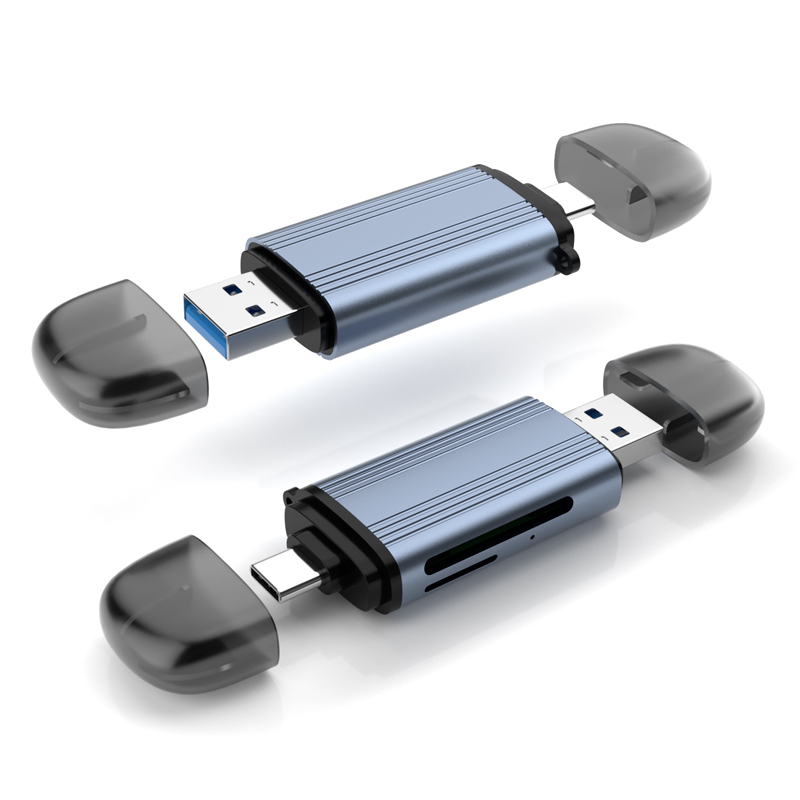
2. Establish a Stable Connection: Interface the memory card with the computer using a high-quality USB docking station or a dedicated card reader to ensure stable data transmission. Two logical drives will typically appear: the host computer's drive and the removable storage.
3. Configure the Scan: Launch the recovery utility and specify the designated memory card as the target directory.
4. Execute Deep Scan: Allow the software to map the file allocation table and identify fragmented or deleted sectors.
5. Preview and Extract: Upon completion, the interface will display recoverable files. Note that highly compressed or large files (like RAW images or extensive archives) may not generate an instant visual preview. Select the required directories and execute the recovery command, ensuring the output destination is your local hard drive, never the corrupted memory card itself.
VI. Troubleshooting Formatting Failures
When a storage volume suffers from logical errors or becomes inaccessible, a system format is often required to rebuild the file structure.
1. Connect the memory card to the computer using a reliable card reader.
2. Navigate to the operating system's file explorer (e.g., "This PC" on Windows).
3. Right-click the designated removable disk drive and select "Format" from the context menu.
4. Verify the capacity and select the appropriate file system. Click "Start." A prompt will warn that the operation will erase all sector data. Confirm the prompt to initialize the formatting sequence. If standard OS formatting fails, utilizing a command-line tool (like Diskpart) or a low-level formatting utility may be necessary.