In today’s remote-work era—where lightweight devices and multitasking have become the norm—docking stations have stepped into the spotlight as essential accessories for laptop users. Beyond expanding ports and simplifying cable management, one question is asked more often than any other:
Can a docking station actually charge a laptop?
The short answer is yes.
Most modern USB-C and Thunderbolt docking stations support laptop charging through power passthrough. However, charging performance varies greatly depending on:
The dock’s power output
The charging protocol it supports
Whether your laptop is compatible
The cable you use
To help you avoid compatibility issues and choose the right dock, this guide walks you through everything you need to know.
How to Know If a Docking Station Can Charge Your Laptop
Not all docking stations are equipped for laptop charging. Keep these key factors in mind when evaluating any model.
1. Check for Power Delivery (PD) Support
Power Delivery (PD) is the standard charging protocol used in the USB-C and Thunderbolt ecosystem. A docking station must explicitly support PD in order to deliver power back to your laptop.
Before purchasing or connecting, confirm:
The dock explicitly states PD or USB-C charging support
The PD wattage meets your laptop’s mini-mum requirement
The host port supports power passthrough
Without PD support, a dock can transfer data and video but will not charge your device.
2. Verify the Dock’s Wattage Output
Each laptop has a recommended charging wattage:
Ultrabooks: 45W – 65W
Mainstream business laptops: 60W – 85W
MacBook Pro & performance laptops: 85W – 100W+
If the dock’s PD output is too low, you may experience:
Very slow charging
“Low power” warnings
Battery drain while plugged in
Some advanced 13-in-1 docking stations offer up to 160W total power, making them suitable even for high-performance models.
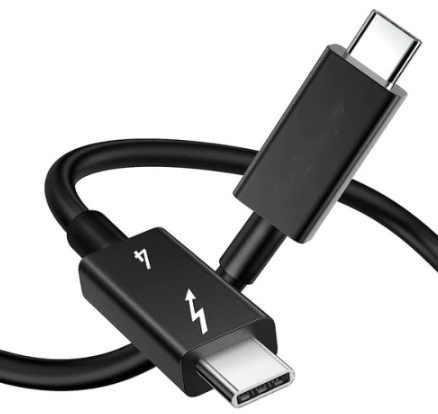
3. Use the Right Cable
A large number of charging problems come from using the wrong cable.
Make sure your cable:
Supports USB-C PD 100W or 240W
Or is a certified Thunderbolt 3/4 cable
Avoid basic USB-C data cables—they often lack power lines and will not deliver full charging wattage.
4. Keep Firmware and System Updated
Some docking stations rely on firmware or OS drivers for proper power negotiation. Outdated firmware may cause:
Unstable charging
Dropped connections
Failure to detect power delivery
Updating both your system and your dock improves compatibility and reliability.
5. Ensure Your Laptop Supports USB-C Charging
Not all laptops accept charging over USB-C. Older models or devices that require proprietary power adapters may block USB-C charging entirely.
If the laptop does not support PD input, no docking station can charge it.
How to Correctly Use a Docking Station to Charge a Laptop
Once you’ve confirmed your dock supports power delivery, follow these steps for optimal setup.
Step 1: Connect the Dock to a Stable Power Source
The dock must be powered before it can charge the laptop. Plug it into a wall outlet using the supplied power adapter.
Step 2: Connect Your Laptop with a PD-Capable Cable
Use a USB-C or Thunderbolt cable that explicitly supports power delivery. Connect it to the dock’s host port (often labeled “Computer,” “Host,” or “USB-C Upstream”).
Step 3: Connect Your Peripherals
Now you can add monitors, Ethernet, hard drives, keyboards, and other accessories. The dock will manage both data and power simultaneously.
Step 4: Check the Charging Indicator
Most laptops show a charging icon in the system tray (Windows) or menu bar (macOS). Verify your device is drawing power.
Step 5: Troubleshoot If Necessary
If the laptop is not charging, check:
Whether the dock is receiving power
Whether the cable supports PD
If any high-power peripherals are draining available wattage
If firmware or OS updates are available
Why Your Docking Station Might Not Charge Your Laptop
Common causes include:
Insufficient wattage: The dock doesn’t meet your laptop’s power requirement
Weak power supply: The dock’s power adapter is under-powered
Incorrect cable: The cable doesn’t support PD
Peripheral overload: Too many power-hungry devices connected
Laptop incompatibility: The system doesn’t support USB-C charging
Firmware/software issues
How to Choose the Right Docking Station for Charging
Consider the following factors before purchasing:
Power Output (Critical Factor)
Match or exceed your laptop’s required wattage:
65W → Standard ultrabooks
100W → High-performance laptops
150W+ → Heavy workloads and multi-device setups
Ports and Connectivity
Choose based on your workflow:
HDMI / DisplayPort for external monitors
USB-A/USB-C high-speed ports for storage
Ethernet for stable connections
SD/TF card readers for creators
USB-C vs Thunderbolt
USB-C docks → cost-effective, good for most users
Thunderbolt docks → highest speed, best for professional workflows
Conclusion
A docking station can charge a laptop—provided it supports USB-C PD, offers sufficient wattage, and is paired with the right cable. Choosing a high-quality USB-C or Thunderbolt dock not only keeps your laptop powered but also helps reduce cable clutter, enhance productivity, and streamline your workspace.
Frequently Asked Questions (FAQs)
Q1: Can any docking station charge a laptop?
No. Only models with USB-C Power Delivery can provide charging.
Q2: Why is my laptop charging slowly through a docking station?
Likely due to insufficient wattage, too many peripherals, or a non-PD cable.
Q3: Will connecting multiple devices affect charging speed?
If the dock has enough power budget, no. Otherwise, charging may slow down.