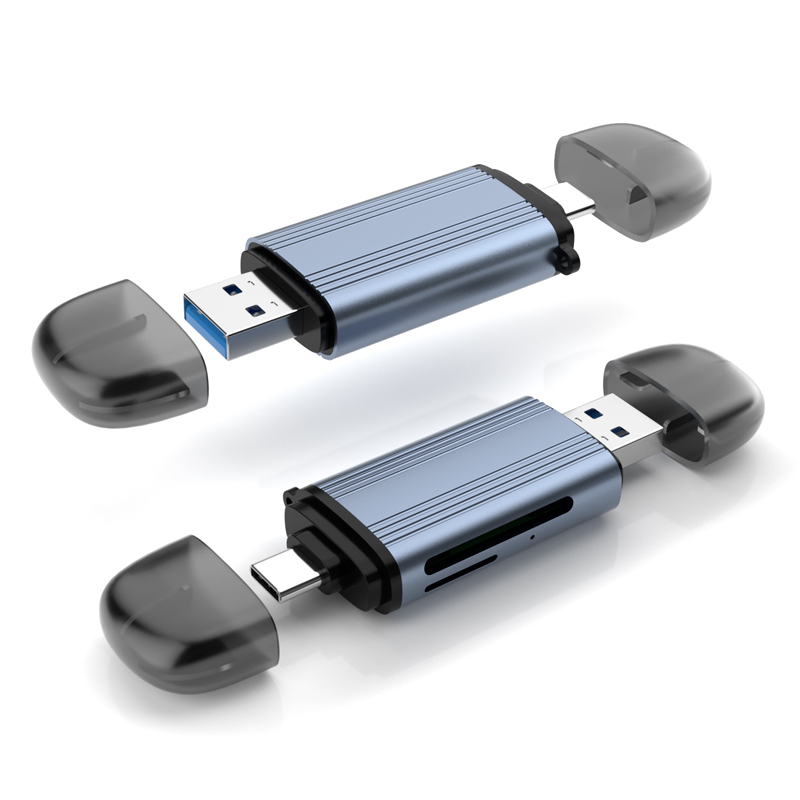
iPhones are renowned for their stylish designs, but they often sacrifice expandable storage space. However, with the Purplelec 2-in-1 USB-A 3.0/USB-C/SD card reader, you can easily access and transfer files from SD or TF (MicroSD) cards. Whether you're a photographer, traveler, or social media enthusiast, this guide will walk you through how to use this versatile tool on your iPhone and share some practical scenarios to fully leverage its potential.

I. Ensure Compatibility
First, confirm that your iPhone supports external storage. This requires iOS 13 or later, which introduced native support for external drives through the "Files" app. The CABLETIME card reader is designed for iPhones equipped with Lightning or USB-C ports, such as the iPhone 15 series or earlier models using a Lightning-to-USB converter. It supports MicroSDHC, MicroSD, MicroSDXC, SD, SDHC, SDXC, and RS-MMC cards, making it suitable for storing a variety of files, from GoPro footage to DSLR photos. For optimal performance, format your SD/TF card as exFAT or FAT32, as iOS may not be compatible with NTFS-formatted cards.
II. Connect the Card Reader
1、Insert the SD/TF card into the corresponding slot on the card reader.
2、Connect the card reader to your iPhone:
For iPhones with a Lightning port, use the Lightning connector on the card reader.
For USB-C iPhones (e.g., iPhone 15), plug the USB-C end directly into your device.
Older iPhones may require a separately purchased Lightning-to-USB adapter.
The compact design of the card reader ensures portability, making it ideal for use on the go.
III. Access Files Through the "Files" App
Once connected, your iPhone will recognize the SD card as an external drive.
1、Open the "Files" app and navigate to the "Locations" section.
2、Select the SD card (usually labeled "No Name" or with the card's brand).
3、Browse through the folders to view, copy, or move files between your iPhone and SD card.
Pro tip: This feature allows you to transfer high-resolution photos or videos without being limited by iCloud storage.
IV. Import Photos Directly into the Photos App
For photographers, the Photos app offers seamless import functionality:
1、Open the Photos app.
2、Tap "Import" at the bottom of the screen.
3、Select the images or videos you want to transfer.
4、Choose "Import All" or specific files.
5、Open the Photos app and post to instantly share on Facebook, Instagram, or TikTok without needing iCloud as an intermediary. This method preserves metadata and avoids compression, making it ideal for RAW files.

V. Manage and Organize Files
1、Create folders on the SD card through the "Files" app to keep your data organized.
2、Drag important files from your iPhone's storage to the SD card for backup.
3、Safely eject: Before disconnecting the card reader, be sure to tap the eject icon next to the SD card in the "Files" app to prevent data corruption.
VI. Practical Application Scenarios
The USB card reader is not just for transferring files; it also offers crea-tive and practical uses:
Social Media Content Creation
Instantly share travel photos/videos: Import footage from a drone or GoPro via the SD card, edit it using CapCut or iMovie, and then post it to social media.
Backup live streams: Save recordings to the SD card during events and share highlights without depleting your iPhone's storage.
Expand Work or Travel Storage Space
Backup important files: Store contracts, presentations, or PDFs on the SD card for easy access anytime.
Travel with ease: Unload vacation photos daily to free up space on your iPhone, perfect for long trips.
Cross-Platform Collaboration
Share files between iPhone, Android, and PC: Extract files from an Android phone's MicroSD card, edit them on your iPhone, and then transfer them to a laptop via USB-A/USB-C.
Content Creator's Toolkit
Edit high-resolution videos: Transfer 4K footage from your camera to your iPhone for mobile editing.
Store project files: Keep large assets (music, templates) on the SD card to avoid cluttering your phone.
Backup and Security
Create physical backups: Save copies of contacts, messages, or app data to the SD card as a failsafe.
VII. Troubleshooting Common Issues
1、Card Not Detected?
Ensure the card is fully inserted. If necessary, reformat the card as exFAT using a computer.
2、Slow Transfer Speeds?
Use a high-speed SD card (UHS-I or UHS-II) and avoid batch processing large files.
3、Unsupported File Types?
Install apps like VLC or FileExplorer to open files in special formats.
The Purplelec 2-in-1 SD card reader transforms your iPhone into a portable crea-tive hub, an efficient office tool, and a seamless sharing platform. Whether you're posting a Facebook update from a mountaintop or backing up important work files, this tool makes it easy for your iPhone to connect to expandable storage.