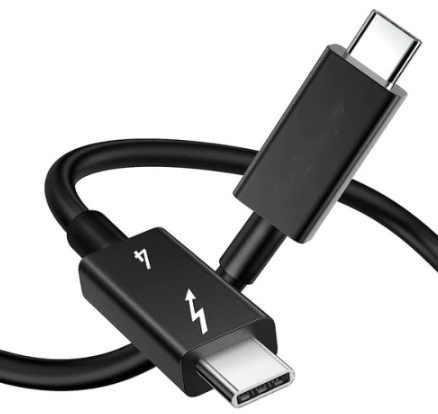
A USB-C docking station is not a passive port extender. It is an active interface system — a USB bridge, a DisplayPort or Thunderbolt retimer/multiplexer, and an independent Power Delivery controller, all sharing one cable. When people are unhappy with their dock, the usual cause is not the dock itself; it is a mismatch between what the host laptop's USB-C port can negotiate and what the dock is being asked to deliver. The first half of this article explains the mechanics — how a single cable carries video, data, and power at the same time. The second half turns that mechanism into a four-step buying decision and a short verification routine, so you can confirm the dock is delivering its rated specs on day one.
PURPLELEC has manufactured USB-C accessories, docking stations, and storage enclosures since 2008. The edge cases and failure modes described below reflect issues that recur across customer support tickets and OEM integration projects — not laboratory benchmark claims.
What Is a USB-C Docking Station, Really?
A USB-C docking station is a single-cable hub that consolidates display output, peripheral data, wired network, and laptop charging into one connection to the host laptop. Internally, three subsystems run in parallel: a USB hub controller (handling downstream USB devices), a display engine (either passing through DisplayPort Alt Mode signals or converting them to HDMI / DVI / VGA), and a Power Delivery controller (negotiating charge voltage and current with the host).
The common misconception is that plugging the dock in unlocks the rated speed of every port on its back panel. It does not. What the dock can deliver is bounded by what the host USB-C port supports — its protocol generation, its DP Alt Mode capability, and the wattage range it accepts as a PD sink. The dock then divides that ceiling across video, data, and power. A 100W, dual-4K, 10-port dock plugged into a laptop whose USB-C port only supports USB 3.2 Gen 1 and 60W input is, in practice, a 5 Gbps, single-display, 60W dock.
This is also the cleanest way to separate a USB-C dock from a USB-C hub: a hub has no independent power supply, no reverse PD to the host, and no multi-display engine. A dock has all three. Chassis size is irrelevant.
How Does a USB-C Docking Station Work?
A USB-C dock multiplexes a single USB-C link into video, data, and power by negotiating which protocol the host port runs (USB 3.2 over USB-C, USB4, or Thunderbolt), then allocating the cable's four high-speed differential lanes accordingly. Power Delivery is negotiated on a separate pair of pins before the data link comes up, so charging is independent of which protocol wins the data lanes.
USB-C: A Connector, Not a Performance Standard
USB-C describes the 24-pin physical connector. It says nothing about speed. The same connector can carry USB 3.2 Gen 1 (5 Gbps), USB 3.2 Gen 2 (10 Gbps), USB 3.2 Gen 2×2 (20 Gbps), USB4 (20 or 40 Gbps), Thunderbolt 3 (40 Gbps), Thunderbolt 4 (40 Gbps), or Thunderbolt 5 (symmetric 80 Gbps by default; up to 120/40 Gbps asymmetric in Bandwidth Boost mode). Two laptops with identical-looking USB-C ports may have completely different ceilings. Writing “USB-C 3.0” or “USB-C 3.1” is a category error — the correct way to describe a port is “USB 3.2 Gen 2 over USB-C” or “Thunderbolt 4 over USB-C.” When the host's port is mislabeled in marketing copy, you have to find the actual protocol in the laptop's spec sheet. (For the formal naming and bandwidth definitions, see the USB-IF USB4 specification; Thunderbolt naming and certification are maintained by Intel — see Intel — Thunderbolt technology.)
Lane Allocation: Where Bandwidth Actually Goes
The USB-C cable carries four high-speed differential pairs (“lanes”). How those lanes are assigned depends entirely on which protocol the host has negotiated:
| Host protocol |
Lane allocation |
Practical ceiling |
| USB 3.2 Gen 2 over USB-C |
2 lanes for USB data (other 2 unused) |
10 Gbps total downstream |
| USB 3.2 Gen 2 + DP Alt Mode (2+2) |
2 lanes USB, 2 lanes DisplayPort |
10 Gbps data + 1× 4K@60 Hz (DP 1.4) |
| DP Alt Mode (4 lanes) |
All 4 lanes DisplayPort, USB falls back to 2.0 (480 Mbps) |
1× 5K@60 Hz or 2× 4K@60 Hz via MST, no high-speed USB |
| USB4 / Thunderbolt 4 |
Dynamic, up to 40 Gbps shared |
Multiple 4K displays + 10 Gbps+ USB simultaneously |
This is the physical reason why opening a 4K display on a USB 3.2 Gen 2 dock often makes the SSD on the same dock slow down: the host has just reallocated two of its four lanes from USB data to DisplayPort. The dock did not throttle anything. The pipe got narrower.
DP Alt Mode: How Video Rides on USB-C
DisplayPort Alternate Mode (DP Alt Mode) lets four of the USB-C pins carry native DisplayPort signals instead of USB data. The host's GPU outputs DisplayPort, the dock re-times or splits it, and the monitor receives a standard DP stream. For this to work, three things all have to support DP Alt Mode: the host port, the cable, and the dock. A charge-only USB-C cable, which has no high-speed pairs wired through, will plug in and fail silently on the video side. (The DisplayPort standard and Alt Mode are maintained by VESA.)
A second subtlety: most USB-C docks do not have native HDMI outputs. The HDMI ports on the back are usually fed by a DisplayPort-to-HDMI conversion chip downstream of DP Alt Mode. This caps the output at HDMI 2.0 behavior in many cases — 4K@60 Hz is fine, but 4K@120 Hz or full HDMI 2.1 features are unstable or unsupported, regardless of what the spec sheet prints. If you need 4K@120 Hz, look for a dock with a DisplayPort output and use a DP cable, or confirm the HDMI port is fed by a true HDMI 2.1 transmitter (rare on docks below the Thunderbolt tier).
Power Delivery: Independent Negotiation, Not a Free Lunch
USB Power Delivery (PD) is handled by a dedicated PD controller on the CC (Configuration Channel) pins. PD negotiation completes before the high-speed data lanes initialize, which is why charging works on docks even when video does not. PD 3.0 tops out at 100W (20V/5A); PD 3.1 EPR (Extended Power Range) goes to 240W using 28V/36V/48V profiles. (The current PD specification is published by USB-IF.) Two numbers matter when reading a dock spec:
• PD input — what the dock's wall adapter can pull (the dock's own ceiling)
• PD output to host — what the dock can deliver upstream to the laptop
These are not the same number. A dock advertised as “100W PD” usually means 100W input. After the dock's own electronics and downstream ports take their share, what reaches the host is typically 85–90W. If your laptop's original charger was 96W, an 85W upstream feed will run it — but under heavy CPU/GPU load it will draw down the battery instead of charging, and you will see what looks like thermal throttling. It is usually power throttling.
Multi-Monitor: MST, SST, and DisplayLink
Three different mechanisms drive multiple external displays from one USB-C port, and they are not interchangeable.
• SST (Single-Stream Transport) — one DisplayPort stream per physical link, one monitor per stream. The default.
• MST (Multi-Stream Transport) — time-multiplexes multiple DisplayPort streams onto one DP link. The dock daisy-chains or splits them. Supported on Windows and Linux. Not supported on macOS. macOS will treat an MST hub as a single display and mirror it across all connected monitors. The only ways around this on a Mac are Thunderbolt docks (which use TB's multi-display controllers, not MST) or DisplayLink.
• DisplayLink — a third-party technology that encodes video frames into the USB data stream and decodes them on the monitor side. Requires a driver on the host. Works across Windows, macOS, and Linux. Trades GPU acceleration and latency for compatibility — fine for productivity, not ideal for gaming or HDR video.
A separate macOS limit worth flagging: M1 and M2 base-chip MacBook Air models support exactly one external display at the SoC level. No dock, MST, or Thunderbolt trick can give them a second native display — DisplayLink works because it bypasses the display controller. M3 MacBook Air supports two external displays only when the laptop lid is closed (clamshell mode); M4 MacBook Air supports two external displays with the lid open. (Apple documents the per-model external display limits in its official specifications — see Apple — How many displays can be connected to MacBook Air.)
How to Choose a USB-C Docking Station for Your Setup
Match the dock to your host port's protocol first, then to your workload (display count and resolution, peripheral mix, charging wattage), then verify before deploying. The order matters — a dock that exceeds the host's ceiling wastes money; a dock that falls short of the workload wastes time.
Step 1: Check Your Laptop's Host Port Capability
Open the laptop's official specification sheet (manufacturer site, not the retail page) and confirm four things for the specific USB-C port you plan to use:
1. Protocol generation. Look for “USB 3.2 Gen 2,” “USB4,” “Thunderbolt 3/4/5,” or a Thunderbolt lightning-bolt icon. If the spec only says “USB-C,” the port is almost certainly USB 3.2 Gen 1 or Gen 2 — assume 5 or 10 Gbps and no Thunderbolt features.
2. DP Alt Mode support. On some laptops only certain USB-C ports carry video. The spec will say “with DisplayPort 1.4” or “DP Alt Mode.”
3. PD sink wattage range. The accepted charging range — for example, “USB-C PD input, 45W minimum, 100W recommended.”
4. OS-level support for MST and DisplayLink. Windows/Linux: both work. macOS: MST does not work; DisplayLink works with a driver.
If any of these four are unclear, do not buy yet — ask the manufacturer or test with a borrowed dock. Most “dock doesn't work” support tickets trace to a host port that never supported the feature the user assumed it did.
Step 2: Match the Dock to Your Workload
Use this routing table:
| Workload |
Minimum host protocol |
Dock type |
| 1× monitor up to 4K@60 Hz + keyboard/mouse/USB drives |
USB 3.2 Gen 2 over USB-C + DP Alt Mode |
Standard USB-C dock |
| 2× 4K@60 Hz on Windows/Linux |
DP Alt Mode + DP 1.4 (for MST) OR USB4 / Thunderbolt 4 |
MST dock OR Thunderbolt/USB4 dock |
| 2× displays on M1/M2 MacBook Air |
Any USB-C with USB 3.2 data |
DisplayLink dock (mandatory) |
| 2× displays on M-series MacBook Pro |
Thunderbolt 3/4 |
Thunderbolt dock |
| Heavy data throughput (NVMe enclosures, 2.5/10 GbE) + video |
USB4 or Thunderbolt 4 |
Thunderbolt 4 / USB4 dock |
| Mixed corporate fleet (Windows + macOS) |
Lowest common denominator: USB4 or DisplayLink |
DisplayLink dock for OS-agnostic deployment |
The most common buying mistake is selecting an MST dock for a Mac. The second most common is buying a Thunderbolt dock for a host port that only supports USB 3.2 Gen 2 — the dock will work, but at a small fraction of its rated bandwidth.
Step 3: Calculate Required PD Output
Use this formula:
Required dock PD output to host = (laptop's original charger wattage) + 10–15W peripheral overhead
Then pick a dock whose advertised PD input is roughly 15W higher than that, because the dock itself consumes power.
Quick reference for common laptops:
| Laptop |
OEM charger |
Required upstream PD |
Buy a dock rated for |
| MacBook Air (M-series) |
30W |
≥ 45W to host |
≥ 65W PD input |
| MacBook Pro 14″ (M-series, base) |
67W |
≥ 80W to host |
≥ 96W PD input |
| MacBook Pro 14″ (M-series, Max) |
96W |
≥ 110W to host |
≥ 135W PD input (PD 3.1 EPR) |
| MacBook Pro 16″ |
140W |
≥ 155W to host |
PD 3.1 EPR dock, ≥ 180W |
| Dell XPS 13 / ThinkPad X1 Carbon |
65W |
≥ 80W to host |
≥ 100W PD input |
| Gaming laptops / mobile workstations with dGPU |
180W+ |
Dock cannot fully power under load |
Dock for data/video only; use OEM charger in parallel |
A laptop whose CPU and discrete GPU together draw more than the dock's output will slow-charge or net-discharge under load. This is not a defect; it is physics. For high-wattage gaming and mobile workstation laptops, plan to use the original charger in parallel with the dock.
Step 4: Audit the Spec Sheet for Hidden Limits
Three things to check before ordering:
1. HDMI port: native or converted? If the dock has both DisplayPort and HDMI outputs and the spec sheet says “HDMI 2.0,” the HDMI is almost certainly a DP-to-HDMI conversion. Anything advertised as “HDMI 2.1, 4K@120 Hz” on a non-Thunderbolt dock deserves a question to the seller about whether the port uses a true HDMI 2.1 transmitter chip.
2. Bus-powered or self-powered? Bus-powered docks (no DC barrel jack, no wall adapter) can only deliver 7.5–15W downstream — a 3.5″ hard drive will brown out. Choose self-powered for any setup with spinning HDDs, multiple bus-powered SSDs, or downstream charging.
3. Certifications. USB-IF certification means the dock has passed interoperability testing. FCC (US), CE (EU), UKCA (UK), and RoHS (materials) are baseline regulatory marks. For business purchasing, all four should be present.
How to Verify Your Dock Is Delivering What You Paid For
Five-step check on the day the dock arrives:
1. Re-confirm host port support. Open the laptop spec sheet (or System Information on macOS, Device Manager on Windows) and verify the USB-C port you are about to use lists DP Alt Mode and the PD wattage you need.
2. Power up in the correct order. Plug the dock's wall adapter into mains first, then connect monitors and peripherals to the dock, then plug the USB-C cable into the host laptop. Some PD controllers latch the wrong profile if the host is connected before the dock has DC power.
3. Read actual display output.
• Windows: Settings → System → Display → Advanced display. Confirm resolution and refresh rate per monitor.
• macOS: Apple menu → About This Mac → More Info → Displays (or System Information → Graphics/Displays). Confirm each monitor is listed with its native resolution.
4. Read actual PD input wattage.
• Windows: hover the battery icon; for a detailed report, run powercfg /batteryreport in PowerShell and open the generated HTML.
• macOS: System Information → Power → AC Charger Information. The “Wattage (W)” line is what the laptop is actually receiving.
5. Five-minute stress test. Copy a large file to a USB drive on the dock, play a 4K video on one external monitor, and watch for screen flicker, dropped frames, or SSD throughput collapse. If everything stays stable under combined load, the dock is delivering. If not, troubleshoot before deployment.
Three Common Problems and How to Fix Them
| Symptom |
Real cause |
Fix |
| Video flickers, drops frames, or refuses to wake |
Cable bandwidth too low (charge-only or USB 2.0 cable in use), or host's DisplayPort version below 1.4 |
Replace cable with a USB-IF Certified full-feature USB-C cable rated for the host's protocol; check host's DP version in spec sheet |
| Laptop slow-charges or net-discharges while docked |
Dock's upstream PD wattage is below the laptop's draw under load, or host is rejecting the PD profile |
Cross-check with the PD reference table above; if dock is correctly sized, the host port may need a firmware update from the laptop OEM |
| USB peripherals (drives, webcams, audio) disconnect intermittently |
USB hub bandwidth saturated, or high-draw peripheral plugged into an unpowered USB-A port |
Move high-bandwidth peripherals (external SSDs, 4K webcams) to USB ports labeled as self-powered or to the 10 Gbps ports; keep low-bandwidth peripherals on the slower ports |
If a dock fails all three tests after these fixes, the issue is usually a protocol mismatch (host port cannot actually negotiate what the dock requires), not a defective unit.
For B2B Buyers: What to Look for Beyond Specs
Selecting a dock SKU for a fleet adds dimensions an individual buyer does not weigh.
• Certification completeness. USB-IF, FCC, CE, UKCA, RoHS, and where applicable REACH should all be documented. Some procurement processes require certificate numbers at PO stage.
• Interoperability test records. A serious manufacturer can produce a compatibility matrix listing tested host models across Windows OEMs and Mac generations. Without this, deployment troubleshooting becomes per-user.
• OEM/ODM capability. For volume orders, the relevant questions are private label and packaging, firmware versioning and lock policy, accessory bundling, MOQ, lead time, and warranty (typically 1–3 years on docks, with a separate policy for cables).
Regulatory note for buyers: Docks sold into the US require an FCC Supplier's Declaration of Conformity (SDoC); into the EU, CE marking under the EMC Directive (2014/30/EU) and Low Voltage Directive (2014/35/EU); into the UK, UKCA marking; and into both the EU and UK, RoHS 2 (EU 2011/65/EU) restriction-of-hazardous-substances compliance. REACH (EC 1907/2006) applies for EU shipments above declared substance thresholds. Procurement teams should request Declaration of Conformity documents and supporting test reports at PO stage rather than at delivery.
PURPLELEC (博德越) is one such OEM/ODM supplier in Shenzhen, with 18 years of factory experience in USB-C accessories, docks, and storage enclosures. For procurement teams standardizing on a SKU, the deciding factor is usually not the spec sheet — it is whether the supplier can hold the same SKU stable across two years of fleet refresh.
Frequently Asked Questions
Q1: What's the difference between a USB-C docking station and a USB-C hub?
A1: A dock has three things a hub lacks: an independent power supply, reverse Power Delivery to charge the host, and a multi-display engine. A hub only splits one USB-C port into more ports and draws its power from the host. Chassis size does not determine which is which.
Q2: Why does my M1 MacBook Air only drive one external display through a dock?
A2: M1 and M2 base-chip MacBook Air models support exactly one external display at the SoC level. No dock, MST, or Thunderbolt method changes this. A DisplayLink dock with its driver installed is the only way to add a second display, because DisplayLink bypasses the display controller.
Q3: Why doesn't a 100W PD dock fully charge my laptop under load?
A3: “100W PD” usually refers to the dock's input from its wall adapter, not what reaches your laptop. After the dock's own electronics and downstream ports take their share, the host typically receives 85–90W. Under heavy CPU/GPU load, a laptop drawing more than that will net-discharge rather than charge.
Q4: Can a USB-C dock output 4K at 120 Hz over HDMI?
A4: On most non-Thunderbolt docks, the HDMI port is fed by a DisplayPort-to-HDMI conversion chip that behaves like HDMI 2.0, capping clean output at 4K@60 Hz. For 4K@120 Hz, use a DisplayPort output with a DP cable, or confirm the HDMI port uses a true HDMI 2.1 transmitter chip.
Q5: How do I find out what protocol my laptop's USB-C port actually supports?
A5: Check the manufacturer's official spec sheet (not the retail listing) for the specific port. Look for “USB 3.2 Gen 2,” “USB4,” or a Thunderbolt icon, plus “DP Alt Mode” / “DisplayPort 1.4” and a PD input wattage range. If it only says “USB-C,” assume USB 3.2 Gen 1 or Gen 2 with no Thunderbolt features.
Q6: Is Thunderbolt 4 always better than USB4 for a docking station?
A6: Not always. Thunderbolt 4 guarantees a minimum feature set (40 Gbps, dual 4K or single 8K, 32 Gbps PCIe) through Intel certification. USB4 allows a wider range — some USB4 ports match Thunderbolt 4, others cap lower. If your host is USB4 without Thunderbolt certification, match the dock to the host's actual negotiated capability rather than assuming parity.
A USB-C dock's real performance is set by the host laptop's port, not by the number of ports on the back of the dock. Confirm the host's protocol, DP Alt Mode support, and PD sink range first; match the dock to the actual workload using the routing table above; size the PD output by adding 10–15W to the original charger; then run the five-step verification on arrival. That sequence removes almost every category of dock-related complaint.
For deeper reading on the protocols touched on here, three related topics are worth understanding next: how Thunderbolt 4 compares with USB4, how DisplayLink differs from MST for multi-monitor setups, and how PD 3.1 EPR enables charging for high-wattage laptops.
This article focuses on protocol mechanics and selection logic; it is not a brand-by-brand dock comparison.