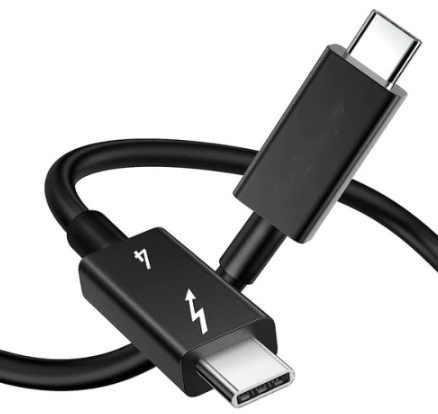
In the Apple ecosystem, the collaborative use of MacBook and iPhone can greatly improve work efficiency and entertainment experience. Mirroring the iPhone screen to MacBook via USB opens the door to seamless integration and collaboration across devices for users. Next, we will explore this operation method, its advantages, and how to optimize the USB-C connection experience of MacBook.
1. How to Mirror iPhone to MacBook via USB
Mirroring the iPhone screen to MacBook, using USB connection can get a more stable and low-latency experience. The specific steps are as follows:
Hardware connection: Use Lightning to USB-C or Lightning to USB-A cable to connect iPhone to MacBook. Make sure the cable is of good quality. If the cable is damaged or has poor contact, it may cause connection failure or instability.
Device authorization: On the iPhone, the system will pop up a prompt asking you to grant MacBook access to the device. Click to confirm the authorization. This step is necessary to ensure data security and the legitimacy of the device connection.
Mirroring operation: On MacBook, you can use the built-in QuickTime Player to capture and display the iPhone screen. After opening QuickTime Player, click "File" in the menu bar and select "New Movie Recording". The recording interface will appear. Click the small arrow next to the recording button and select the connected iPhone device to start mirroring the iPhone screen. In addition, you can also use third-party mirroring applications, such as "AirServer" and "Reflector". These applications usually have more personalized functions, such as recording mirror content and setting mirror image quality. After searching and downloading and installing relevant applications in the App Store, follow its prompts to complete the mirroring.
Enjoy cross-device collaboration: After completing the above steps, the iPhone screen content will be displayed on the MacBook in real time, realizing seamless cross-device integration and collaboration. Whether it is showing photos and videos in the iPhone, or operating iPhone applications for demonstrations, they can be clearly presented on the large screen of the MacBook.
2. Advantages and uses of mirroring iPhone to MacBook via USB connection
(I) Convenient content sharing
In work reports, project presentations and other scenarios, you can easily share the content on the iPhone, such as PPT presentations, important documents, and wonderful videos, to the larger MacBook display. Compared with displaying on the small iPhone screen, the large MacBook screen can show more details, allowing the audience to obtain information more clearly and improve the display effect.
(II) Enhanced collaboration and presentation
Allowing users to control both iPhone and MacBook devices at the same time is extremely useful in teaching demonstrations, team collaboration and other scenarios. For example, teachers can use MacBook to operate iPhone in class, display teaching applications, play educational videos, and use the keyboard and mouse of MacBook to annotate and explain, making the teaching process smoother and more natural; when discussing solutions, team members can use MacBook to control iPhone to display relevant data and cases, promote interactive communication, and improve collaboration efficiency.
(III) Expand iPhone functions
With the powerful processing power and ample storage space of MacBook, the functions of iPhone can be enhanced. For example, you can process high-definition photos and 4K videos taken by iPhone on MacBook, and use professional software for more complex editing and modification; back up important data in iPhone to the large-capacity hard drive of MacBook to ensure data security and easy management.
(IV) Stable and reliable connection
Compared with wireless connection, USB connection can provide more reliable and low-latency screen mirroring effect. In scenarios with high real-time requirements such as real-time game live broadcast and video conferencing, USB connection can effectively avoid screen freezes and delays caused by wireless signal interference, and ensure a smooth visual experience.
(V) Multi-scenario application support
Whether it is to improve work efficiency in office scenarios, assist teaching in the field of education, or enjoy large-screen viewing and games in home entertainment, mirroring iPhone to MacBook via USB can play an important role and meet the needs of various productivity and education use cases.
3. Improve MacBook USB-C connection experience: tips and suggestions
(I) Optimize connection stability
Choose high-quality cables: It is crucial to use high-quality, certified USB-C cables. Certified cables are more secure in terms of materials and craftsmanship, and can ensure reliable data transmission and power transmission. For example, certified USB-C cables from brands such as UGREEN and BASEUS have been well received by many users, and can effectively reduce data transmission error rates and reduce unstable connections caused by cable problems.
Avoid daisy chain connection: Try to avoid connecting multiple USB-C devices in a daisy chain manner, that is, multiple devices are connected in series in sequence. This connection method may cause problems such as insufficient power supply and signal interference, which in turn cause unstable connections and performance degradation. If you need to connect multiple devices, it is recommended to use a USB-C hub and connect the devices to different ports of the hub.
Clean the port regularly: Clean the USB-C port of your MacBook regularly to prevent dust and debris from accumulating. Impurities such as dust may affect port contact and cause intermittent connection problems. You can use a clean, soft brush or cotton swab to gently clean the port to keep the port clean and ensure a smooth connection.
Reasonably distribute the load: Reasonably distribute the load of the USB-C port of your MacBook according to the power requirements of the device. Connect high-power devices, such as external hard drives and high-performance docking stations, to ports with stronger power supply capabilities; connect low-power devices, such as keyboards and mice, to other ports. This can prevent device performance and connection stability from being affected by overloading a port.
Update the system in a timely manner: Regularly update the operating system and firmware of your MacBook to obtain the latest USB-C enhancements and bug fixes. Apple will optimize the USB-C driver in system updates to improve compatibility and stability. Use the "Software Update" option in "System Preferences" to install the latest updates in a timely manner to ensure that the system is in the best condition.
(II) Improve data transfer speed and charging efficiency
Identify high-speed ports: Determine the USB-C port with the highest bandwidth on your MacBook, and prioritize connecting high-speed devices such as external SSDs to these ports. The USB-C ports of some MacBook models have bandwidth differences. For example, some ports on the MacBook Pro support the Thunderbolt 3 protocol with a bandwidth of up to 40Gbps. Connecting high-speed devices to this port can fully utilize the device performance and achieve fast data transfer.
Enable Power Delivery Management: Enable USB-C Power Delivery Management in the MacBook's settings to optimize power distribution and charging for connected devices. By properly managing power, you can improve charging efficiency and reduce charging time while ensuring the normal operation of your devices. For example, in the Energy Saver option in System Preferences, you can adjust the USB-C power settings.
Choose high-performance accessories: Use a USB-C hub or dock that supports the latest USB standards and protocols to ensure maximum data transfer speed and charging capabilities. For example, a hub that supports the USB4 standard can reach a transfer speed of up to 80Gbps, which can meet the needs of high-speed data transfer; a dock with PD 100W fast charging function can quickly charge your MacBook and other devices.
Monitor and upgrade accessories: Regularly monitor the performance of the USB-C connection. If you find that the transfer speed is slowing down or the charging efficiency is reduced, consider upgrading to a newer, more powerful cable and adapter. As technology develops, new USB-C accessories continue to emerge and their performance continues to improve. Timely replacement of accessories can keep your devices running efficiently.
(III) Outlook on the development of the MacBook USB-C ecosystem
Technology upgrade: USB-C protocols and bandwidth capabilities will continue to improve, and faster data transmission and higher-power charging are expected in the future. For example, USB4 technology continues to evolve. The released USB4 Version 2.0 doubles the maximum transmission speed to 80Gbps. In the future, higher-speed versions may appear to meet users' needs for fast transmission of large amounts of data and fast charging of devices.
Accessory innovation: Innovative USB-C accessories and hubs will continue to emerge to meet the diverse connection needs of MacBook users. For example, hubs with more integrated functions may integrate wireless charging, Bluetooth extension, multi-interface conversion and other functions to provide users with a one-stop connection solution.
Technology integration: USB-C will further integrate with other emerging technologies such as Thunderbolt 4 and USB4 to provide more powerful functions and cross-device compatibility. This integration will make the connection between devices more convenient and efficient, and achieve seamless collaboration between multiple devices.
Optimize power management and heat dissipation: In response to the challenges brought by the compact design of MacBook, power management and heat dissipation solutions will be continuously improved. Improve energy utilization efficiency by optimizing power management algorithms; adopt more advanced heat dissipation technology to ensure that the device maintains stable performance when running under high load.
Software and firmware optimization: achieve more seamless software and firmware integration, optimize user experience and solve USB-C compatibility issues. Apple will continue to optimize the interaction between the operating system and USB-C devices, improve the stability and ease of device connection, and bring users a smoother experience.
Purplelec's MacBook Pro USB-C adapter series provides a comprehensive solution to the connection challenges faced by MacBook Pro users. These adapters integrate seamlessly with the laptop's USB-C port and provide a range of powerful additional ports, including USB-A, HDMI, SD card slot and Ethernet. Designed with versatility and user convenience in mind, Purplelec adapters enable MacBook Pro users to easily improve their productivity and connectivity. By continuously exploring and utilizing the USB connection function between MacBook and iPhone, and optimizing the USB-C connection experience, users will enjoy a more efficient and convenient digital life in the Apple ecosystem.