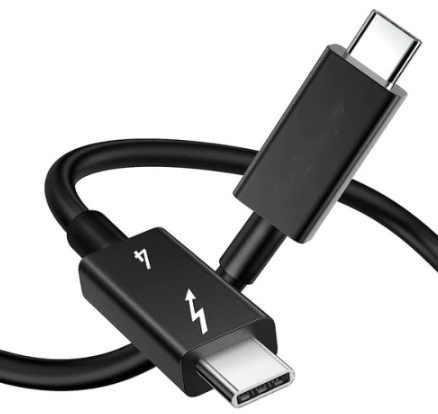
In the era of rapid technological development, the pursuit of faster and more efficient data transmission has never stopped. Since its inception, Thunderbolt technology has continuously driven changes in the field of high-speed connectivity. Now that we have entered a critical transition from Thunderbolt 4 to Thunderbolt 5, how will this upgrade reshape the future of digital connectivity? Let's delve deeper together.
Thunderbolt 4: laying the foundation for high-speed connectivity
On the stage of digital connectivity, Thunderbolt 4 is undoubtedly the backbone. It has achieved a significant breakthrough on the basis of Thunderbolt 3, with a maximum speed of 40Gbps but greatly enhanced functionality and compatibility. Strict certification requirements are a major feature of Thunderbolt 4, which stipulates that PCIe supports a data transfer rate of at least 32Gbps, making it easier to handle large datasets and multimedia files, providing strong guarantees for efficient work for professionals.
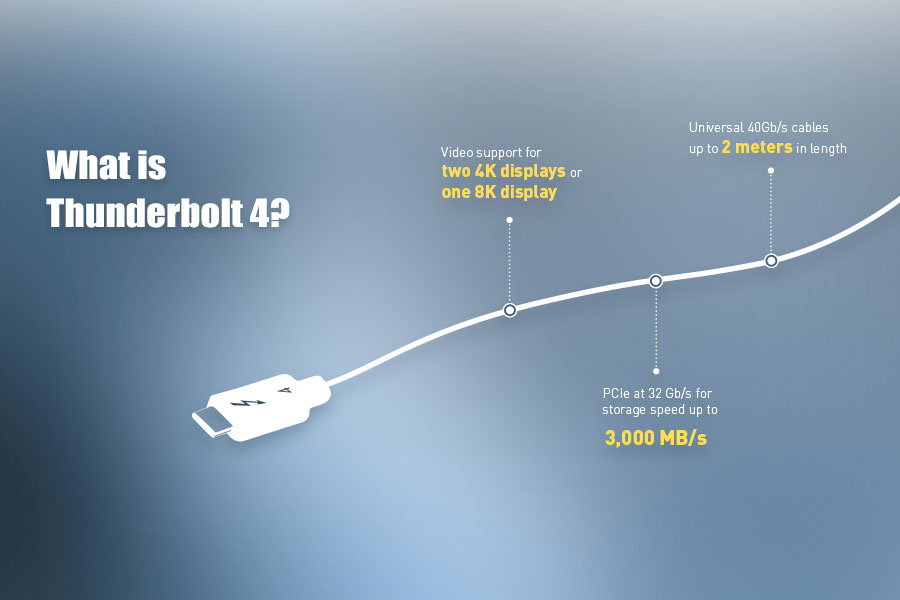
Thunderbolt 4 also performs well in terms of display and power supply, supporting the connection of two 4K displays or one 8K display, while also providing up to 240W of power, helping users create a simple and efficient workspace. In terms of connectivity compatibility, Thunderbolt 4 achieves backward compatibility with all Thunderbolt versions and widely supports more USB standards, truly embodying the concept of "future oriented". In addition, the addition of advanced security protocols such as direct memory access (DMA) protection based on Intel VT-d has made data transmission more secure and reliable. With these advantages, Thunderbolt 4 has set industry standards in high-speed data transmission and display technology.
Thunderbolt 5: ushering in a new era of connectivity technology
Thunderbolt 5, officially released on September 12, 2023, is a revolutionary leap in the field of digital connectivity. Its birth aims to meet the urgent needs of creators, gamers, and professionals for high-speed data transmission. The most remarkable feature of Thunderbolt 5 is its enormous increase in bandwidth, with a bidirectional bandwidth of up to 80Gbps. Through bandwidth enhancement, the upper limit can reach 120Gbps, which is several times that of Thunderbolt 4. Such astonishing speed
It can make the transfer of large video files, the running of high-end games, and the processing of complex datasets more smooth and efficient.
The introduction of the "Barlow Ridge" next-generation chip in Thunderbolt 5 not only brings technological innovation, but also enhances the convenience of use. It is expected that Thunderbolt 5 will be widely used in various devices by 2024. In addition, Thunderbolt 5 is based on USB4 2.0 and DisplayPort 2.1 standards, ensuring seamless compatibility with existing devices while also reserving space for future technological development.
Thunderbolt 5 and Thunderbolt 4: Comprehensive Depth Comparison
Bandwidth and speed: a qualitative leap
The 40Gbps transmission speed of Thunderbolt 4 was already outstanding at that time, while Thunderbolt 5 completely broke the speed bottleneck with its 80Gbps bidirectional bandwidth and 120Gbps bandwidth limit. Whether transferring large files or running applications with extremely high data transfer requirements, Thunderbolt 5 can bring significant efficiency improvements and significantly reduce waiting times.
Data throughput: comprehensive performance upgrade
Thunderbolt 5 doubles the data throughput of PCI Express and supports PCI Express Gen 4, significantly improving the read and write speeds of storage devices. External graphics cards can also perform better, effectively solving the problem of device performance being limited by connections.
Network function: more efficient connection
Thunderbolt 5's bandwidth has doubled, setting a new standard for point-to-point connections and greatly simplifying and accelerating data transfer between PCs, making it particularly advantageous in multi device collaboration scenarios.
Technological Innovation: Better Experience
Thunderbolt 5 adopts PAM-3 (three-level pulse amplitude modulation) technology, which can improve performance without changing cables or connectors, making it easier for users to upgrade. The introduction of the "Barlow Ridge" controller also demonstrates Intel's innovative strength in architecture design.
Application advantages in different scenarios
Professional work scenario: significantly improving productivity
For researchers dealing with large datasets, creative workers engaged in high-resolution video editing, and engineers engaged in complex simulations, Thunderbolt 5's high bandwidth and high-speed data transmission capabilities can significantly shorten task processing time. Meanwhile, its support for complex docking solutions and multi monitor configurations also makes collaborative work more efficient. In addition, Thunderbolt 5's backward compatibility allows enterprises to upgrade their devices without having to retire existing Thunderbolt 3 or 4 devices, reducing upgrade costs.
In the gaming field, immersion and competitiveness are both emphasized
Thunderbolt 4 laid the foundation for high-speed gaming experience, while Thunderbolt 5, with double bandwidth and PAM-3 modulation technology, further reduces latency, allowing competitive gamers to react faster and seize the opportunity. Meanwhile, Thunderbolt 5 supports finer and higher resolution multi monitor configurations, providing players with an immersive gaming experience. Moreover, its backward compatibility also protects the existing device investments of gamers.
Conclusion: Embracing the Infinite Future of Connected Technology
Thunderbolt 4 has laid a solid foundation for high-speed connectivity with its stable performance and wide compatibility; Thunderbolt 5 takes digital connectivity to a whole new stage with its groundbreaking bandwidth improvements, technological innovations, and powerful features. The evolution from Thunderbolt 4 to Thunderbolt 5 is not only an improvement in speed and performance, but also a redefinition of future digital work and entertainment. With the widespread use of Thunderbolt 5, we have reason to believe that a digital age with faster connection speeds, higher efficiency, and better experience is coming, which will inspire the birth of more new technologies, devices, and applications. Let's wait and see.