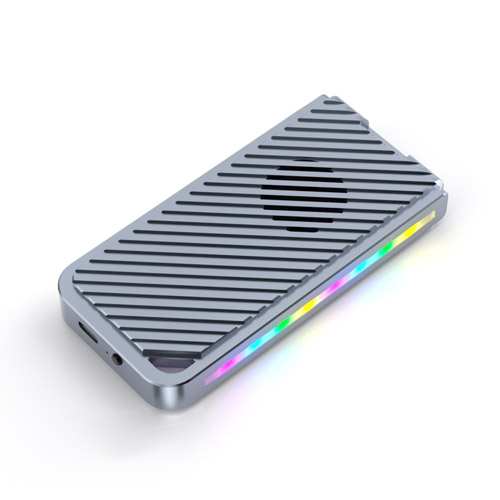
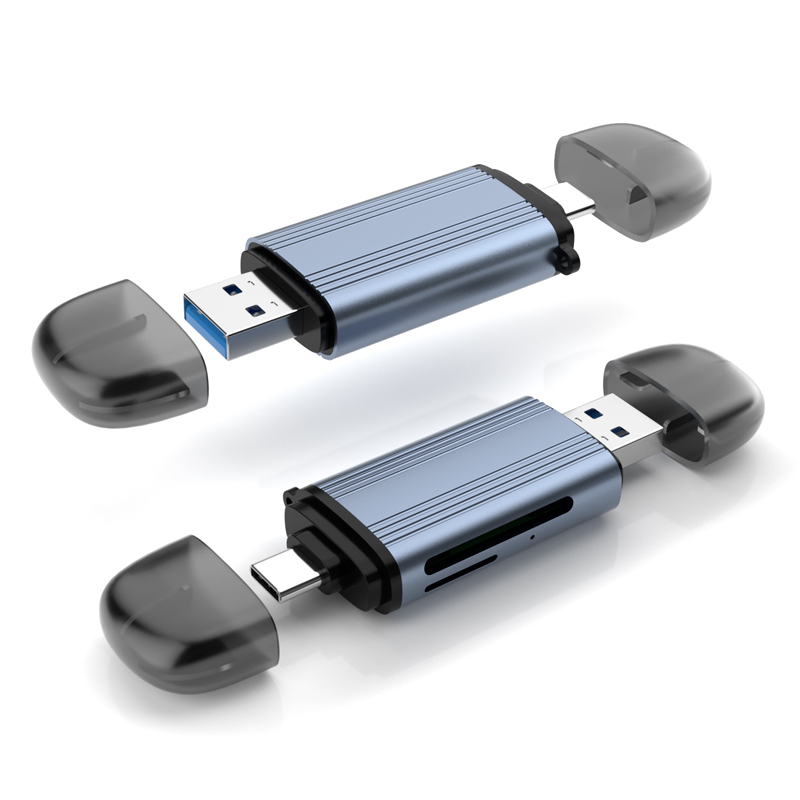
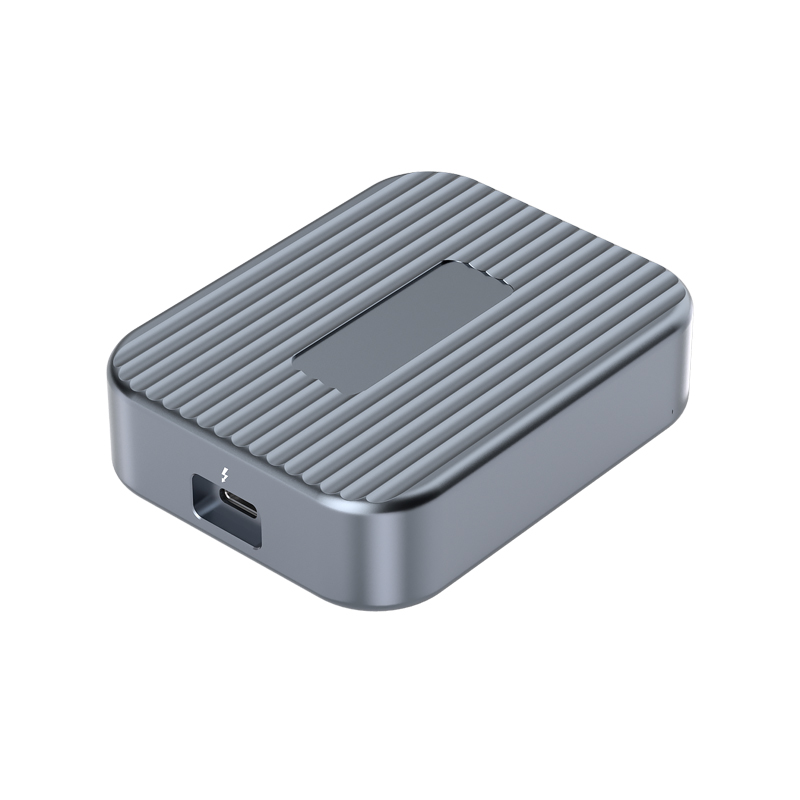
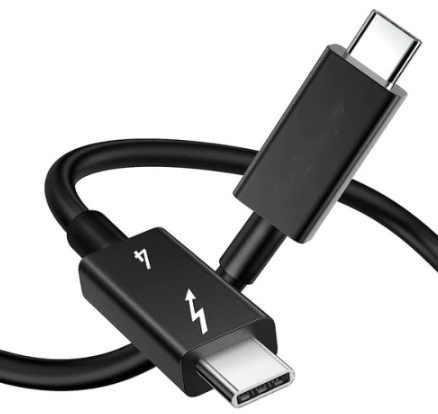
In the dynamic landscape of mobile electronics, Thunderbolt 4 and USB4 have emerged as the most prevalent connection standards in devices such as laptops, desktops, and docks. Both Thunderbolt 4 and USB4 utilize the USB Type - C connector, and due to numerous similarities in their design and functionality, they are compatible with each other. These two technologies support data transfer speeds of up to 40Gbps, video pass - through, and power delivery of up to 240W.
I. The Evolution and Upcoming Leap: Thunderbolt 5
The forthcoming Thunderbolt 5 is designed based on Thunderbolt 3 and 4, and it will double the supported data rate to 80Gbps. With its asymmetric link that supports high - resolution DisplayPort output, the data rate provided by Thunderbolt 5 can even be increased to 120Gbps, while still maintaining 40Gbps of synchronous data transfer when connected via a single USB - C cable. This significant upgrade will open up new possibilities for high - performance applications that demand rapid data transfer, such as high - speed external storage and multi - monitor setups.
II. The Interconnection between TBT and USB4
Intel's Thunderbolt 3 technology was first introduced in 2017. Subsequently, the same protocol specification was contributed to the USB - IF in 2019, laying the foundation for the open USB4 specification released in the same year. Intel then integrated TBT4 functionality into its CPUs, enabling a wider range of devices and accessories to be incorporated into the TBT4 and USB4 ecosystems. Renowned laptops, desktops, and accessories that support TBT3 and TBT4 include the Apple MacBook Air and MacBook Pro series laptops, the Dell XPS series laptops, and the OWC TBT4 dock. Moreover, TBT4 and USB4 applications have started to reference the same USB4 specifications, covering aspects such as electrical, link, and protocol. Additionally, after the announcement that USB4 version 2 supports 80Gbps, Thunderbolt 5 has also begun to support USB4 version 2.
III. Key Differences between USB4 and TBT4
The primary difference between these two standards lies in the fact that most of the functions supported by USB4 are optional. This openness allows the USB4 specification to be widely used in various applications. In contrast, TBT4 makes these options the default functions for laptop and desktop - related applications. Nevertheless, the similarities between the two standards have led to confusion among ordinary consumers, as well as professional engineers and product designers. To convey the correct functions to consumers and help manufacturers save resources spent on design, testing, and debugging, it is crucial to analyze the differences between these standards.
IV. The Benefits of Obtaining Thunderbolt 4 Certification
(1) Coverage of USB Charging, High - Speed Data Transfer, and Interoperability
As the data rate of TBT4 has indeed increased to 20Gbps and that of TBT5 has increased to 25.6GBaud, the signal quality of components, PCBs, connectors, and cables has declined significantly. To ensure that the correct power level is provided from a TBT4 dock or a USB - C power adapter to the connected device or power - consuming device, Intel TBT4 requires product suppliers to obtain TBT certification before entering the market. This certification encompasses electrical testing, functional testing, and various high - speed applications for TBT4/3 hosts, devices, accessories, and cables, ensuring that the end - consumers can enjoy the expected TBT4 experience.
(2) Meeting Consumer Demands and Realizing Market Potential
The performance of Thunderbolt 4 offers a more attractive option for users seeking the following functions:
Backward compatibility with Thunderbolt 3, which allows users to seamlessly connect older devices without the need for additional adapters.
Data security during connection through DMA protection based on Intel VT - d, safeguarding sensitive information from potential threats.
Hosts supported by 11th - generation Intel Core i5 or i7 mobile processors equipped with Intel Iris X graphics, providing enhanced graphics performance for multimedia and crea-tive applications.
Improved video and data transfer quality, resulting in smoother video playback and faster file transfers.
Extended battery life, as the efficient power management of Thunderbolt 4 can optimize energy consumption.
Support for connection accessories with up to four downstream Thunderbolt ports, enabling greater expandability for users with multiple devices.
Compatibility with USB4, ensuring seamless integration with a wide range of devices in the market.
Furthermore, through a single cable, Thunderbolt 4/5 also provides support for other protocols, such as DisplayPort 1.4/2.1 and PCIe Gen3/Gen4, via protocol tunneling. In this sense, TBT4 is truly a universal cable that can carry DisplayPort, PCI Express, and power transmission for USB4 and TBT4/5. This unprecedented flexibility will undoubtedly be welcomed by the following user groups:
Crea-tives and marketers who require the fast PCIe 32Gbps transfer speed and large - capacity storage needed for the latest cameras, enabling them to handle high - resolution images and videos more efficiently.
Developers who use multiple monitors during coding or modeling, as Thunderbolt 4/5 can support high - resolution multi - monitor setups without sacrificing performance.
Ordinary high - productivity employees who increasingly use data - intensive artificial intelligence programs to speed up their workflows, as the high - speed data transfer capabilities of Thunderbolt 4/5 can significantly reduce processing times.
In conclusion, Thunderbolt 4, USB4, and the upcoming Thunderbolt 5 play crucial roles in the modern digital ecosystem. Understanding their features, differences, and the benefits of Thunderbolt 4 certification is essential for both consumers and manufacturers to make informed decisions and fully leverage the potential of these advanced connection standards.