In the world of data storage, internal storage drives are usually designed to connect to the SATA or M.2 interface inside the PC. However, with the help of SSD or hard drive enclosures, these internal drives can be transformed into portable backup devices connected via USB. Whether you are looking to give an old drive new life and convert it into external storage, purchase a new SSD and make it an external drive, or just plug a new SSD into a USB port for system cloning, choosing the right enclosure is crucial.
Price Range and Feature Differences
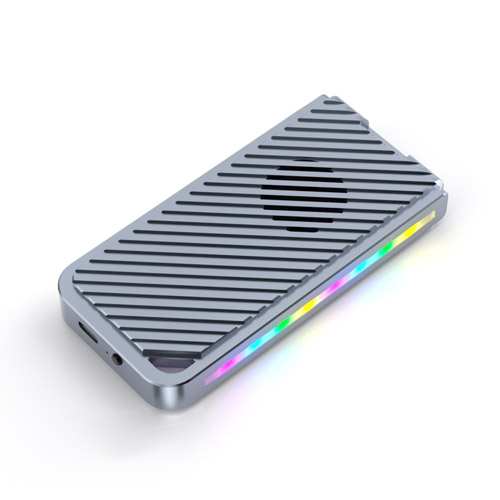
The price of SSD or hard drive enclosures varies depending on a variety of factors, ranging from $12 to $150. This mainly depends on the type of storage to be enclosed and the desired connection speed. In most cases, the main functions of an SSD enclosure include protecting the drive, assisting with cooling, and converting the interface to USB. But some high-end enclosures have additional features, such as RGB lighting or status menus, to bring a richer user experience. To help you make an informed choice among the many products, we conducted detailed tests on more than a dozen different models.
Flexible storage options
If you don't have a spare drive or don't want to install an internal drive in an enclosure, then picking up a quality external SSD from our test list is a good option. However, it's usually cheaper to buy an enclosure and install the drive yourself. It also gives you the flexibility to upgrade the drive to a higher capacity model at any time without having to buy a new enclosure, which reduces your long-term costs.
Choose the right size based on your needs
Determine the form factor
The first question when choosing an SSD or hard drive enclosure is determining the right form factor. You have to make sure the SSD enclosure you buy is a perfect match for the physical size of the drive. If you have a 2.5-inch hard drive or SSD, a 2.5-inch SATA enclosure is the best choice; for a 3.5-inch hard drive, a 3.5-inch SATA enclosure is the best choice. For M.2 SSDs, you'll naturally need an M.2 enclosure, but be careful if your SSD is shorter than the standard 2280 (80mm size) to confirm that the enclosure has mounting screws for the shorter size, as not all enclosures are designed to have this. Also, if you plan to use an M.2 SATA SSD instead of an NVMe SSD, make sure the enclosure supports that standard, as most M.2 enclosures only support NVMe.
Consider transfer speeds
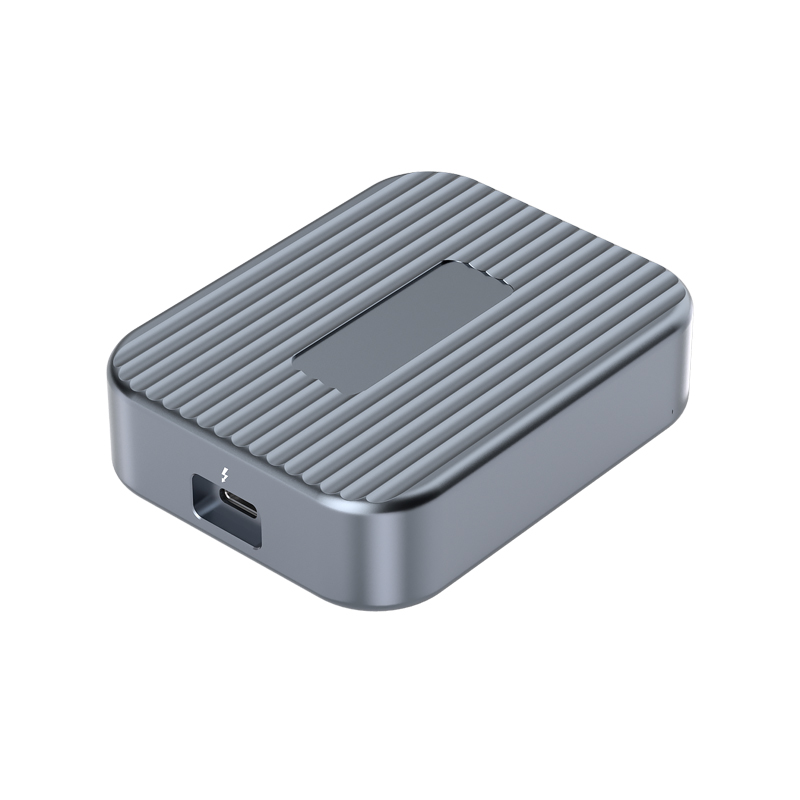
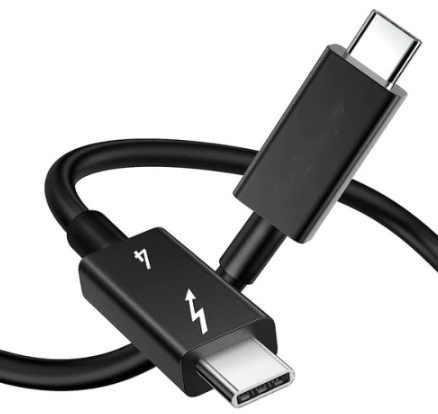
The transfer speed of the enclosure depends on its USB port and the performance of the USB ports on your computer. Generally speaking, most 2.5-inch and 3.5-inch hard drive/SSD enclosures run at standard 5 Gbps USB (USB 3/3.1 or 3.2 Gen 1). Most M.2 SSD enclosures run at 10 Gbps (i.e. USB 3.1 or USB 3.2 Gen 2). Some more expensive models, typically priced at $130 and up, support speeds up to 40 Gbps because they support USB 4, Thunderbolt 3, or Thunderbolt 4 (all of which are compatible with each other and can reach 40 Gbps transfer speeds). Some drives also support 20 Gbps USB, known as USB 3.2 Gen 2x2 or USB 4 20 Gbps. For most users, 10 Gbps is more than enough for everyday use. It is important to note that if you plug a Thunderbolt enclosure into a port that does not support Thunderbolt, it may not work properly. While USB 4 enclosures should theoretically be backwards compatible with USB 3.x ports, in actual testing, we found compatibility issues with some USB 4 enclosures.
Evaluate frequency of use
When considering how often the enclosure will be used, pay attention to how easy it is to open. Most of the M.2 SSD enclosures we tested were usually screwed down after the drive was installed to ensure long-term stability. Although all enclosures can be reopened and drives replaced at any time, if you anticipate swapping drives frequently, a tool-free enclosure is a better choice to save time and effort.
As mentioned above, choosing the right SSD or hard drive enclosure requires a combination of factors. By clarifying your needs, including the form factor of the drive, the desired transfer speed, and the frequency of use, you can choose the enclosure that best suits your needs from a wide range of products, creating a convenient and efficient storage solution to meet your daily data storage and backup needs.