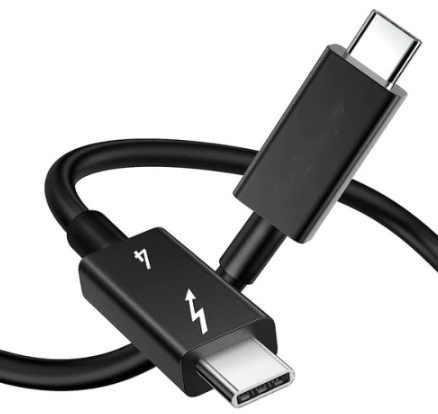

A working display and Ethernet connection tell you that those dock functions work in the current session. Before deploying shared-desk docks, also check accessory approval, behavior around screen locking, and the host's applicable DMA protection. Employees need a repeatable way to connect at different desks. Your support team needs enough detail to distinguish an expected restriction from a connection fault.
We recommend testing each combination of laptop model, operating system version, dock and firmware, cable, and management policy. Use the procedure and acceptance matrix below to build your deployment checks, then record the results on your own equipment.
Check accessory approval and memory access separately
Accessory approval determines whether a connection may proceed. Direct memory access, or DMA, concerns devices reading and writing memory without continuous CPU involvement. Protection must restrict the memory a device can reach. Record whether the accessory was approved, then document the host's memory protection state separately.
On Apple silicon Macs, an input/output memory management unit (IOMMU) restricts PCIe and Thunderbolt peripherals to memory mapped for their use. Accepting an accessory prompt does not verify that platform protection. Mac DMA protections.
Identify the connection and downstream devices before testing. A USB-C plug does not describe the entire setup. List display, USB, network, and storage functions separately, adding device and driver details for relevant PCIe devices. In Windows Device Manager, the Devices by connection view shows the USB4 host router and its connected devices. Windows USB4 connection manager.
Check connection approval and memory protection separately
Accessory approval
DMA protection
Record both checks. An approval prompt does not prove that DMA protection is enabled.
Original conceptual diagram. Behavior depends on the host, operating system, and management policy.
Windows: establish the host, driver, and policy baseline
Run msinfo32 on the intended Windows host and save the Kernel DMA Protection state from System Summary. If your deployment baseline requires this feature, confirm that it reports On. Resolve an Off or unavailable status against the host requirements before approving that configuration. The platform needs appropriate firmware and IOMMU support. Firmware handles DMA isolation before the operating system takes over, so a Windows status screenshot cannot replace the manufacturer's documentation for startup protection. Microsoft platform and firmware requirements.
For the relevant PCIe device instance, open Details in Device Manager and inspect DMA Remapping Policy. A value of 2 indicates capable drivers; 1 indicates at least one driver opted out. Zero or a missing property is not evidence of enforced remapping. These values differ from driver installation and registry settings. DMA remapping property definitions.
Devices with compatible drivers can start while the screen is locked. Record that compatibility before treating continued dock operation as a failure. Driver support for DMA remapping.
On a Windows host with Kernel DMA Protection supported and enabled, the default enumeration policy blocks newly connected external DMA devices with incompatible drivers before sign-in or while locked. After an authorized unlock starts the device, it can keep working through another lock or sign-out until unplugged or the system restarts. Test a new connection while locked separately from locking an established connection. Windows Kernel DMA Protection behavior.
Check your effective DmaGuard policy. It can block incompatible external DMA devices, allow them after sign-in or unlock, or always allow them. It requires supported, enabled Kernel DMA Protection, and policy changes require a restart. DmaGuard policy. Record the policy source before testing. If the baseline does not match, retain that failed configuration for review with the host or driver supplier.
Mac: test new accessories and use with the lid closed
On a Mac laptop with Apple silicon, open System Settings, Privacy & Security, then Accessories, and check Allow accessories to connect. A new accessory may require unlocking before approval. Choosing Don't Allow can still leave charging available. Record power and data authorization separately. Mac accessory connection settings.
The choices cover asking every time, asking for new accessories, allowing automatically when unlocked, and always allowing. Management settings can affect behavior, and exceptions include approved hubs and non-Thunderbolt displays. Check the applicable configuration before classifying an absent prompt as a fault. Apple accessory access management.
For your pilot, use a trusted accessory that has not been approved on that Mac and triggers an approval prompt under the current policy, with test files only. Decline the first request and record the prompt, device recognition, and charging. Reconnect, approve it, and check its functions. If automatic approval or an exception applies, record the reason and mark the decline/approve check as not applicable. Give the dock and subsequently attached accessories separate entries; a successful dock connection is insufficient evidence for the whole desk.
If employees work with the lid closed, keep it open during initial setup so the built-in screen and keyboard remain available. Approve the required display, mouse, and keyboard before testing closed-lid connections, wake, and desk changes. This follows Apple's preparation sequence for closed-lid use. Prepare accessories for closed-lid use. Write down how an employee should handle a prompt, alongside the connection result.
Use connection timing in your dock acceptance matrix
We recommend the following checks for shared desks. Use trusted sample equipment, close test files, and safely eject storage before unplugging it. Base the expected result on the verified platform behavior and your organization's policy. Mark combinations you have not covered as untested.
| Scenario | Your action | Record and acceptance condition |
|---|---|---|
| First connection while unlocked | Connect the dock and check each planned peripheral. | Capture prompts and choices; required functions work through the approved procedure. |
| New connection while locked | Disconnect equipment, lock the host, then connect it. | Assess against the platform, driver, and policy; document recovery after unlock. |
| Lock an established connection | Lock the host while the required functions are working. | Record continued operation, pauses, and recovery separately from the preceding case. |
| Decline, then approve on Mac | Use an unapproved trusted accessory that triggers a prompt; decline, reconnect, and approve. | Separate data access from charging; prompts and functions match the active setting. |
| Change host or desk | Connect another managed laptop and test a spare dock. | Keep individual host records; employees can complete required initial setup. |
| Restart, sleep, and resume | Test a docked restart, wake from sleep, and applicable closed-lid use. | Record startup stage and action order; exceptions have repeatable recovery steps. |
For each run, retain the date, equipment identifiers, versions, connection order, exact prompt, and result. If charging works but a peripheral is missing, name the failed function: network adapter absent, for example, or storage volume not mounted. Specific observations make the fault reproducible and give suppliers something to investigate.
Set deployment conditions for failures and exceptions
Approve complete configurations. We recommend adding a setup to the deployment list only when its equipment, versions, policy, and required functions match the test record. Put expected unlock or first-connection approval steps in the desk instructions. Hold configurations with unexplained failures out of the bulk rollout.
When a peripheral fails to start, identify whether it happened on first connection, after locking, or following an update. Check the device instance and driver version next. Test any proposed firmware or management change on pilot equipment before distributing it. Review the reason for any temporary adjustment and retest it before applying it across employee laptops.
Define retest triggers, including a different laptop model, a connection-related driver or firmware update, an approval policy change, or a replacement downstream device. Retain the previous record and the new result, identifying the change that resolved a fault. That gives you a concrete basis for checking hardware or firmware revisions in a later shipment.
Shared-desk dock deployment questions
Does a USB-C connector mean the same security requirements are met?
Assess host capabilities, the actual connection, and your policy. Request documentation for the specified model, then validate the complete setup. The connector's shape cannot replace that acceptance record.
Why is a black screen after locking a poor pass criterion?
It records only display behavior. Acceptance also needs the accessory policy, relevant drivers, host protection state, and required functions beyond the display. A single screen observation leaves those checks unanswered.
Should you test another dock of the same model?
Include a second unit and another managed host in the pilot to check whether additional setup is needed. After deployment, work from the validated configuration and retest affected functions when hardware, firmware, or policy changes.
Do these checks prove the dock has no security risks?
They verify configuration and operating behavior for a specified setup. They do not replace a full security assessment or establish results for every device and system version. Keep approval scoped to the combinations you validated.
To discuss shared-desk dock procurement, send PURPLELEC your host list, system versions, peripheral requirements, and accessory policy. Confirm candidate-model documentation and sample evaluation arrangements before deciding the deployment scope from your acceptance results.