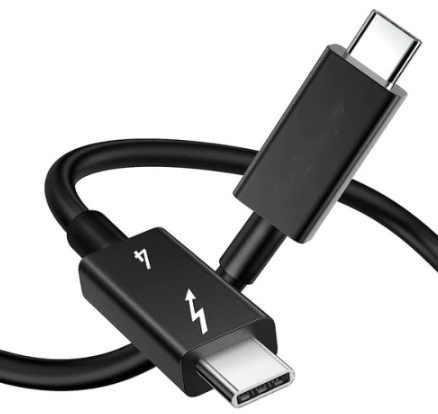
The reduction of physical ports on modern ultra-thin laptops has necessitated the topological demand for docking stations. In enterprise IT asset provisioning and professional workstation setups, the core divergence in equipment selection lies in whether to choose proprietary OEM docking stations tied to specific laptop brands (e.g., Dell, HP, Lenovo) or to adopt cross-protocol universal third-party docking stations (Universal Docking Stations).
This article provides an objective breakdown from the dimensions of underlying hardware protocols, device interoperability, and lifecycle.
1. Physical and Protocol Limitations of Proprietary OEM Docking Stations
The underlying logic of proprietary docks is a "single-brand closed ecosystem." This design exhibits significant physical exclusivity in mixed hardware environments.
| Limitation Dimension |
Technical & Application Scenario Performance |
Deployment Risk & Cost |
| Vendor Lock-in |
Handshake protocols are fine-tuned for specific brand motherboards. When used across brands (e.g., a Dell dock connecting to an Apple or ASUS terminal), it is highly prone to trigger video signal loss, PD handshake failures, or peripheral disconnections. |
In Bring Your Own Device (BYOD) and mixed office environments, IT departments must purchase multiple types of docks, increasing hardware redundancy. |
| High Premium |
Significant brand premiums exist. Under the same budget, the number of USB ports and display output specifications (e.g., supporting only DP 1.2) of OEM docks are often below current industry standards. |
The Cost per Port is excessively high, resulting in insufficient functional density. |
| Update Lag |
Firmware update cycles are forcibly tied to the release pace of the host brand's laptops. Faced with the popularization of high-speed transmission standards like USB4 and Thunderbolt 4/5, older OEM docks cannot receive support via independent drivers. |
Laptop upgrades force the docks into premature obsolescence, leading to a short lifecycle. |
| Rigid RMA Process |
Hardware maintenance heavily relies on enterprise-level service contracts, lacking flexible return/exchange mechanisms for the peripherals themselves. |
The sunk cost of hardware failures after the warranty expires is extremely high. |
2. Architectural Advantages of Universal Docking Stations
Produced by professional third-party peripheral manufacturers, universal docking stations feature core IC solutions that are independent of the PC motherboard, focusing purely on I/O throughput and cross-platform compatibility.
- Cross-Platform Interoperability: By integrating high-standard Hub chips and display protocol chips, they enforce compatibility with macOS, Windows, ChromeOS, and Linux. Whether connected to a Dell, HP, or a MacBook, they achieve driver-level plug-and-play capability.
- High-Density Video & Data Throughput: Free from the budget constraints of host brands, universal docks are typically fully loaded with high-specification ports (such as HDMI 2.1, dual DP interfaces, Gigabit RJ45, and multiple 5Gbps/10Gbps USB-A/C ports), supporting ultra-high-resolution multi-screen extended displays.
- Independent Firmware Lifecycle: Professional manufacturers break away from the "selling hosts" logic, providing continuous, independent driver upgrade services to ensure the hardware maintains stable compatibility even after the release of new-generation operating systems.
3. Enterprise IT Deployment and TCO (Total Cost of Ownership) Evaluation Matrix
For large-scale procurement or long-term workstation setups, costs must be calculated over the entire lifecycle:
| Evaluation Metric |
Proprietary OEM Docking Station |
Third-Party Universal Docking Station |
| Initial Procurement Cost |
High (includes heavy brand premium) |
Excellent (transparent hardware costs, performance-focused) |
| Device Reusability |
Extremely Low (obsolete once the laptop brand changes) |
Extremely High (backward compatible with all Type-C/USB-A terminals) |
| Office Scenario Adaptability |
Limited to fixed, single-hardware workstations |
Perfectly adapts to hot-desking, shared conference rooms, and hy-brid remote work |
| Quality Control Standards |
Complies with the specific laptop brand's internal standards |
Complies with independent international industry standards such as USB-IF |
Selection Decision Conclusion
Facing a highly dynamic terminal device environment, Universal Docking Stations are the only logical path to breaking down hardware barriers, achieving high-density data transmission, and optimizing the Total Cost of Ownership. When executing hardware procurement, the focus should be on auditing the device's IC chip solution combinations, PD power delivery margins, and actual multi-screen refresh rate data.