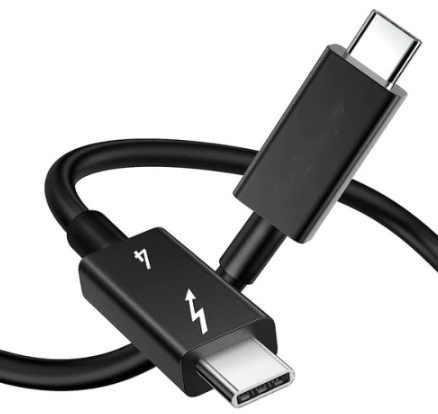
MacBook Air is known for its sleek design and portability, and its port options have changed significantly over the years. Old MacBooks have USB ports, but does the MacBook Air have USB ports? The answer is that the MacBook Air no longer has traditional USB ports. Instead, it mainly uses USB-C ports for connection and charging. It is worth noting that this change is not unique to the MacBook Air; the latest MacBook Pro models also do not have USB ports, but adopt USB-C and Thunderbolt.
What ports does the MacBook Air have?
Although the MacBook Air does not have USB ports (including models equipped with M1 chips and models equipped with the latest M2 and M3 chips), the MacBook Air ports provide a variety of connectivity functions to meet daily needs, such as charging, data transfer, and connecting peripherals. Here are those ports:
Thunderbolt/USB 4 ports: The MacBook Air is equipped with two Thunderbolt/USB 4 ports with USB-C connectors, which can provide fast data transfer speeds of up to 40Gbps. These ports support charging, connecting external displays (dual 4K or single 8K), and other USB-C accessories such as external storage or hubs.
MagSafe 3 charging port: Introduced in the M2 and M3 models, MagSafe 3 provides secure and fast charging through magnetic alignment to prevent accidental disconnection. When used with a 70W power adapter, it supports fast charging, reaching 50% power in just 30 minutes.
5mm headphone jack: The inclusion of the headphone jack ensures compatibility with wired headphones or external speakers, providing high-quality audio output for professionals and music lovers.
Why is Apple moving from USB to USB-C?
Apple transitioned from traditional USB ports to USB-C to adopt a more feature-rich, efficient, and future-proof technology. Officially known as USB Type-C, USB-C features a symmetrical oval design that allows for reversible plug orien-tation, solving the challenges of early USB designs.
The move to USB-C enables multiple functions in a single port. For example, the MacBook Air USB-C ports support Thunderbolt 3 and USB 4 standards, providing ultra-fast data transfer speeds of up to 40 Gbps and high-resolution video output for multiple external displays.
In addition, these ports support USB Power Delivery (USB-PD), allowing the MacBook Air to charge not only itself, but also devices such as smartphones and tablets.
How to Use USB-A Devices with MacBook Air?
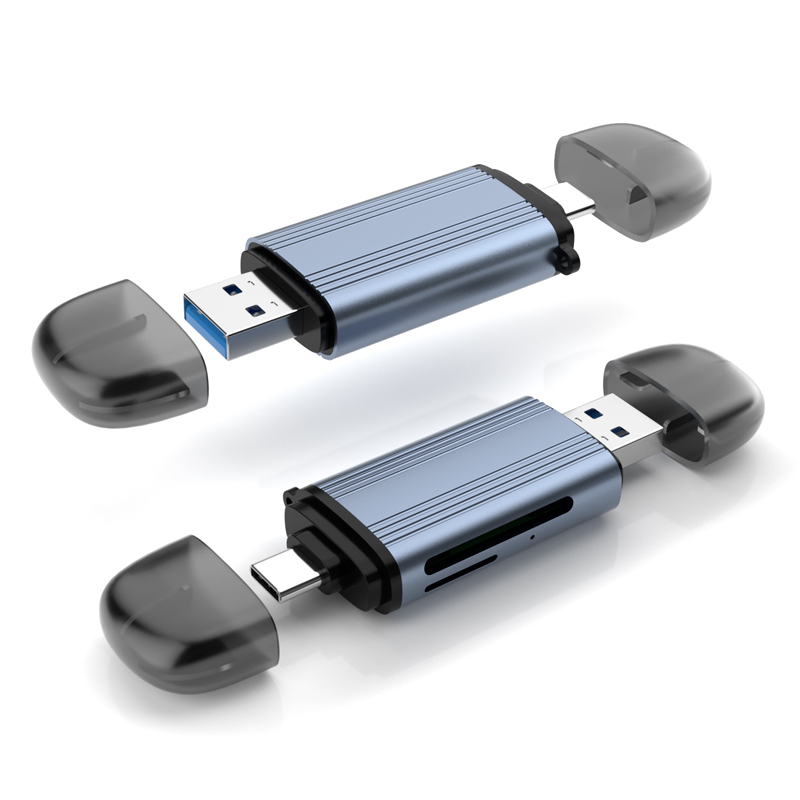
Although you can’t use USB on MacBook Air, you can still connect USB-A devices like flash drives, printers, and external hard drives using adapters or hubs. Here’s how to use USB-A devices with your MacBook Air:
1. Use a USB-C to USB-A Adapter
Purchase a reliable USB-C to USB-A adapter to connect a single USB-A device directly to your MacBook Air.
Simply plug the adapter into one of the MacBook Air’s USB-C ports and attach your USB-A device to the adapter.
A USB-C hub is ideal for connecting multiple devices at once. Many hubs include USB-A ports, HDMI, SD card slots, and Ethernet connections, expanding your MacBook Air’s functionality.
Plug the hub into your MacBook Air, then connect your USB-A devices to the appropriate ports.
Purplelec USB-C Hub (7-in-2, for MacBook): The Purplelec USB-C Hub (7-in-2)is designed specifically for MacBook users, leveraging both USB-C ports to expand into a Thunderbolt USB-C port, a USB-C data port, two USB-A ports, an HDMI port, and SD/microSD card readers. Its Thunderbolt 3 port supports blazing-fast 40 Gbps data transfer, 5K@60Hz video output, and up to 100W charging power. The HDMI port delivers 4K@30Hz video, while dual display support ensures smooth multitasking across multiple screens. Compact and tailored for MacBook Air, this hub is perfect for users looking for high performance in a sleek and functional design.
Conclusion
Did you know "Does the MacBook Air have USB ports?" In the new Apple laptops (new MacBooks), both the MacBook Air and MacBook Pro do not have USB ports. They have transitioned to USB-C ports, replacing traditional USB ports to meet modern connectivity needs.
From the lightning-fast data transfer and display capabilities of the Thunderbolt/USB 4 ports to the efficient wireless charging of MagSafe 3, and the always-reliable headphone jack, the MacBook Air's array of ports can meet a variety of needs.
For those who need additional connectivity, USB-C hubs (such as the Anker 555, 543, and 547 models) provide a practical solution. These accessories fill that gap, making the MacBook Air the perfect combination of simplicity and adaptability in the USB-C age.