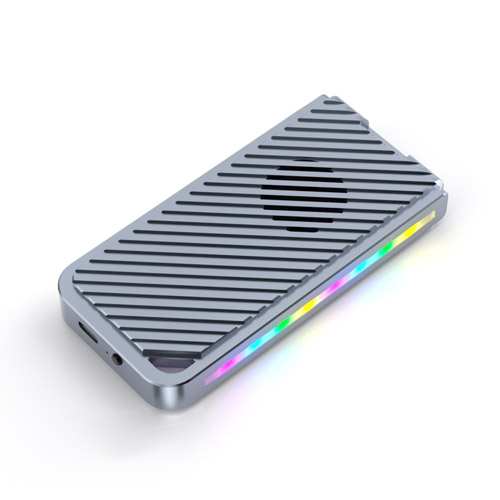
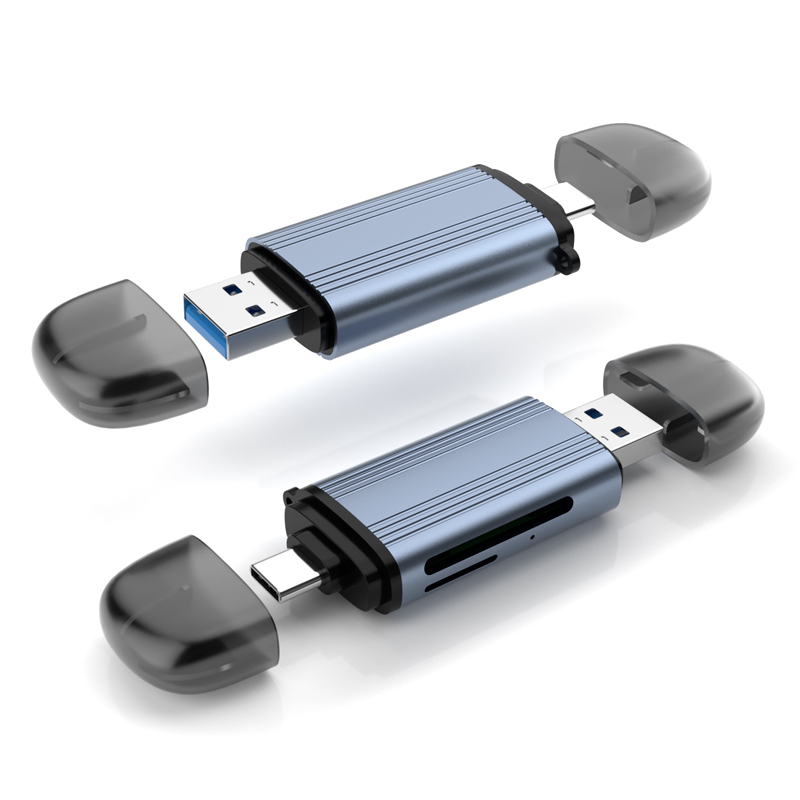
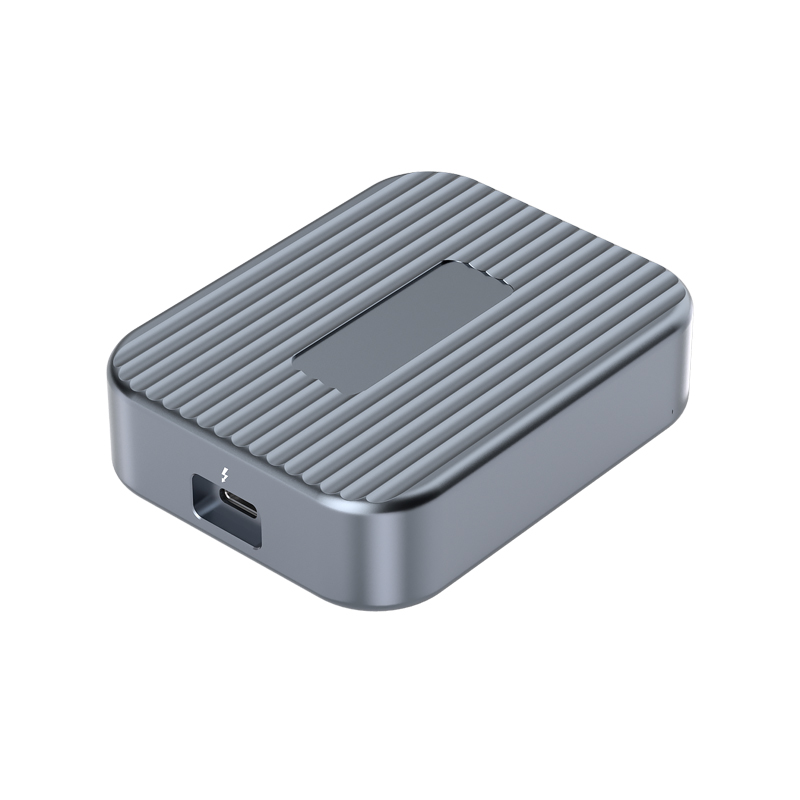

Replacing a customer's SSD means copying the original drive to its replacement. Sorting removed drives may also require access to two SSDs at once. A dual-bay M.2 SSD cloner can bring these jobs into one device, but drive compatibility, cloning requirements and storage modes need separate attention. Recognizing two drives does not establish that every pairing will work for cloning or RAID.
The DEM066 dual-bay M.2 SSD cloner combines NVMe/SATA M.2 support, offline cloning, JBOD/RAID 0/RAID 1 modes and an LCD. For an IT service bench, storage distribution business or branded product range, start with your intended drive combinations and evaluate a sample using representative tasks.

DEM066 connected to a laptop workstation.
1. Check Protocol and Size Before Choosing a Dual-Bay M.2 SSD Cloner
M.2 describes a drive's form factor; NVMe and SATA involve different communication technologies. A purchasing list that says only “M.2 SSD” leaves too much unspecified. Record each drive's exact model, protocol, size and capacity. Physical fit alone does not establish electrical and protocol compatibility. M.2, SATA and NVMe explained.
DEM066 supports 2230, 2242, 2260 and 2280 SSD sizes, with capacities up to 8TB per drive. For a bench handling different drives, assess single-drive access, simultaneous dual-drive access and cloning in the required direction separately. Support for both NVMe and SATA does not establish compatibility for every migration between protocols.

Dual M.2 bays with the enclosure cover removed.
| Record before ordering | Why it matters |
|---|---|
| Exact source and target models, including firmware | Confirms a specific pairing, beyond the brand name |
| NVMe or SATA, plus M.2 size | Matches the communication technology and mounting position |
| Device-reported total capacity of each drive | Checks whether the target meets the cloning requirement |
| Fitted heatsinks and drive thickness | Checks installation clearance |
| Drive access, cloning or RAID use | Tests the intended function, beyond drive detection |
2. Confirm Cloning Direction, Capacity and Data Handling
Offline cloning copies a drive without connecting a computer. On DEM066, SSD1 is the source and SSD2 is the target. The target must have a capacity equal to or greater than the source, and cloning requires JBOD mode. The device handles one source-to-target copying task at a time.
A 1TB source containing 200GB of files still requires a suitable target of at least the source capacity; a 500GB drive does not qualify. This requirement concerns the drives, not the folder size. For different models both labeled 1TB, also check that their actual capacities meet the requirement.
Cloning overwrites the target drive. Label the source and target, retain a separate backup of important source data, and check that nothing on the target needs to be kept. Setting RAID mode on DEM066 deletes data. If drives containing data need a mode change, complete a separate backup first, then follow the operating instructions for the supplied version.
Maintain stable power once cloning starts. Do not remove drives or force an exit. Use the LCD to check progress. After completion, connect a computer and inspect the target's partitions, important files and readability. For an operating-system replacement, also test startup, sign-in and business applications on the destination computer before releasing the original drive for archiving or erasure.
3. Choose JBOD, RAID 0 or RAID 1 for the Job
Decide whether you need two separate drives, a combined working volume or mirrored storage. The following example uses two 2TB SSDs; capacities are nominal values before formatting.
| Mode | How DEM066 presents the drives | Capacity example and suitable task |
|---|---|---|
| JBOD | Two independent drives | 2TB each; separate data management and preparation for offline cloning |
| RAID 0 | One striped array | About 4TB; reproducible working data with another copy available |
| RAID 1 | One mirrored array | About 2TB; working data requiring a mirrored pair |
Unequal drives change the calculation. DEM066 uses twice the smaller drive's capacity for RAID 0, and the smaller drive's capacity for RAID 1. A 2TB drive paired with a 4TB drive therefore provides a nominal 4TB RAID 0 array or 2TB RAID 1 array.
RAID 0 has no redundancy: one drive failure puts the array at risk. RAID 1 mirrors data and helps address a single drive failure, but deletions and incorrect changes also reach the mirror. Keep important files backed up on another device, with recoverable earlier versions. How RAID 0 and RAID 1 work.
4. Evaluate 20Gbps With the Host and Cable
DEM066's USB-C host data port uses USB 3.2 Gen 2x2, with a rated interface speed up to 20Gbps. The computer port and data cable must support the required capability. USB-C describes the connector: check the computer specification for explicit USB 3.2 Gen 2x2 or USB 20Gbps support. USB-IF guidance on USB 3.2 speeds.
Both SSDs share this host connection; do not budget 20Gbps independently for each drive. Actual file transfers also depend on SSD performance, file size and count, operating mode and temperature during sustained workloads. The USB interface rating does not specify offline cloning speed.
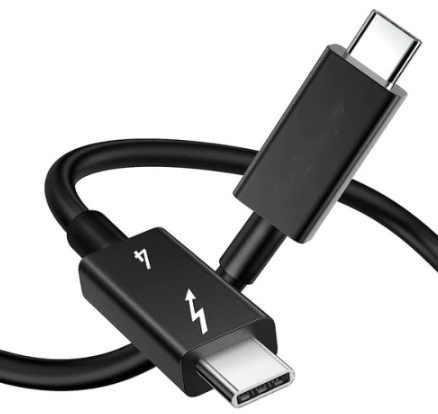
DEM066 also has a separate USB-C power input. Check data and power connections separately when preparing the sample bench, using a suitable supply and cables. Before a long task, confirm stable power, secure cable placement and room around the enclosure for heat to dissipate.
5. Use a Sample Record to Approve the Purchase
Evaluate the work you intend to deliver to customers, beyond whether a computer detects the drives. For a service bench, use common source drives and upgrade targets. For distribution or a branded range, use the drive combinations and host environments you intend to sell or support.

Evaluate the enclosure with the files and applications your workstation uses.
- Drive access: Record SSD models, capacities, host and operating system. Check detection with one drive and with both drives.
- Cloning: Use test data with a separate backup. Record source, target, completion status and verification results. Never use a customer's only copy for evaluation.
- Sustained transfers: Run representative large-file and small-file tasks. Record elapsed time, transfer behavior and any disconnections.
- Storage modes: Use disposable test data to check mode configuration, reported capacity and drive presentation in JBOD, RAID 0 and RAID 1.
- Handover: Keep the power supply, cable details, operating instructions and tested drive models in the same record so the configuration can be reproduced.
DEM066's LCD displays information including capacity, temperature, mode and cloning progress, making task status accessible at the bench. Use these readings to observe operation. Checks after completion establish whether files are intact and the destination system works.
6. Frequently Asked Questions
Does NVMe and SATA support mean any cross-protocol clone will work?
No. Identify the source and target models, capacities and migration direction. Confirm cloning compatibility for that pairing and validate it in the destination device. Drive access and system migration require separate checks.
Can the target be smaller than the source?
DEM066 requires a target capacity equal to or greater than the source. A small amount of stored data does not relax that requirement. Confirm capacity alongside the exact replacement-drive model.
Will the cloned SSD always boot the computer?
Copy completion does not complete system-migration testing. Startup also depends on the destination hardware, boot configuration and operating system. Retain the original drive until the replacement passes startup and application checks.
Is a separate backup still necessary with RAID 1?
Yes. The mirror holds the same current data on two drives. Keep a separate backup with recoverable earlier versions on another storage device, and periodically check that it can be restored.
7. Configure DEM066 for Your Drive Tasks
For a bench handling M.2 SSD replacement, dual-drive access and optional RAID, explore the DEM066 dual-bay M.2 SSD cloner. Send us the source and target models, capacities, host interface, required modes and order quantity to discuss compatibility, samples and a quotation. Validate representative tasks before finalizing your purchasing configuration.