By PURPLELEC | 05 June 2025 | 0 Comments
Wired vs. Wireless Networks: Which Reigns Supreme?
When faced with the choice between wired and wireless networks, your decision largely hinges on your priorities—be it security, speed, or flexibility. Let's delve into a comparison between the common wired solution of USB-to-Ethernet adapters and wireless networks, highlighting their respective pros and cons to aid you in making an informed choice.
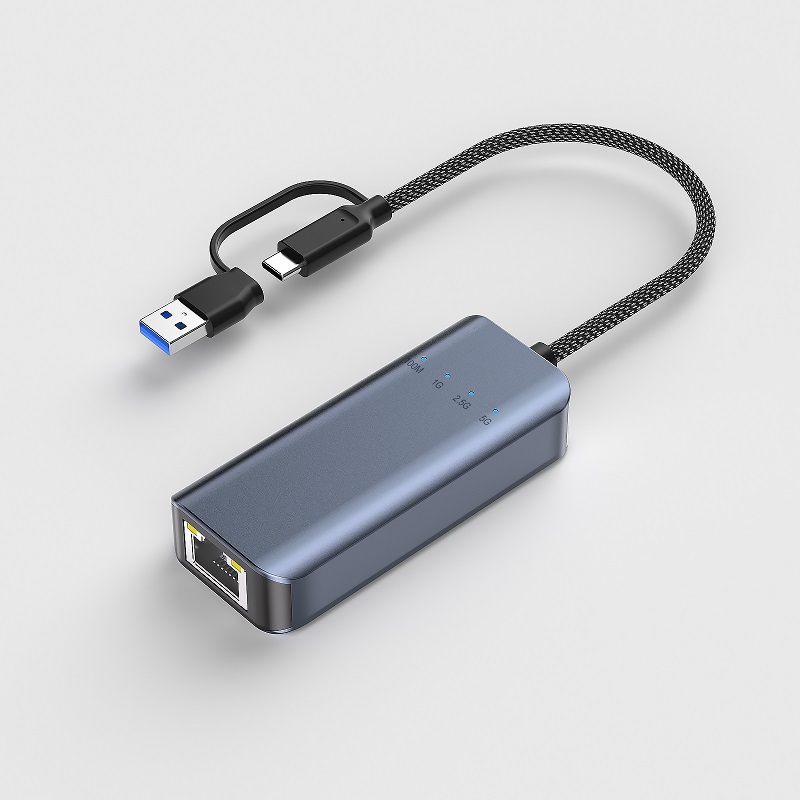
Wired networks are renowned for their security. Unauthorized access to a network that necessitates a physical connection is significantly more challenging. Additionally, they offer unparalleled stability and speed, being less susceptible to interference. This makes them ideal for activities demanding a stable, high-performance internet connection, such as live streaming or online gaming. However, wired networks do come with a trade-off in terms of mobility. Being tethered to a specific location can be a drawback, and the physical aspect of running cables across spaces can be both cumbersome and unsightly.
On the flip side, wireless networks excel in flexibility and mobility. Within the network's coverage area, you can connect freely without the hassle of cables, a significant advantage. Moreover, setting up a wireless network is generally straightforward and scalable, allowing for easy accommodation of more devices without the need for additional cabling. But this convenience comes at a cost. Wireless networks may face interference from various sources, leading to unstable connections. Without proper safeguards, they also pose a higher security risk, as potential intruders can infiltrate the network without physical contact. Finally, the speed of a wireless network can be affected by the distance from the router, physical barriers, and other electromagnetic interference, potentially resulting in slower connection speeds compared to wired networks.

In essence, the choice between wired and wireless networks should depend on what aspects you value most. If stability in speed, reliability, and security are your top priorities, then a wired connection via a USB-to-Ethernet adapter might be your best bet. But if ease of setup, scalability, and freedom to roam are more important to you, then a wireless network could be your ideal choice. Both options have their merits, and understanding their strengths and limitations will help you tailor your network to your specific needs.
In summary, when choosing between wired USB-to-Ethernet and wireless networks, the key lies in prioritizing security, speed, and stability over flexibility, ease of setup, and mobility. USB-to-Ethernet connections stand out for their robust security and reliable high-speed connections, making them indispensable in environments where performance and security are paramount. However, as we progress, the significance of USB-to-network adapters is also evolving. With advancements in wireless technology narrowing the gap in speed and reliability, coupled with the growing demand for mobility and convenience, wired and wireless network solutions may coexist complementarily in the future, each catering to different needs in our increasingly interconnected world.
HDMI Extenders in the High-Definition World: A Comprehensive Analysis of Functions, Types, and Appli
How to set up a dual-monitor workspace
Leave a Reply
Your email address will not be published.Required fields are marked. *