By PURPLELEC | 10 June 2025 | 0 Comments
DisplayPort 1.4 vs 1.2: In-depth comparison of interface performance and purchase guide
DisplayPort 1.4 and DisplayPort 1.2 are core interfaces for connecting desktop computers to high-end monitors. Although they belong to the DisplayPort family, they have significant differences in performance and application scenarios. Although DisplayPort 2.0/2.1 has gradually become popular, version 1.4 is still a popular choice in the current gaming and professional display fields due to its high cost performance and wide compatibility.
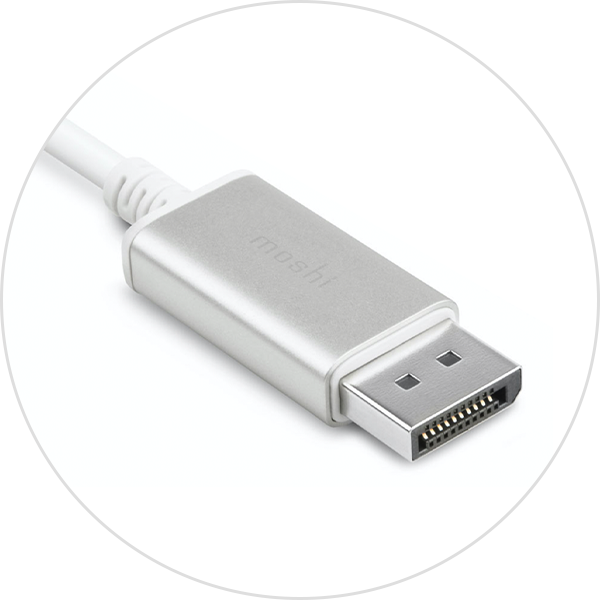
I. DisplayPort 1.4 vs 1.2: Core performance comparison
Bandwidth and data rate
DisplayPort 1.2: Provides 21.6 Gbps total bandwidth, maximum data rate 17.28 Gbps, supports HBR2 transmission mode, and can achieve 4K@60Hz (8-bit color depth) or 1080p@200Hz resolution and refresh rate combination.
DisplayPort 1.4: Bandwidth increased to 32.4 Gbps, data rate up to 25.92 Gbps, HBR3 mode introduced, supports 4K@120Hz (8-bit color depth) or 1440p@240Hz, and is compatible with 5K@60Hz and 8K@30Hz (DSC technology required).
Key technical features
Display Stream Compression (DSC): DisplayPort 1.4's unique lossless compression technology can break through bandwidth limitations and achieve 60Hz 4K@30-bit color depth + HDR or 60Hz 8K@10-bit color depth transmission.
HDR support: DisplayPort 1.4 adds support for HDR10 metadata, significantly improving color dynamic range, while 1.2 version only supports basic color gamut expansion (such as svRGB, Adobe RGB 1998).
Multi-Stream Transport (MST): Both support daisy chain connection of multiple monitors, but 1.4 version is more efficient in bandwidth allocation in multi-screen scenarios.
Audio and scalability
DisplayPort 1.4 supports up to 32 channels of audio transmission, which is more suitable for high-end audio devices than version 1.2 (no clear channel limit).
Version 1.4 is compatible with USB-C/Thunderbolt 3/4 interfaces, and can achieve video output through Alt Mode, while version 1.2 requires an additional adapter.
II. Application scenarios and compatibility analysis
Game scenarios
DisplayPort 1.2: Suitable for mainstream 4K@60Hz games or high refresh rate 1080p e-sports (such as 240Hz), but cannot meet the 4K high refresh requirements.
DisplayPort 1.4: Perfectly adapted to 4K@144Hz or 1440p@240Hz e-sports monitors, DSC technology can achieve 4K@240Hz (monitor support required).
Professional display scenarios
DisplayPort 1.2: Supports basic HDR (such as HDR10) and wide color gamut, suitable for static content creation such as photography and design.
DisplayPort 1.4: supports dynamic HDR (such as HDR10+) and higher color depth (10/12 bits), which is more suitable for high-precision requirements such as film and television post-production and 3D modeling.
Device compatibility
Both are backward compatible with older DisplayPort devices, but 1.4 cables cannot activate the DSC or HDR functions of 1.2 devices.
Newly released graphics cards (such as NVIDIA RTX 40 series, AMD RX 7000 series) and monitors (such as 4K@240Hz models) after 2023 generally require DisplayPort 1.4 or higher.
III. Purchase suggestions: Why choose DisplayPort 1.4 first?
Future compatibility
DisplayPort 1.4 cables can meet the current and next 3-5 years of hardware upgrade needs (such as 8K monitors, high refresh OLED screens).
Even if the existing device only supports 1.2, the 1.4 cable can still work normally, avoiding subsequent repeated purchases.
Technical Redundancy Advantages
DSC technology reserves space for higher resolutions (such as 8K@60Hz) or color depth (such as 12 bits) in the future.
32-channel audio support is suitable for high-end home theater or virtual reality equipment.
Brand and quality recommendations
Give priority to brands certified by VESA (such as Cable Matters, Club3D) to ensure that the cables comply with the DisplayPort 1.4 specification.
Avoid choosing non-certified cables, which may have bandwidth fraud or HDR compatibility issues.
IV. Summary: The irreplaceability of DisplayPort 1.4
Although DisplayPort 1.2 is still cost-effective in mainstream applications, DisplayPort 1.4 has become the "standard" for high-end display devices with its bandwidth advantages, DSC technology and HDR support. For gamers, content creators and hardware enthusiasts, choosing DisplayPort 1.4 is not only to pay for current needs, but also to reserve space for future technology upgrades. If the budget allows, DisplayPort 1.4 cables are undoubtedly a wiser choice.
Is Ethernet Adapter Better Than Wi-Fi? Here’s What You Need to Know
Display port types explained: Choose the display connection solution that suits you
Leave a Reply
Your email address will not be published.Required fields are marked. *