USB-C Docking Station Troubleshooting: Video Signal, Data & Power Faults
Views : 5790
Author : PURPLELEC
Update time : 2026-01-21 10:15:39
USB-C and Thunderbolt docking stations can act as a central hub for data distribution and video output; models that support USB Power Delivery can also charge the laptop. Users may encounter failures caused by a loose cable, an unsupported host-port feature, insufficient power, a driver problem, or shared bandwidth. The following troubleshooting procedures cover six common failure scenarios and help narrow the problem before hardware is replaced.
Start here: quick dock check
1. Note what fails: video, USB, charging, or all functions.
2. Reseat power and cables; test one known-good part at a time.
3. Record the host, dock, OS, cable rating, and display mode.
I. Troubleshooting Video Signal Loss (No Signal)
When an external monitor displays a black screen or "No Signal," possible causes include a loose or faulty cable, an unsupported display path, display settings, a driver problem, or a display-detection failure.
Troubleshooting Steps:
1. Verify Physical Link Integrity: Check HDMI or DisplayPort cables for damage and make sure every connector is fully seated. For 4K at 60 Hz over HDMI, use a certified Premium High Speed HDMI Cable. For DisplayPort, use a cable rated for the display's required link rate. Do not rely on a label such as "HDMI 2.0 cable" alone.
2. Port Swap Testing: Docks often have multiple video outputs. If the current port is unresponsive, test another supported output and, if possible, another monitor input or known-good cable. A successful swap narrows the fault path, but it does not by itself prove a soldering defect or damaged dock port.
3. GPU Driver Check: Outdated or faulty GPU drivers can contribute to external-display failures. Install Windows updates and applicable optional driver updates. If the problem began after an update, follow Microsoft's rollback or reinstall steps, or use the current driver supplied by the PC or GPU maker.
4. Ask the Operating System to Detect the Display: If the system does not automatically recognize the display, run its built-in detection command.
macOS: Apple menu > System Settings > Displays. Hold the Option key to reveal Detect Displays, then select it.
II. Input Device (Keyboard/Mouse) Latency or Failure
Intermittent disconnection or input lag can have several causes. For a 2.4 GHz wireless receiver near an active USB 3.x device, radio-frequency interference is one documented possibility.
Troubleshooting Steps:
1. Physical Reconnection & Tactile Confirmation: Re-plug the USB receiver or cable, ensuring the plug is fully inserted into the socket with clear tactile feedback to rule out poor contact.
2. Avoid USB 3.x RF Interference: Certain USB 3.x devices and cables can radiate broadband noise in the 2.4 GHz band, reducing the sensitivity or range of a nearby wireless receiver. Test the receiver on a USB 2.0 port or use a short extension cable to move it away from the dock and active USB 3.x devices. If lag improves after moving the receiver, USB 3.x proximity is likely contributing.
3. Execute a Model-Specific Power Cycle: Restarting the computer may not reset the dock. Use the reset or power-cycle steps for the exact dock model; do not assume one disconnect-and-reconnect order applies to every dock.
III. Device Not Recognized (Enumeration Failure)
When the system reports "USB Device Not Recognized" or the device is unresponsive, possible causes include the cable, insufficient power, unsupported host-port features, operating-system drivers or permissions, and device compatibility.
Troubleshooting Steps:
1. Check Whether the Dock Uses DisplayLink: DisplayLink software is required only for docks that use DisplayLink technology. On Windows 10 or 11, the software may install through Windows Update or from DisplayLink. On macOS, install DisplayLink Manager and grant the permissions requested by the app. Confirm the dock model before installing software.
2. Check Protocol Compatibility: Confirm the host USB-C port specifications. The connector shape alone does not guarantee Thunderbolt or DisplayPort Alt Mode. A dock that requires Thunderbolt may not work on a USB-C port that lacks Thunderbolt; a dock designed with USB fallback may work with reduced capabilities. Verify the host, dock, and cable specifications.
3. Controlled Variable Test (A/B Test): Connect the failing device directly to the computer, then test the dock with another known-good cable, port, or computer if available. If the direct connection works but the dock path fails, you have narrowed the cause to that path. The result does not prove whether the dock, cable, host compatibility, power, or bandwidth is responsible.
IV. Data Transfer Speeds Below Expectations
If SSD or external-drive speeds are far below the link rating, the limiting factor may be the host port, dock, cable, enclosure, drive, protocol overhead, or bandwidth shared with other devices. An advertised Gbps link rate is not a guaranteed sustained file-copy speed.
Troubleshooting Steps:
1. Match Port Specifications: Compare the labeled performance of every link, such as Hi-Speed USB (up to 480 Mbps), USB 5Gbps, or USB 10Gbps. The connection operates at the lowest mutually supported speed. Do not infer speed from port color alone; USB-IF treats blue as a recommendation and leaves identification to the implementer.
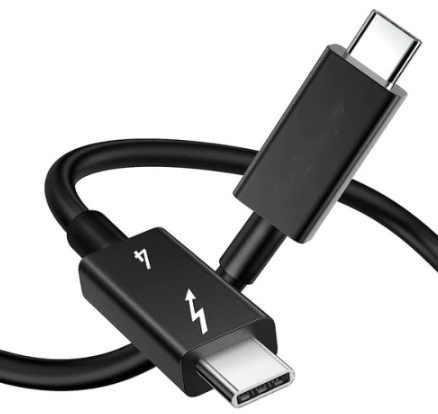
2. Verify Cable Capability: A USB-C connector does not reveal the cable's data rate. A Hi-Speed USB (USB 2.0, up to 480 Mbps) Type-C cable will limit a faster dock and drive. Check the original cable specification or, when present, the data-rate marking on a USB-IF-certified USB-C to USB-C cable.
3. Bandwidth Load Management: When multiple high-bandwidth devices, such as a 4K monitor and NVMe drive, operate simultaneously, the dock may share link capacity between video and data, depending on its implementation. Temporarily disconnect unnecessary displays or peripherals, repeat the same transfer, and compare results. If the transfer speeds up, shared link capacity is likely contributing.
V. Dock Has No Power or the Laptop Is Not Charging
A USB-C connector does not guarantee USB Power Delivery. Charging depends on the host port, dock, power adapter, cable, and the laptop's power requirement.
Troubleshooting Steps:
1. Check the Charging Path: Use the dock's designated host port. Confirm that the computer accepts charging through that USB-C or Thunderbolt port; some USB-C ports carry data but do not accept power.
2. Match Power Ratings: Use the adapter and host cable specified for the dock. Compare the dock's rated host output with the laptop's requirement; the dock and bus-powered devices consume part of the adapter's power budget.
3. Isolate the Source: Disconnect nonessential bus-powered devices, then test the laptop with its original charger. If direct charging works, check the dock's host-output rating, cable, firmware, and model-specific compatibility.
Stop and switch off AC power if an adapter or cable is frayed, exposed, bent, buzzing, or overheating.
VI. System-Level Maintenance
If the targeted measures above fail, use a model-specific maintenance check before replacing hardware:
Full Chain Restart: Follow the dock maker's instructions for the exact model. If the instructions call for a power cycle, use their stated disconnect, wait, and reconnection order, then test peripherals one at a time.
Firmware and Driver Check: Run operating-system updates, then visit the support pages for the exact host and dock models and install only applicable BIOS, firmware, and driver updates. An update may fix a documented compatibility problem, but it is not a universal remedy.
Consult the Technical Manual: Power behavior and supported display or data combinations vary by model. Use the manufacturer's manual, compatibility list, diagnostics, or support steps for the exact product.