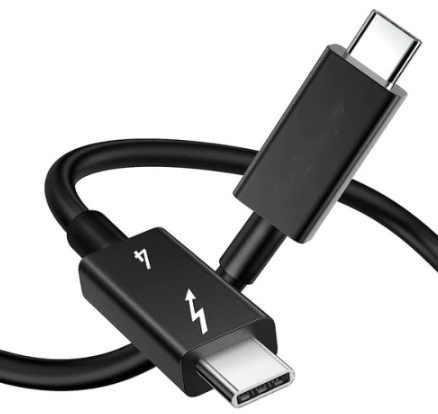
A great Thunderbolt dock extends the functionality of a computer by offering additional connections, each capable of the fastest data-transfer speeds, regardless if it’s a port-strapped laptop or a desktop computer. In evaluating our picks, we looked for the following features:
Port selection: In general, more ports are better, but we especially prefer useful ports such as USB-A and digital video output. Less expensive docks generally don’t have extra Thunderbolt ports, so you can’t connect additional Thunderbolt devices through such docks.
Port performance: Devices connected via the Thunderbolt dock should perform almost as well as devices connected directly to the computer.
Design and size: Everything else being equal, a smaller dock is better for your desk than a larger one.
Once niche, more Thunderbolt docks are gradually becoming available. For our 2024 testing, we used a 2023 15-inch M2 Apple MacBook Air and a Micro-soft Surface Laptop Studio to test the docks’ performance and speeds. Specifically, we ran the following tests:
USB-A, USB-C, Thunderbolt 3 or 4: The “standard” USB-A port is still the most common input for peripherals—including external drives, wired keyboards, and more—and most Thunderbolt docks have several of them. USB-C ports are less common, as are extra Thunderbolt ports.
Video: Almost all Thunderbolt docks promise dual 4K monitor support at a full 60 Hz, assuming that your computer and monitors support it. Using the appropriate cable depending on each dock’s port selection, we connected our 15-inch MacBook Air and the Surface Laptop Studio to a pair of 4K monitors. We set each monitor to its maximum resolution and verified that both were performing at the proper refresh rate. (Apple’s M-series-based MacBooks support only one external display, even if you’re using a dock.)
Power output: We used the Power tab in macOS’s System Report to view the wattage of the dock, and then we compared the figure against what each company advertised.
Audio: We tested each dock’s audio inputs and outputs by plugging microphone-equipped headphones into each of the audio jacks, making sure the input or output source was properly set in macOS or Windows.
Ethernet: We verified each hub’s connection speed in Network Settings on the Mac and in System Settings on the Surface Laptop Studio.
SD card: We ran AJA System Test on an OWC Atlas Pro SD to measure the read and write speeds.