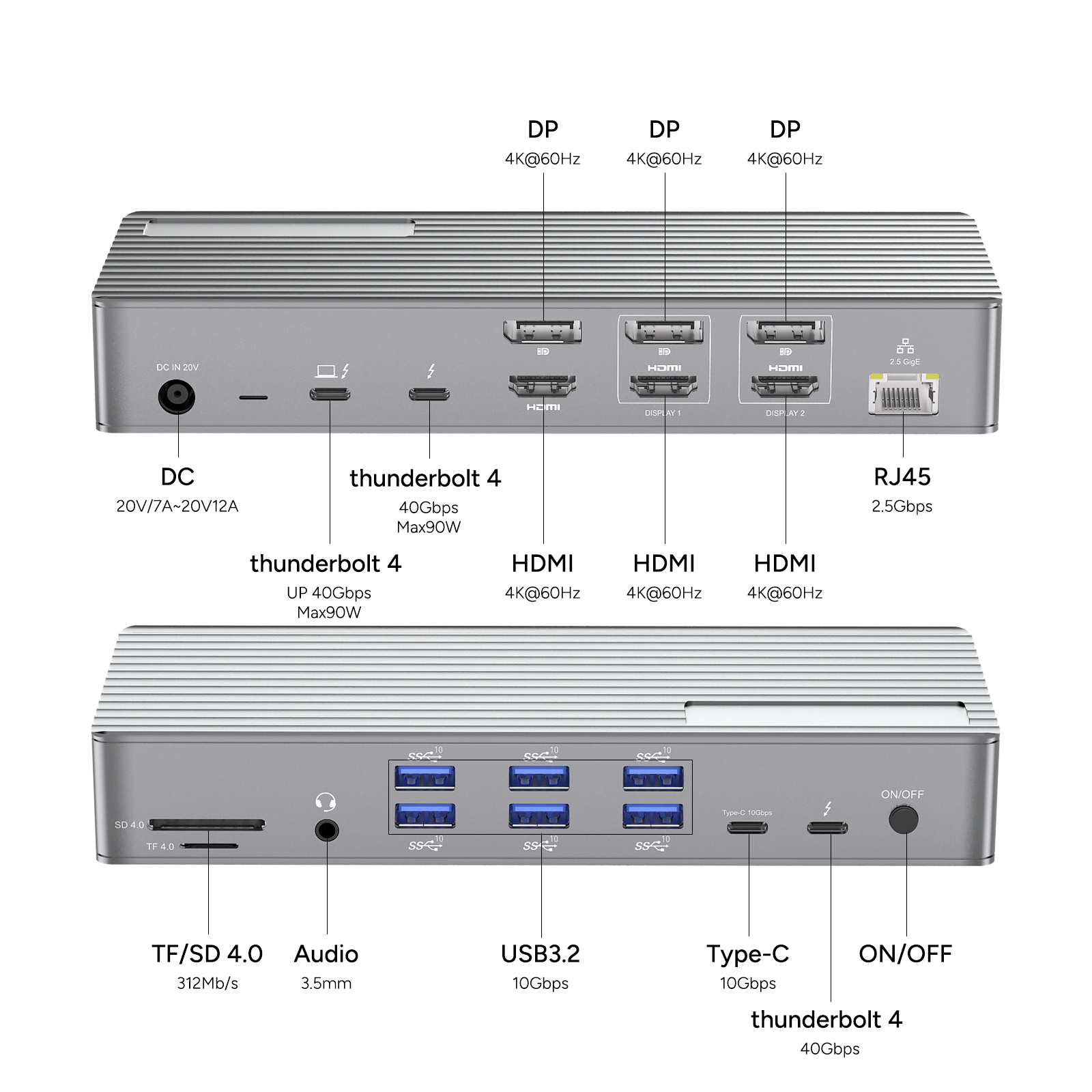
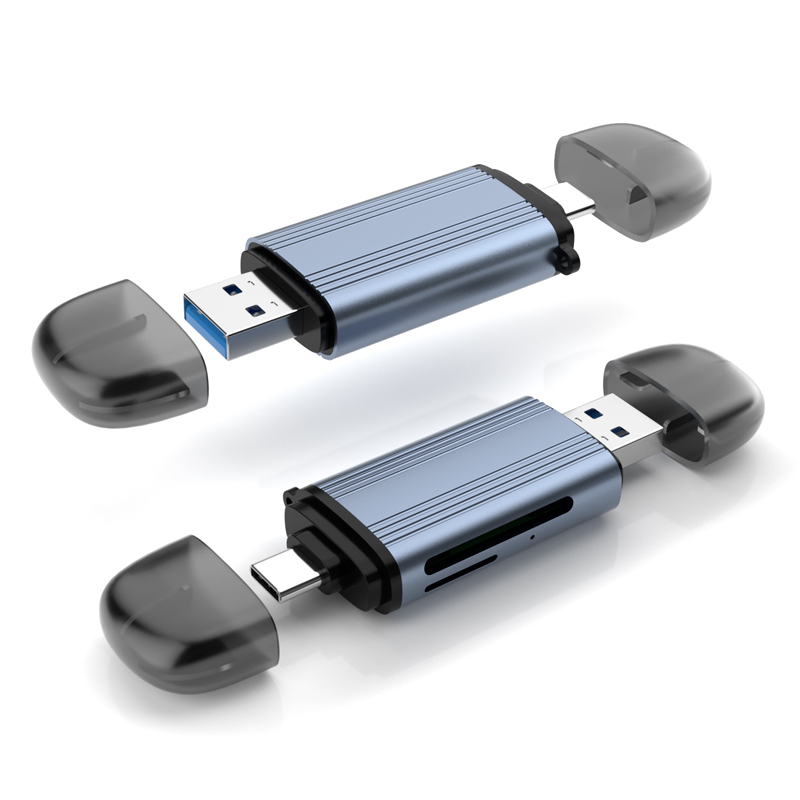
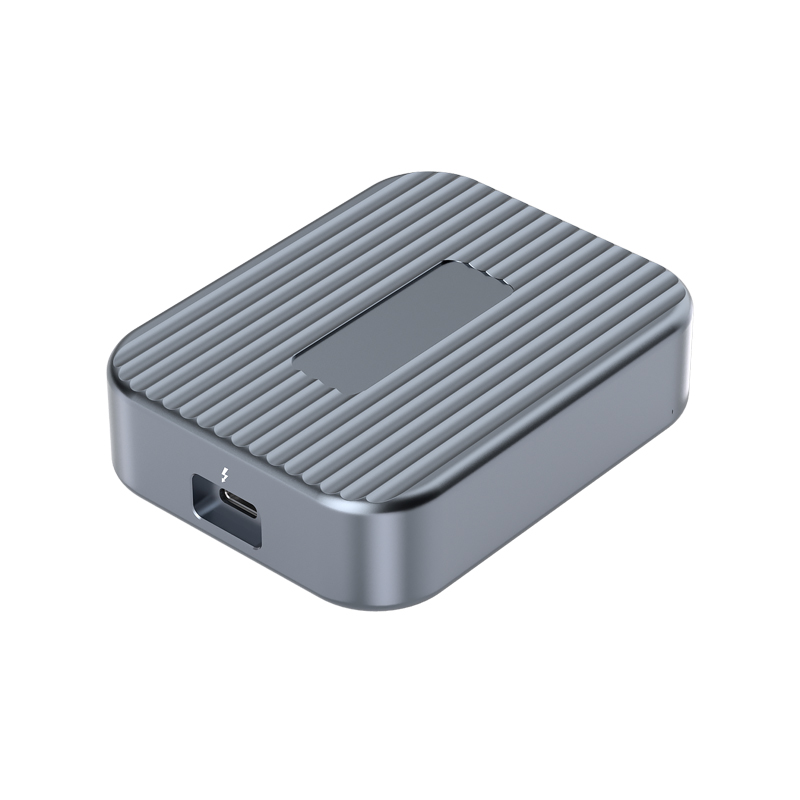
In the era of rapid integration between home theaters and office environments, wireless docking stations are becoming an increasingly popular choice for users. These devices can stably transmit high-definition signals from a source device to a TV or monitor without the need for physical cables. Their ability to penetrate walls for signal transmission is particularly valuable when the source and display devices are in separate rooms. Concerns about signal stability and image clarity are common—how do wireless docking stations actually perform? Let's explore their core benefits.
Eliminating Cable Clutter
Traditional wired solutions often require CATx cables for long-distance video transmission, involving wall drilling, wiring installation, and sometimes professional assistance. Tangled cables not only disrupt aesthetics but also pose tripping hazards and clash with interior details like baseboards. Wireless docking stations solve this by pairing a transmitter with a receiver. Simply connect the source device to the transmitter and the display to the receiver via HDMI, then power both units—wireless connectivity is established within a minute. The AV Access HDW100 Wireless Docking Station Kit exemplifies this simplicity: devices auto-pair upon power-up, requiring no driver installations or complex setups for true plug-and-play convenience.
Enhanced Spatial Flexibility
Forget about routing cables through walls or around obstacles. Attach your media device to the transmitter and your display to the receiver, and you're ready to go. Need to relocate the receiver to another display? Just move it—no dragging cables required. Premium models like the AV Access HDW100 deliver 1080P signal transmission up to 200 meters in open spaces and maintain stability within 10-50 meters even through drywall. Compact and portable, these stations grant freedom to position source devices and displays optimally, breaking free from cable constraints while ensuring equipment safety. For hard-to-wire areas, they extend audio/video signals precisely where needed, while strategic display placement improves audience viewing experiences.
Stable Independent Transmission
A common misconception is that wireless docking stations rely on Wi-Fi networks. In reality, most feature built-in wireless modules for direct point-to-point transmission of lossless audio/video signals, bypassing concerns over network congestion, disruptions, or signal loss. The AV Access HDW200, for instance, supports up to five independent docking station pairs in a single area without interference, enabling robust wireless systems for extending HDMI sources to remote displays effortlessly.
With advantages like effortless installation, flexible placement, and network-independent operation, wireless docking stations offer efficient solutions for home theater setups. From reducing cable chaos to maximizing spatial freedom and ensuring reliability, their value is proven in real-world scenarios. This guide aims to provide practical in-sights for users seeking superior viewing experiences.