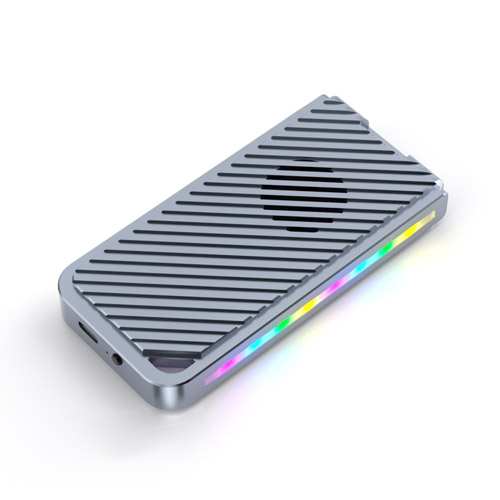
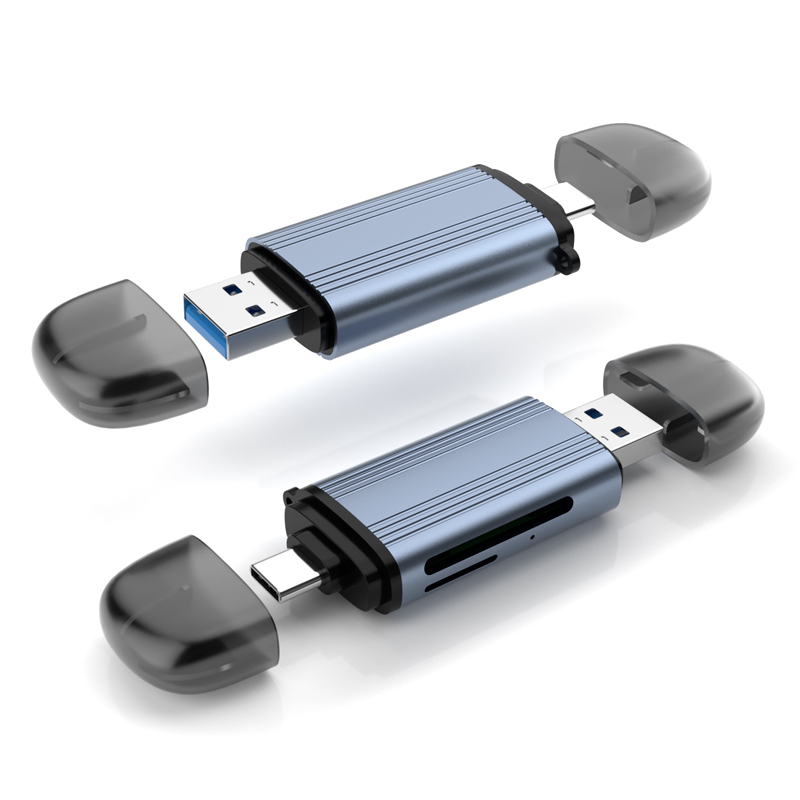
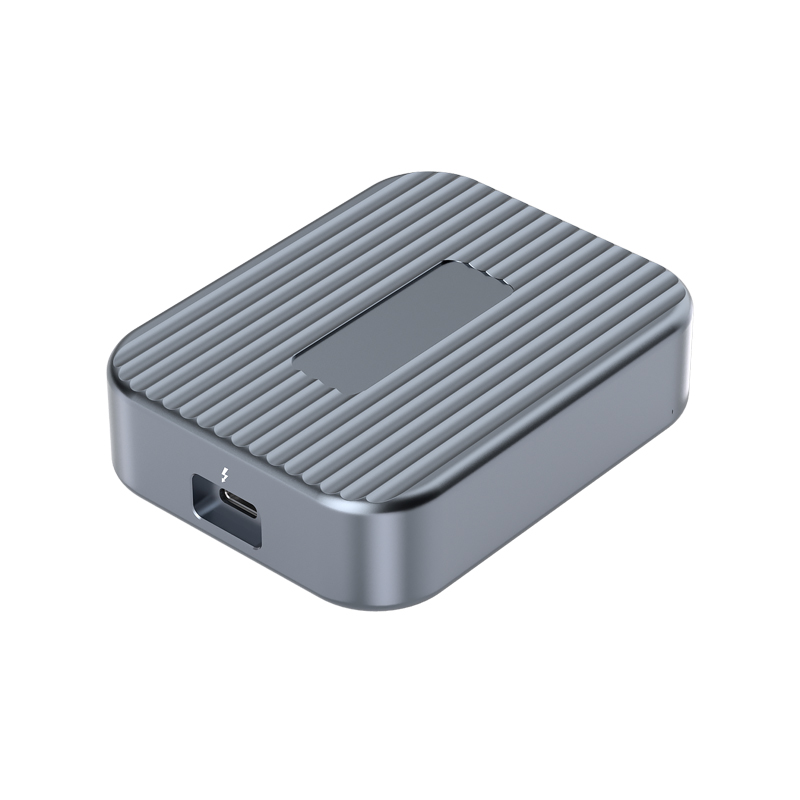
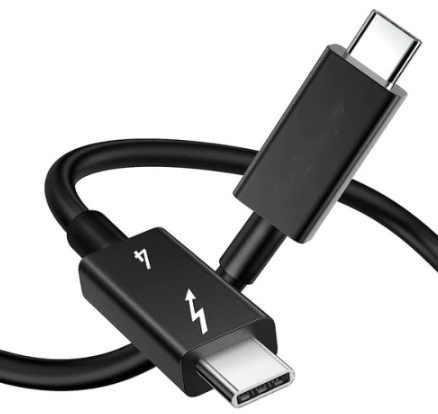

RTS5490, JHL7440, JHL8440 and JHL7540 all support connections in the 40 Gbps class, but they perform different roles in a system. RTS5490 is a USB4 hub controller. JHL7440 and JHL8440 target Thunderbolt 3 and Thunderbolt 4 peripherals, respectively, while JHL7540 is intended primarily for computers. Controller role, onboard PCIe resources and downstream port topology are more useful selection criteria than a model number or a single bandwidth figure.
For docking station and storage product development, we compare the published controller specifications and show how we apply JHL8440 and JHL7440 in our DS020 and DS043 designs. Host compatibility, display routing, power and certification have to be evaluated as one system because real performance depends on the complete implementation and test conditions.
Controller roles and intended applications
| Controller | Manufacturer classification | High speed port configuration | Design considerations |
|---|---|---|---|
| Realtek RTS5490 | USB4 hub controller | 1 USB4 upstream port and 2 USB4 downstream ports | USB4 expansion, downstream USB configuration and system integration |
| Intel JHL7440 | Titan Ridge Thunderbolt 3 peripheral controller | Two Thunderbolt ports | PCIe expansion on the peripheral side, storage devices and docks |
| Intel JHL8440 | Goshen Ridge Thunderbolt 4 / USB4 peripheral controller | Four ports, configurable as 1 upstream and 3 downstream | Multiple downstream Thunderbolt branches and desktop docks |
| Intel JHL7540 | Titan Ridge Thunderbolt 3 host controller | Two host Thunderbolt ports | Implementing Thunderbolt interfaces in computers |
On mobile, scroll the table horizontally to view all columns.
These port counts describe controller resources. A finished product does not necessarily expose every resource as an external connector. The specifications come from the Realtek RTS5490 announcement, the Intel 7000 Series controller brief and the official JHL8440 specifications.
USB4 and Thunderbolt: capabilities, compatibility and certification
USB4 and Thunderbolt share a technical foundation. USB-IF explains that the USB4 architecture builds on the Thunderbolt protocol specification contributed by Intel and carries different types of traffic over a shared high speed link. Thunderbolt 4 adds defined minimum capabilities and certification requirements. A claim of USB4 support is therefore different from a claim that a product is Thunderbolt 4 certified. See the USB-IF architecture overview and Intel's Thunderbolt technology overview.
Realtek identifies RTS5490 as a USB4 controller and lists USB-IF certification under TID 11930. Its announcement also specifies Thunderbolt 3 device compatibility, PCIe switching and support for external graphics applications. The USB4 designation is not evidence that this controller lacks PCIe or Thunderbolt device support. See the official Realtek announcement.
USB4 requirements must also be read according to device role. The USB-IF test matrix lists PCIe and DisplayPort tunneling as mandatory tests for a Hub/Dock. For a Host, PCIe tunneling is tested when the feature is supported. The optional condition for hosts must not be applied to hubs and docks. See the USB4 Product Test Matrix.
For an OEM/ODM project, we confirm three items separately: the target computer's interface capabilities, the controller features used in the design and the certification status of the exact production configuration. A 40 Gbps rating or a Thunderbolt compatibility statement is not a substitute for Thunderbolt 4 certification, and selecting JHL8440 alone does not certify a finished product.
PCIe interfaces determine how storage connects
A material difference between JHL7440 and JHL8440 is the native PCIe interface available to devices on the board.
| Comparison point | JHL7440 | JHL8440 |
|---|---|---|
| Local PCIe interface on the peripheral side | PCIe Gen 3 ×4 | Native PCIe ×1 at 8 GT/s |
| Capabilities to distinguish | Connection of onboard PCIe devices versus transport over the Thunderbolt link | Local ×1 interface versus 32G PCIe tunneling capability |
| Storage design considerations | Allocation of local lanes to SSDs and other PCIe devices | Whether storage connects to the local interface or through a downstream link and additional controllers |
On mobile, scroll the table horizontally to view all columns.
These specifications come from the Intel 7000 Series device architecture and the JHL8440 native interface and tunneling specifications. GT/s means billions of transfers per second; it is not the effective file read or write throughput in Gbps.
JHL8440's 32G PCIe tunneling capability does not mean that the chip has a native ×4 interface for direct SSD attachment. Its local ×1 interface also does not mean that every storage device connected to a downstream Thunderbolt port is restricted by that same interface. Identify bottlenecks along the device's connection path.
Realtek's RTS5490 documentation lists an integrated PCIe switch. For a design with onboard NVMe SSDs, verify the PCIe interfaces exposed by the selected version, its topology and firmware support. A statement of PCIe support alone does not establish interchangeability with JHL7440. Both approaches require validation of single drive and concurrent drive workloads, throughput with active display outputs, and temperature and power behavior under sustained load.
USB ports, DisplayPort and HDMI require different bandwidth metrics
Downstream USB ports and shared upstream bandwidth
RTS5490 provides 2 USB4 downstream ports and 2 USB 3.2 Gen 2x2 downstream ports, with the latter supporting the 20 Gbps USB class. JHL8440 supports up to 3 downstream Thunderbolt / USB4 branches and has a native 10 Gbps USB 3 interface. These resources affect the number of external high speed branches and the way USB devices connect. The attainable rate still depends on support across the device, cable and complete connection path.
Adding downstream ports does not increase the bandwidth of the 40 Gbps upstream connection discussed here. Concurrent display, storage and peripheral traffic must be budgeted according to the link and protocol path. A specification should distinguish the nominal port rate, effective payload bandwidth and file copy speed at the application layer.
A DisplayPort version does not define the finished product's display capability
The RTS5490 announcement lists DisplayPort (DP) 2.1, while the published information for JHL7440, JHL7540 and JHL8440 lists DP 1.4 capabilities. The interface version identifies a set of possible functions. The implementation still needs to be checked for link rate, lane count, compression support and video routing.
Four HBR3 lanes provide a raw rate of 32.4 Gbps, or 25.92 Gbps after 8b/10b encoding overhead. Four UHBR20 lanes provide a raw rate of 80 Gbps, but DP 2.1 does not by itself guarantee UHBR20 support. VESA also states that DP 2.1b certification includes devices without UHBR support. See the VESA DisplayPort technical announcement and the VESA certification and bandwidth FAQ.
An 8K display at 60 Hz is not proof of an 80 Gbps link either. DP 1.4 can support such applications using Display Stream Compression (DSC). Acceptance testing should record resolution, refresh rate, color depth, chroma format, whether DSC is enabled, and the conditions for single or multiple displays. See VESA's explanation of DP 1.4 and DSC.
HDMI output depends on the complete video design
These controllers' DP capabilities do not directly specify the finished product's HDMI output. Sending a native DP path to an HDMI connector requires an appropriate conversion design; DisplayLink outputs use a separate display path. The maximum HDMI mode depends on the converter, transport mode, compression handling, host output and monitor. It cannot be established from the Thunderbolt or USB4 controller part number alone. See Intel's notes on display conversion.
Multi-Stream Transport (MST) carries multiple video streams over one DP link. DisplayLink requires separate evaluation of the USB graphics implementation and its software requirements. List the number of physical video connectors, DP tunnels and supported independent extended displays separately. See the Synaptics DisplayLink overview and driver resources.
DS020 and DS043: how we build around Thunderbolt controllers
DS020: broad connectivity and flexible display expansion
Our DS020 is built around Intel's JHL8440 controller. Our current standard DS020 configuration is Intel Thunderbolt 4 certified. When an OEM/ODM project changes the hardware, firmware, port layout or power design, we confirm certification coverage for the final configuration rather than carrying the standard model's certification over automatically.
DS020 provides one 40 Gbps Thunderbolt 4 upstream port with up to 90 W host charging, two 40 Gbps downstream Thunderbolt 4 ports, six 10 Gbps USB-A ports, one 10 Gbps USB-C port and 2.5GbE. Its dedicated HDMI and DisplayPort outputs support up to 4K at 60 Hz, and two additional DisplayLink groups each provide an HDMI/DisplayPort choice at up to 4K at 60 Hz. Within each DisplayLink group, HDMI and DisplayPort share one output path, so only one connector in the pair can be used at a time.
JHL8440 provides the Thunderbolt backbone, while supporting controllers implement USB, Ethernet, card-reading and DisplayLink functions. We therefore assess the controller resources, the physical ports and the additional DisplayLink paths separately. Tell us the target computer, operating system and required monitor setup, and our team will confirm the supported display matrix. The maximum mode listed for each connector does not mean that every output can run at its maximum resolution simultaneously. For the chip-level architecture, see our JHL8440 technical analysis.
DS043: NVMe storage with desktop expansion
Our DS043 takes a different approach. Built around JHL7440, it combines two M.2 NVMe slots with two DisplayPort outputs rated up to 4K at 60 Hz, three 10 Gbps USB-A ports, card reading and a Type-C auxiliary power input. Because available display combinations vary with the host and operating system, we confirm the intended setup as part of the project configuration.
With two M.2 slots, total storage performance depends on PCIe resource allocation, shared bus bandwidth and the workload running across both drives. A single drive's peak figure cannot simply be doubled to predict total throughput. The Type-C auxiliary power connector supplies power to the dock; it is not a USB Power Delivery output for charging a laptop.
DS020 focuses on broad port and display expansion, while DS043 adds integrated NVMe storage. The right choice depends on the target host, required display combinations, storage workload and power design—not the Thunderbolt generation alone. Share those requirements with us, and we can recommend and validate the appropriate configuration for your project.
Requirements for engineering, procurement and product teams
| Evaluation area | Required project documentation |
|---|---|
| Engineering design | Host or peripheral role, port topology, PCIe connectivity, video paths, firmware and power budget |
| Performance acceptance | Test conditions for single and concurrent drive workloads, simultaneous display and storage use, thermal stability, hot plugging and sleep/wake recovery |
| Procurement | Exact part number and revision, certification coverage, confirmed lead times, complete product BOM cost and lifecycle status |
| Product definition | Target systems, simultaneous port and display combinations, driver requirements and published specifications |
On mobile, scroll the table horizontally to view all columns.
Cost comparisons should include the complete bill of materials (BOM), auxiliary chips, power delivery, cooling, firmware and validation effort. A controller quotation alone does not determine the cost of a finished product. Cost or reliability rankings between brands require data collected under comparable purchasing conditions and validation scopes.
Lifecycle information must be checked by exact model. As of August 28, 2026, Intel ARK lists JHL7540 as Discontinued. New designs should confirm supply arrangements and replacement plans. That status does not establish distributor inventory levels, nor does it imply that JHL7440 or JHL8440 has the same status. See the official JHL7540 lifecycle listing.
Tell us what your dock needs to do
The controller is only one part of a workable docking station. To recommend a DS020, DS043 or custom USB4/Thunderbolt configuration that we can validate for your application, we need the actual host, display, storage and power requirements:
- Target computers, operating systems and Thunderbolt or USB4 interface capabilities.
- Display count, resolution, refresh rate, color requirements and simultaneous output combinations.
- SSD Enclosure count, expected concurrent workloads, and requirements for USB, networking and other peripherals.
- Host charging, peripheral power, certification requirements and expected order volume.
Send these details through our project consultation page. We will review the port topology, display combinations, storage path, power requirements, driver needs and certification scope, then discuss whether an existing DS020 or DS043 configuration—or a custom OEM/ODM design—is the right starting point.