In today's fast-paced digital office environment, dual-screen office and even multi-screen office have become standard configurations for many professionals, especially in crea-tive fields such as programming, design and video editing that require a lot of multitasking. With the increasing demand for multiple monitors, a single monitor can no longer meet the work needs of users, and multi-stream transmission (MST) technology came into being in this context.
Multi-stream transmission technology (MST) is a unique feature of DisplayPort that allows users to connect multiple external monitors through one port. MST was first introduced by the VESA Association in 2009 and incorporated into the DisplayPort 1.2 standard in 2010. Compared with single-stream transmission (SST), MST is able to split a video signal into multiple independent streams, thereby displaying different content on multiple monitors at the same time. The introduction of this technology greatly improves work efficiency and enables users to better multitask.
How MST technology works
The working principle of MST is to split a single video signal into multiple streams, which can be displayed independently on the connected monitors. Users can connect multiple monitors through a single DisplayPort (DP) port to create a larger, more immersive workspace. There are two main ways to connect MST: daisy chain and connection through a third-party device (such as MST Hub or KVM switch). Daisy chain mode allows users to connect the DP input port of one monitor to the computer, and then connect to the next monitor through the DP output port to achieve device series connection.
Advantages of MST Technology
The advantages of MST technology are mainly reflected in the following aspects:
1. Connection optimization: Transmitting signals for multiple monitors through one cable simplifies cable management and makes multi-screen settings more convenient.
2. Improve efficiency: Multi-monitor settings allow users to work on different applications and documents at the same time, significantly improving work efficiency.
3. Expand space: MST supports extending or mirroring multiple monitors, providing a wider visual space for encoding, data analysis and software testing.
MST setup requirements and methods
To use MST technology to build a multi-monitor setup, users need to ensure the following conditions:
1. The laptop or desktop must have a port that supports DP MST.
2. The connected monitor must support MST and enable the function.
3. The graphics card must support DP MST.
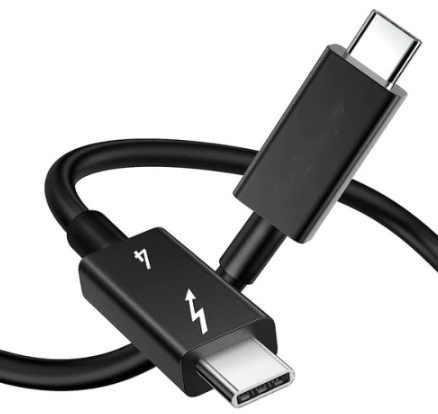
In addition, some USB-C or Thunderbolt ports also support MST, but it should be noted that Macbook only supports DP SST, so it is not suitable for MST multi-monitor setup.
Conclusion
Multi-stream transport (MST) technology provides users with an efficient and flexible solution to build a multi-monitor work environment. Whether connected through daisy chain or third-party devices, MST can meet users' needs for multitasking and help them cope with increasingly complex work tasks. With the continuous development of digital office, the application prospects of MST technology will be broader.