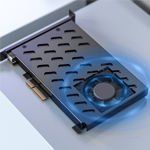
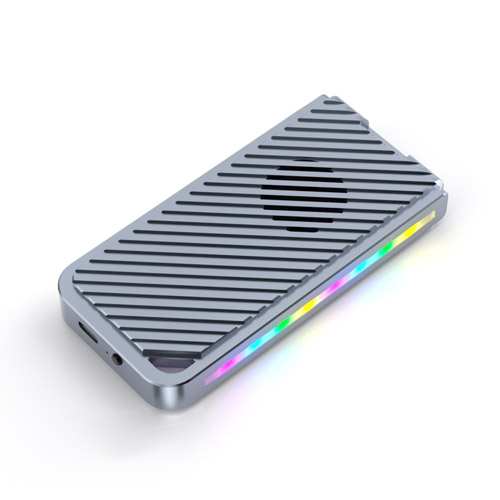
The function of DV video capture card is to capture video signals into the computer and save them on the hard disk in the form of data files. It is an essential hardware device for video processing. Through it, we can transfer the video signals shot by the camera from the video tape to the computer, and use relevant video editing software to perform post-editing processing on the digital video signals, such as cutting pictures, adding filters, subtitles and sound effects, setting transition effects, adding various video special effects, etc. Finally, the edited video signals are converted into standard VCD, DVD and online streaming media formats for easy dissemination.
The reasons why a DV camcorder utilizes a video capture card can be summarized as follows:
First, video signal transmission and editing
Signal conversion and transmission:
The video signals generated by a DV camcorder are either ana-log or digital, which need to be converted into digital signals recognizable by a computer through a video capture card before they can be stored and processed. The video capture card serves as a bridge between the computer and video devices, ensuring the smooth transmission of video signals.
Editing and post-production:
The video capture card not only transmits video signals to the computer but also allows users to edit and post-produce the videos. For instance, users can trim videos, add subtitles, special effects, background music, etc., enhancing the quality and viewing experience of the videos.
Second, support for multiple video sources
Compatibility: Video capture cards typically support multiple video input formats, including those from DV camcorders. This enables users to easily connect and use different types of video devices, achieving unified processing and management of video signals.
Third, achieving high-quality video capture
HD capture: Modern video capture cards often support high-definition (HD) video capture, enabling them to capture high-quality video footage. This is crucial for users requiring high-resolution videos, such as in film production, advertising photography, and other fields.
Fourth, real-time video transmission and live streaming
Real-time transmission: Video capture cards support real-time video transmission, allowing users to transmit video footage captured by a DV camcorder in real-time over the internet for live streaming or sharing. This is particularly useful for scenarios requiring real-time video content transmission, such as news broadcasts and sports event live streams.
Fifth, hardware compression and space savings
Hardware compression: Most video capture cards feature hardware compression capabilities, compressing video data while capturing video signals, thereby reducing storage space requirements. This is practical for users who need to record and save large amounts of video content over extended periods.
Sixth, enabling advanced features like dual-machine live streaming
Dual-machine live streaming: Video capture cards can also be used for advanced features like dual-machine live streaming. By installing a capture card on one computer and capturing video signals from another, users can achieve a setup where one computer handles gaming while the other handles streaming, enhancing streaming stability and video quality.
the use of a video capture card with a DV camcorder is driven by the need for video signal transmission and editing, support for multiple video sources, high-quality video capture, real-time video transmission and live streaming, hardware compression and space savings, as well as enabling advanced features like dual-machine live streaming. These capabilities make video capture cards widely applicable in video production, live streaming, education, healthcare, and other fields.