Apple's M1 and M2 series of chips bring significant performance improvements to MacBooks, but are somewhat limited in terms of external monitor support. M1/M2 Pro supports two external monitors, M1 Max supports up to four, and with the help of a docking station, M1/M2 Max can even support five monitors. However, the base M1 and M2 chipsets are limited in dual-monitor support, which can be a challenge for Apple users who need multiple monitors to streamline their workflow.
Nonetheless, Purplelec offers a docking station and video adapter solution that allows owners of Apple's new M2 MacBook to quickly set up multiple monitors. This article will explore how to set up dual monitors on a MacBook Pro or Air device powered by the M1 and M2 base chipsets, and cover the two main use cases.
M2 dual monitor options and limitations
According to Apple's technical specifications, the M2 chipset only supports an external monitor with a maximum resolution of 6K and 60Hz. At WWDC 2022, Apple announced that the base M1 and M2 chipsets will continue to support single monitors only, which is bad news for users who want to use multiple monitors on these devices. But luckily, Purplelec's docking stations and video adapters provide a solution.
Use the docking station to connect dual monitors
Users who already have a docking station: Simply connect the USB-A DisplayLink video adapter to the docking station and download the latest DisplayLink driver for macOS to expand your display capabilities. Purplelec offers a range of compatible adapters, such as USB-A to DisplayPort™ 4K video adapters.
For those without a docking station: Purplelec offers a variety of USB-C® DisplayLink docking stations to choose from, which utilize DisplayLink technology to connect multiple displays without the need for additional adapters. Once you decide which DisplayLink docking station is best for your workstation setup, just download the latest DisplayLink software for macOS.
M1/M2 basic chipset and single monitor support
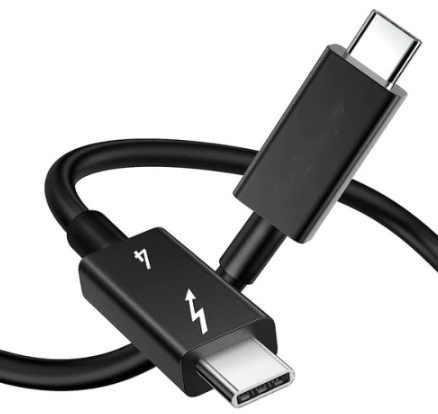
Apple's decision to support a single native display was puzzling at first, but with the release of Pro, Max, and Ultra chipsets, the decision makes more sense. However, as with any M1 or M2 chipset-based device, users will need to look for alternatives if their desktop setup requires multiple external monitors. Purplelec's USB-C®, Thunderbolt™ 3 or Thunderbolt™ 4 docking station supports these users.
Purplelec solutions enhance visual performance
For multiple display needs on base chipset M1/M2/M3 MacBooks, Purplelec offers a range of industry-leading DisplayLink docking stations. For MacBooks equipped with M1/M2/M3 Pro, Max or M1/M2 Ultra, Purplelec offers a variety of Thunderbolt™ solutions, supporting up to 40Gbps data transfer, dual 4K video and 85W or higher power transfer, all Achieved via a cable.
In summary, despite the limitations of Apple's M1 and M2 chipsets in terms of external monitor support, with Purplelec's docking station and video adapter solutions, users can still easily connect their MacBook with multiple external monitors to suit their needs. their job requirements.