By PURPLELEC | 15 August 2024 | 0 Comments
The difference between video capture cards in video conferencing and surveillance
There are many differences in the application of video capture cards in the field of video conferencing and monitoring. These differences are mainly reflected in the types, interfaces, functional requirements and system implementation methods of the capture cards.
1. Capture card types and interfaces
Video conferencing capture cards: Video conferencing systems generally use streaming capture cards. This type of capture card can usually only capture one channel of image data. The analog signal is converted to a digital signal without compression, so it is also called a video soft compression card. Video conferencing equipment generally uses AV or HDMI interfaces to connect the PTZ camera to the capture card.

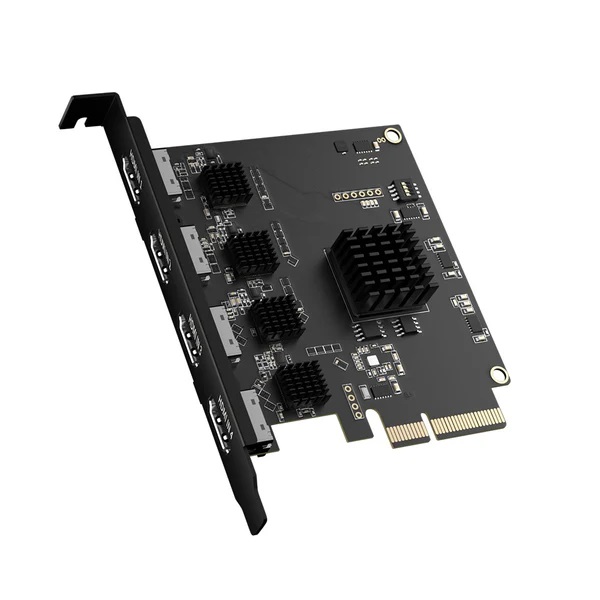
Monitoring capture card: The capture card used by the monitoring device is a type of video capture card. It generally has multiple data interfaces and can capture multiple channels of video at the same time. The data is compressed, so it is also called a video hard compression card. Monitoring equipment usually uses a BNC interface to connect monitoring equipment and capture cards.
2. Functional requirements
Video conferencing: Video conferencing systems have very high requirements for video clarity, scalability, compatibility, etc., and audio also needs to be captured synchronously with video. In addition, video conferencing capture cards may also need to support multi-channel compatibility to meet the needs of large-scale conferences.
Monitoring: The main function of the monitoring system is real-time monitoring and recording. It is necessary to collect multi-channel video images and perform real-time compression and recording. For the compression of multi-channel videos, it is difficult to achieve real-time performance through software, so the monitoring system usually adopts hard coding. However, when the number of capture channels is not large, it may also support the use of soft coding.
3. System implementation method
Video conferencing system: Video conferencing systems generally use software video encoding, but some high-end systems may also use hard coding to achieve real-time data transmission. Such a system can adapt to different network environments and hardware conditions more flexibly.
Monitoring system: Due to its real-time and multi-channel video processing requirements, the monitoring system usually uses hard coding to compress and transmit video data. This can ensure the real-time and stability of video data while reducing the occupation of system resources.
4. Other differences
Application scenarios: Video conferencing acquisition cards are mainly used in scenarios that require real-time audio and video transmission, such as remote meetings, online education, and telemedicine; while monitoring acquisition cards are widely used in security monitoring, industrial automation, intelligent transportation and other fields.
Performance requirements: Due to different application scenarios, video conferencing capture cards usually have higher performance requirements, such as higher clarity, lower latency, stronger stability, etc.; while monitoring capture cards focus more on real-time and multi-channel video processing capabilities.
There are obvious differences in the application of video capture cards in the fields of video conferencing and monitoring. These differences are mainly reflected in the type, interface, functional requirements and system implementation of the capture card. When selecting and using a video capture card, you need to choose the appropriate type and specification according to the specific application scenario and requirements.
What protocols does USB4 support?
Application of high-definition VGA video capture card in large-screen splicing system
Leave a Reply
Your email address will not be published.Required fields are marked. *