By PURPLELEC | 24 February 2025 | 0 Comments
In-depth analysis of CFexpress cards
CFexpress is a removable storage standard based on the PCIe interface and NVMe protocol, designed to meet modern high-bandwidth data needs. Its technical architecture achieves significant performance differences from the traditional SATA interface by natively supporting the physical layer and protocol layer of the PCIe bus, showing generational advantages in transmission rate and protocol efficiency.
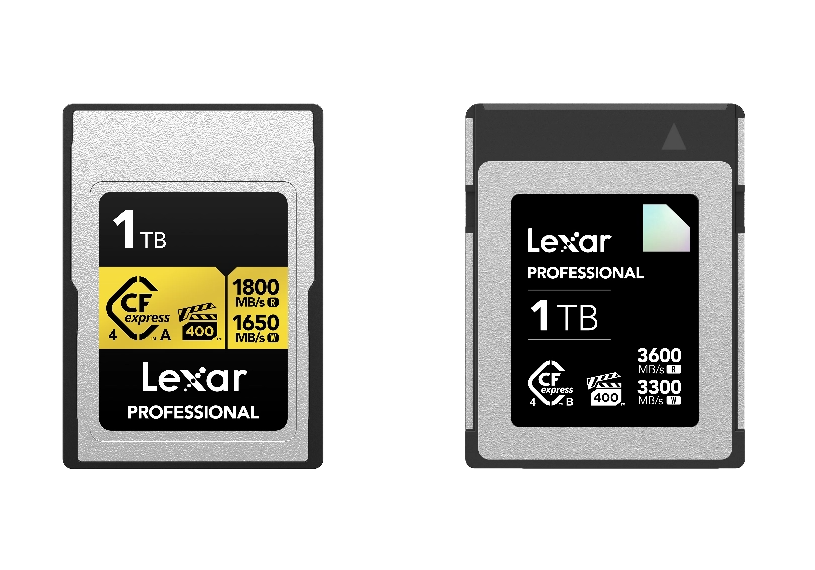
The standard includes three physical specifications, corresponding to different PCIe channel configurations:
Type A: Single-channel design (PCIe x1), mainly for entry-level devices
Type B: Dual-channel configuration (PCIe x2), with dimensions of 38.5×29.8×3.8mm and a maximum power consumption of about 3W, which is the mainstream specification with the highest market share
Type C: Four-channel version (PCIe x4), suitable for professional-level devices
In terms of application scenarios, CFexpress cards have become the core storage medium for professional photographic equipment due to their full-duplex transmission characteristics (read and write operations can be performed simultaneously), especially in 8K ultra-high-definition video recording, high-speed continuous shooting and other scenarios. It is worth noting that Microsoft's Xbox S|X series consoles innovatively use the CFexpress specification to build a storage expansion system, implement DirectStorage technology through the NVMe protocol, and significantly shorten game loading time with the Velocity Architecture architecture. The measured reading speed can reach 1,700MB/s, and the writing speed exceeds 1,500MB/s.
In terms of technical features, current high-end CFexpress memory cards have achieved:
Capacity expansion: Supports up to 2TB TLC flash configuration
Intelligent management: Integrated wear leveling algorithm, bad block management and other SSD-level durability technologies
System optimization: Full support for TRIM instruction set and firmware online upgrade function
Protocol advantage: 300% increase in theoretical transmission bandwidth compared to USB 3.2 interface
With the continuous improvement of mobile storage performance requirements in emerging fields such as 4K/8K film and television production and cloud computing edge nodes, the CFexpress standard is evolving to a transmission rate of more than 4000MB/s through PCIe 4.0/5.0 version iterations, showing strong technical vitality.
Exploring the secrets of high-performance SDXC cards: a powerful force in the world of storage
USB 3.2 Type-C M.2 Hard Drive Enclosure Technical Analysis
Leave a Reply
Your email address will not be published.Required fields are marked. *