By PURPLELEC | 27 May 2025 | 0 Comments
What are Cable Certifications?
Today, with the widespread use of digital devices, cables serve as the "bridge" connecting various devices, and their quality and performance directly affect the user experience. However, the quality of cable products in the market varies greatly, and cable certification is like a product's "quality ID card", ensuring that cables meet specific performance, quality, and safety standards through strict testing and auditing. HDMI, VESA, USB-IF, Intel Thunderbolt, and Apple MFi certifications are important criteria for consumers to choose high-quality cables. Understanding them can help us make wise choices among a wide range of cable products and ensure stable and reliable device operation.
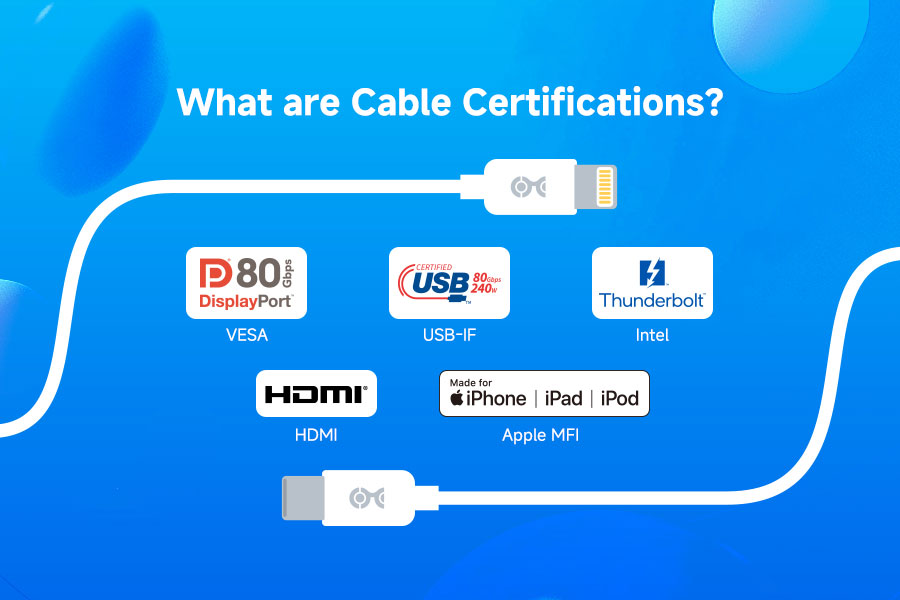
Cable certification: the guardian of the technological ecosystem
Cable certification is a crucial step in ensuring that cable performance meets standards. It is like a "quality seal" issued by authoritative institutions, only cables that have passed strict testing and meet specific quality and performance standards can obtain certification. In the mixed cable market, without certification control, consumers will find it difficult to distinguish the quality of products, which may not only result in poor performance but also pose safety hazards.
The significance of certification goes far beyond protecting consumers, it is also the maintainer of industry standards. Standardization protocols enable products from different manufacturers to be compatible with each other, building a collaborative technological ecosystem for development. Taking the fiber optic cabling service industry as an example, even minor performance differences can lead to serious problems, and cable certification ensures that the industry follows best practices and guarantees the stable operation of the entire ecosystem.
In addition, certification is also crucial for standardizing the cable installation process. Certified cables are designed for specific technical requirements, making them easier for engineers and technicians to install, reducing the probability of problems caused by improper installation (such as incorrect termination), and also helping to improve the professional skills of installers and promote career development.
Detailed explanation of mainstream cable certification
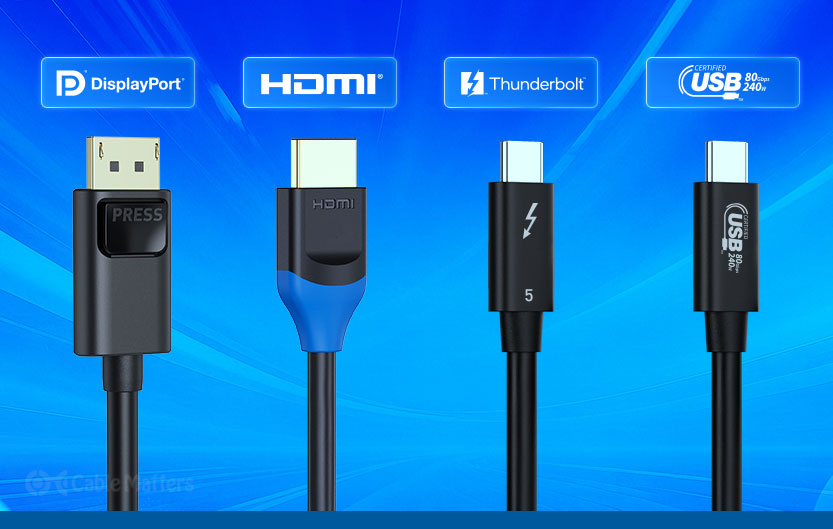
HDMI certification: Quality assurance for high-definition audio and video
HDMI (High Definition Multimedia Interface) is a commonly used interface for transmitting high-quality video and audio signals, and its certification is strictly supervised by the HDMI licensing authority. This certification aims to maintain the performance integrity of HDMI technology in various devices and applications, and is divided into four categories: standard, high-speed, high-quality high-speed, and ultra high speed. Different types of certifications correspond to different performance standards, and ultra high speed HDMI cables can support 8K video resolution and HDR, making them an ideal choice for building advanced home theater systems. Having HDMI certified cables can provide users with excellent audio-visual experience, avoiding problems such as signal attenuation and image blur, making it the best choice for users pursuing high-quality audio and video effects.
VESA certification: a leader in display standards
The Video Electronics Standards Association (VESA) is highly authoritative in the display field, and its DisplayPort cable certification standard ensures the high quality of cables. VESA certification is crucial for distinguishing between different versions of cables such as DisplayPort 1.4, 2.0, and 2.1, ensuring that the cables support the latest display standards, such as higher resolutions and refresh rates. Cables certified by VESA perform exceptionally well in terms of performance, and have been rigorously tested to meet technical requirements. Consumers can use them with confidence. With the continuous advancement of display technology, VESA certification always keeps up with the forefront of the industry, ensuring that cables can meet advanced resolution and HDR functional requirements.
USB-IF certification: a quality benchmark for USB cables
The USB Implementers Forum (USB-IF) is responsible for certifying various USB cables, including USB-A, USB-C, and USB4. Different types of USB cables have different purposes and performance, and USB-IF certification ensures that they meet standards in terms of data transfer rate, power output, and reliability. The certification process is comprehensive and strict, and manufacturers need to submit their products for multi-stage testing. Only cables that successfully pass all tests can obtain certification and become a symbol of reliable quality. USB-IF certified cables can stably achieve the nominal data transmission rate and power supply capability, efficiently completing device charging and transferring large files, providing users with a convenient and reliable user experience.
Intel Thunderbolt Certification: Pioneer in High Speed Transmission
Intel holds a core position in the development and certification of Thunderbolt technology. Thunderbolt cables are highly favored for their high-speed data transfer and versatility, and the Thunderbolt certification program ensures that the cables achieve the expected performance and interoperability. From Thunderbolt 3 introducing USB-C compatibility to Thunderbolt 4 enhancing security and performance, each generation of technology has seen significant improvements. Intel's strict certification process ensures that Thunderbolt cables meet high performance and compatibility requirements. For professionals engaged in video editing, data transmission, and multi device connectivity, certified Thunderbolt cables are a reliable partner for efficient work.
Apple MFi Certification: Exclusive Adaptation for Apple Devices
Apple's "MFi Certification" (Made for iPhone/iPad) is specifically designed for Apple device accessories, ensuring compatibility and performance between accessories and Apple devices. Manufacturers who want to obtain MFi certification must meet the strict requirements set by Apple, including rigorous testing to ensure that accessories seamlessly adapt to Apple devices without causing damage or affecting performance. The certification process covers multiple aspects such as design and functionality. Products that pass certification not only have strong compatibility and excellent performance, but also enjoy Apple's customer support. In contrast, unverified products pose compatibility issues, performance degradation, and even device damage risks. Therefore, choosing MFi certified accessories is a wise move to extend the lifespan of Apple devices and enhance the user experience.
The profound impact and core value of cable certification
Comparing HDMI, VESA, USB-IF, Intel Thunderbolt, and Apple MFi certifications, although each has its own focus, they all aim to ensure cable reliability and compatibility. These certifications have mutual influence and collaborative development. The progress of a certain certification standard often drives improvements in other fields, promotes innovation in the entire industry, and enhances the overall level of the technological ecosystem.
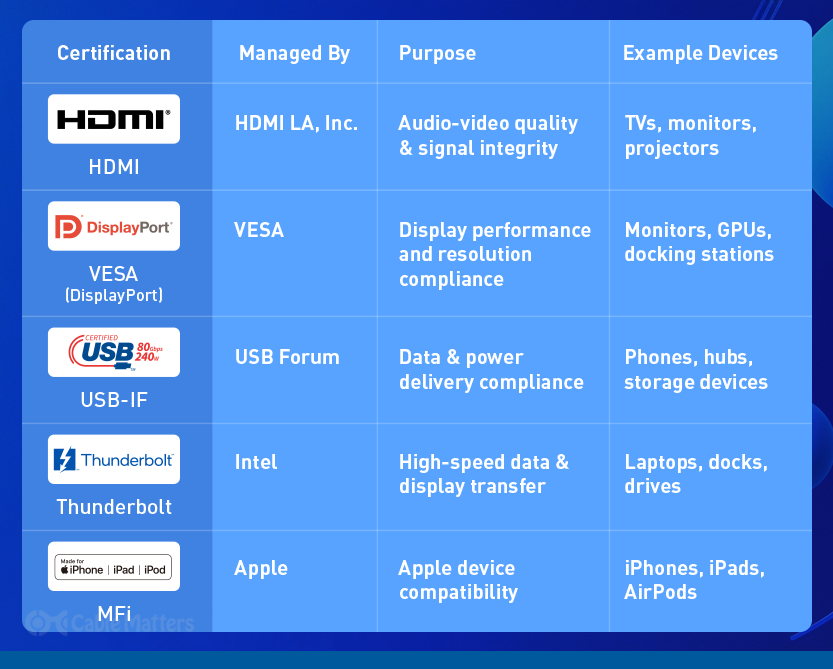
In practical applications, cable certification has a significant impact on fiber optic cabling and installation processes. Certified fiber optic cables and standardized installation practices can significantly improve the efficiency and stability of network systems, playing a key role in both consumer and professional fields.
For consumers, the benefits of cable certification are tangible. Certified cables meet high standards, greatly reducing the probability of failure and ensuring compatibility with various devices. Even in the face of new technological developments, they can maintain good adaptability and provide long-term protection for consumers' technological investments. In addition, certified cables usually come with warranty and exclusive customer support, allowing consumers to use them with peace of mind. Choosing certified cables means rejecting counterfeit and inferior products, building a strong defense line for equipment and personal safety, and is an inevitable choice for pursuing a quality life in the era of technology.
Cable certification is an indispensable part of modern technological life. It is like a guardian of quality, building the foundation of safety and performance for the cables we use in our daily lives. From high-definition audio-visual experience to efficient data transmission, from Apple device adaptation to network system stability, various types of authentication work together to build a reliable technical connection system. Understanding and valuing cable certification is a compulsory course for every consumer to enjoy a high-quality technological life, and it is also an important force in promoting the sustainable and healthy development of the industry.
What is Thunderbolt 5? Redefining the standard for high-speed connections
USB4: Redefining the new standard for high-speed connectivity
Leave a Reply
Your email address will not be published.Required fields are marked. *